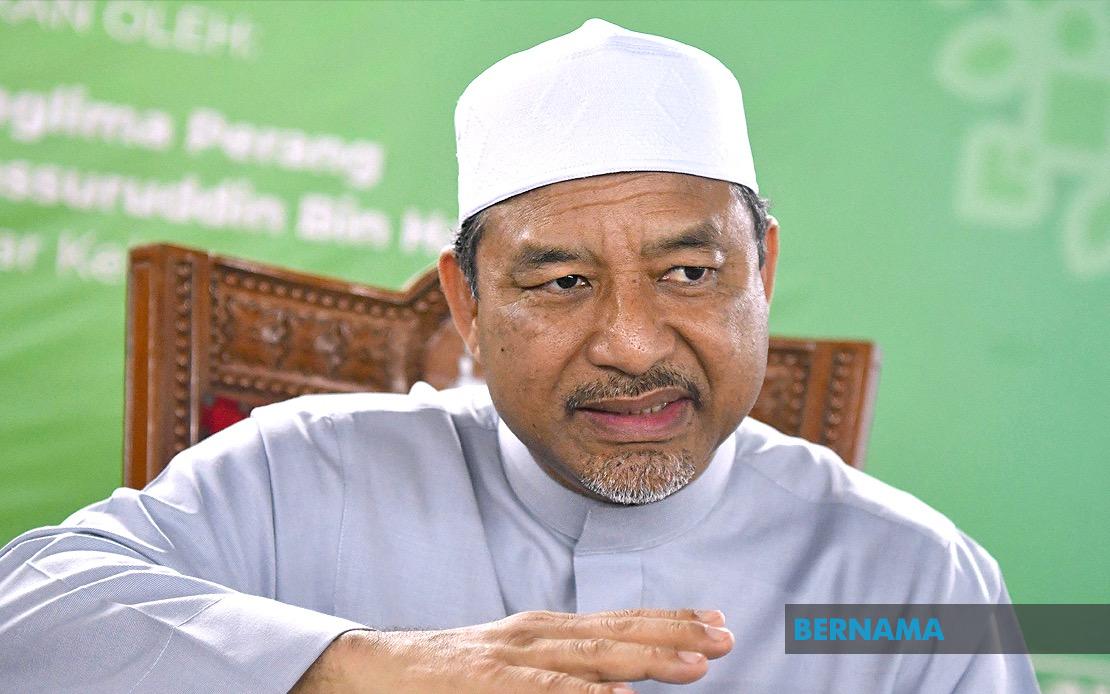
Kelantan's Menteri Besar Datuk Mohd Nassuruddin Daud has pledged sustained governmental support for the preservation and advancement of the state's distinctive arts and cultural traditions, provided they operate within the framework of Islamic teachings and moral principles. Speaking at the conclusion of the Kelantan Arts Festival (FKRK) 2026 in Pasir Puteh on July 4, he framed cultural preservation as an integral dimension of state identity and a strategic pillar of tourism-driven economic growth.
The Menteri Besar clarified that the Kelantan government does not categorically reject traditional artistic expressions simply because of their historical roots. Rather, the administration adopts a refinement approach, seeking to distil cultural practices so they flourish within established Islamic ethical boundaries—encompassing noble values, propriety and moral standards. This nuanced position distinguishes between wholesale prohibition and thoughtful cultural stewardship, reflecting an effort to navigate the tension between tradition and religious governance.
Mohd Nassuruddin acknowledged that certain traditional performances had previously been restricted due to elements perceived as incompatible with Islamic tenets. However, he indicated receptiveness to reinstating such performances once offending components are removed or reformed, demonstrating a pragmatic rather than absolutist approach to cultural regulation. This stance suggests the state government views Islamic principles not as static barriers but as evolving frameworks capable of accommodating cultural expression when properly adapted.
The Menteri Besar situated this cultural philosophy within Kelantan's historical development, arguing that Islam's establishment in the state has historically fostered and intertwined with knowledge, artistic production, language and cultural practice. According to this narrative, Islamic influence did not extinguish Kelantan's artistic heritage but instead shaped and refined it, creating a distinctive synthesis of Malay-Muslim cultural identity. This perspective positions Islam not as externally imposed restriction but as an indigenous intellectual tradition that has organically guided cultural evolution.
Kelantan's material cultural patrimony—encompassing performing arts, traditional games, artisanal craftsmanship, handicrafts and traditional cuisine—represents what Mohd Nassuruddin characterised as invaluable treasures embodying Malay community wisdom and philosophical sophistication. He emphasised that preserving these assets constitutes an obligation to future generations, framing heritage conservation as intergenerational stewardship rather than mere nostalgia. This framing elevates cultural preservation from recreational interest to civic responsibility.
The FKRK 2026 gathering transcends conventional tourism and entertainment functions, according to state leadership. Mohd Nassuruddin portrayed the festival as a substantive platform facilitating networking between heritage practitioners and artists, enabling knowledge exchange across generations and disciplines, catalysing local economic activity, and positioning Kelantan's cultural distinctiveness before domestic and international audiences. This multifunctional characterisation reflects growing recognition that cultural events generate benefits spanning social cohesion, economic stimulus and destination marketing simultaneously.
Particularly noteworthy is the government's emphasis on revitalising traditional games including gasing uri, congkak, dam aji and tating. Mohd Nassuruddin described these recreational practices as counterweights to technological saturation in young people's daily existence, suggesting cultural preservation serves contemporary developmental objectives beyond historical documentation. This framing resonates with broader Southeast Asian concerns about youth disconnection from heritage amid digital dominance, positioning traditional games as pedagogical and developmental tools rather than antiquated amusements.
The FKRK 2026 event, spanning four days and concluding in early July, operates as an annual initiative jointly orchestrated by the Ministry of Tourism, Arts and Culture and the National Culture and Arts Department (JKKN) Kelantan. This institutional arrangement reflects systematic governmental commitment to cultural programming rather than ad-hoc cultural commemoration. The involvement of federal tourism and cultural agencies indicates that Kelantan's heritage preservation efforts receive coordination and resourcing within broader national cultural strategies.
For Malaysian observers and Southeast Asian cultural analysts, Kelantan's approach illustrates one prominent model for reconciling Islamic governance with artistic heritage preservation. Rather than rigid bifurcation between religious authority and cultural expression, the state demonstrates selective refinement, maintaining traditions while modifying specific elements perceived as theologically problematic. This methodology differs markedly from outright cultural suppression, offering a case study in how religious-majority governments can simultaneously uphold theological commitments and cultural continuity—though critics may question whether refinement processes ultimately hollow traditions of authentic meaning.
The implications extend beyond Kelantan's borders. As other Malaysian states and Southeast Asian nations navigate similar tensions between Islamic governance frameworks and cultural pluralism, Kelantan's experience provides empirical reference points. The state's success in maintaining active cultural programming while satisfying religious leadership suggests that artistic heritage and Islamic governance need not constitute zero-sum opposition, though the sustainability and authenticity of such compromises remain subject to ongoing evaluation and contestation among artists, religious scholars and community members.

