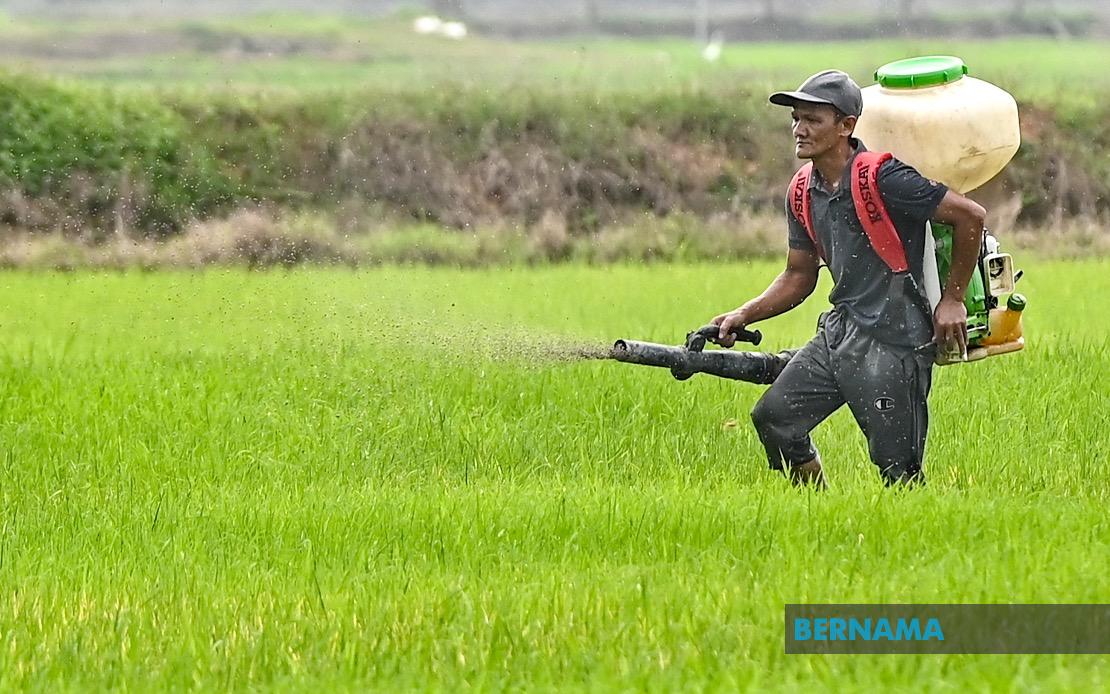
Kelantan's state government has unveiled an ambitious agricultural investment programme worth RM3.64 million designed to revitalise the sector through a comprehensive 10-project initiative spanning crop production, livestock rearing, and fisheries development. The allocation, disclosed during the State Legislative Assembly sitting at the Kota Darulnaim Complex in Kota Bharu, reflects the administration's commitment to transforming agriculture into a more productive and commercially viable industry whilst addressing food security concerns across the state.
The investment encompasses initiatives to reclaim idle agricultural land and intensify padi cultivation, traditionally the backbone of Kelantan's farming economy. Beyond rice production, the state is diversifying into higher-value commodity crops alongside accelerated development of vegetable and fruit cultivation zones. This multi-crop strategy represents a deliberate shift away from sole reliance on traditional padi farming, positioning Kelantan to capitalise on rising consumer demand for fresh produce within Malaysia and potentially across Southeast Asia. The inclusion of dedicated entrepreneur development programmes suggests the state recognises that production capacity alone is insufficient without corresponding business skills and market access infrastructure.
Commercial agriculture expansion is being channelled through the Kelantan State Agriculture Development Corporation, which operates the Rong Chenok Agro Valley facility. This hub focuses on modern cultivation techniques including chilli fertigation systems, honeydew melon production, and hydroponic vegetable farming. These technology-intensive operations represent a significant departure from conventional farming methods prevalent in Kelantan and signal the state's determination to adopt higher-yield, resource-efficient production models that can generate superior returns for participating farmers whilst reducing water consumption and environmental stress.
The livestock sector constitutes another pillar of this agricultural renaissance, with over 380 breeders currently benefiting from state support programmes. These initiatives encompass traditional livestock such as cattle, goats, sheep, and buffalo, alongside emerging alternative livestock including deer and quail farming. The provision of support equipment to breeders addresses a critical bottleneck in rural agricultural development, where access to appropriate machinery and infrastructure often determines whether smallholder farmers can achieve commercial viability. This targeted assistance demonstrates understanding of the practical challenges facing Kelantan's farming communities.
Fisheries and aquaculture represent perhaps the most impressive component of this investment drive, reflecting Kelantan's coastal advantages and the sector's potential for high-value production. The state channelled RM382,094 to support 122 fish and prawn breeders, facilitating aquaculture operations that produced 7,901.74 tonnes of output valued at RM76.2 million in 2025. The ambitious target of 8,000 tonnes for the current year indicates confidence in sector expansion momentum and suggests production infrastructure investments are beginning to yield tangible results. This aquaculture growth carries significance beyond Kelantan, as it contributes to national food security objectives and reduces Malaysia's reliance on seafood imports.
Breeding facility development has been particularly intensive, with over 130 artificial hatcheries constructed to supply fish and prawn juveniles to both commercial operators and public waterways. The Kelantan State Agriculture Development Corporation itself maintains substantial breeding capacity, producing approximately one million catfish fry and 500,000 tilapia fry annually. The white prawn project operating in Pantai Geting, Tumpat, generates roughly 400,000 kilogrammes of production yearly, establishing Kelantan as a significant contributor to national aquaculture output. These facilities represent long-term infrastructure investments that will continue yielding returns well beyond the current funding cycle.
Marketplace access and entrepreneurial development form essential counterparts to production expansion, and the state government has established infrastructure to bridge the farm-to-consumer gap. As of June, approximately 1,560 entrepreneurs had benefited from 74 marketing infrastructure facilities and 99 retail outlets established across Kelantan. This network acknowledges that agricultural development cannot succeed through production alone; farmers and food processors require accessible, affordable distribution channels and direct consumer engagement opportunities to maximise income from their output.
The Kota Bharu Rural Transformation Centre exemplifies this integrated approach, functioning as a centralised agro-food marketing and distribution hub that has accommodated roughly 800 entrepreneurs since its establishment. The facility has generated cumulative sales exceeding RM4.16 billion between 2012 and 2025, demonstrating that well-designed rural infrastructure can generate substantial economic activity whilst improving farmer incomes and employment opportunities. This 13-year track record suggests the model has achieved sustainable commercial viability and offers replicable lessons for other Malaysian states seeking to modernise rural economies.
For Malaysian policymakers and agricultural observers, Kelantan's investment strategy merits attention as a coordinated, sector-wide development approach that combines production modernisation, value-chain infrastructure, and entrepreneurial support. The emphasis on technology adoption, diversification beyond traditional crops, and direct market linkages addresses persistent challenges in Malaysian agriculture that have constrained farmer incomes and deterred younger generations from adopting farming careers. The allocation of resources across crop, livestock, and fisheries sectors simultaneously, rather than concentrating investment in a single subsector, distributes risk whilst maximising employment and income-generation possibilities for rural communities.
Regionally, Kelantan's aquaculture expansion and commercial crop production initiatives position the state to supply growing ASEAN demand for fresh agricultural products. Thailand and Vietnam have demonstrated that coordinated state investment in production facilities combined with entrepreneurial development programmes can generate both food security and export-oriented agricultural industries. Kelantan's experience during this three-year period will offer valuable benchmarking data for assessing whether Malaysian state-level agricultural investment programmes can achieve comparable productivity and income gains for participating farmers. The coming months will reveal whether this RM3.64 million injection catalyses the sustainable agricultural transformation that Kelantan's administration envisages.

