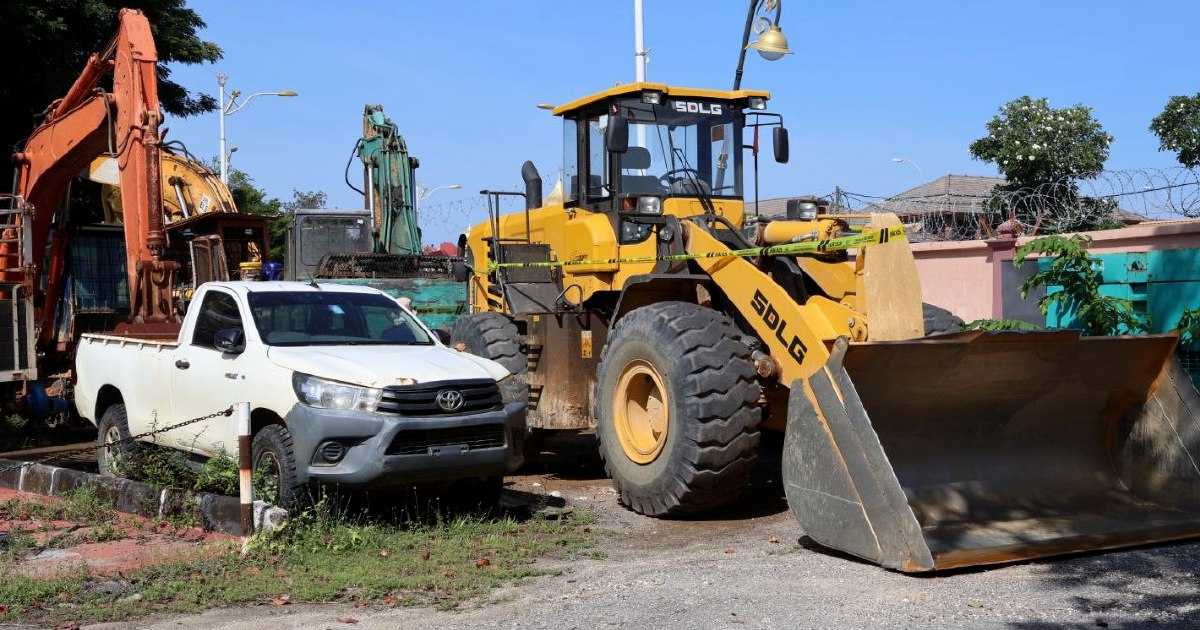
Kelantan state authorities have formally commenced an investigation into a substantial illegal gold mining enterprise discovered in Gua Musang, triggered by the confiscation of specialised heavy machinery estimated to be worth RM4.2 million. The discovery and subsequent seizure of the equipment marks a significant enforcement action against unlicensed mineral extraction activities in the state.
The operation in Gua Musang, one of Kelantan's interior districts with a history of resource-extraction activities, represents a notable breach of mining regulations that govern the extraction of precious metals and minerals across the state. The scale of equipment seized suggests this was a well-organised mining venture rather than small-scale informal prospecting, indicating the sophisticated nature of illegal mining networks operating in the region.
Gold mining, whether licensed or unlawful, remains economically significant in parts of Malaysia. While legitimate mining operations contribute to state revenues and employment, illegal mining operations bypass environmental assessments, labour protections, and taxation requirements that regulated enterprises must observe. The environmental impact of unregulated gold mining is particularly severe, as such operations often leave degraded landscapes, contaminate water sources with mercury and cyanide, and disturb forest ecosystems without restoration obligations.
Kelantan's determination to investigate this operation reflects growing official attention to unauthorised mining across Malaysia's mineral-rich states. The state government, through various departments and enforcement agencies, has increasingly prioritised cracking down on operations that circumvent proper permitting procedures. This investigation suggests coordination between state-level authorities responsible for land, environment, and mining regulations.
The Gua Musang district, located in the interior of Kelantan with significant forest coverage and mineral deposits, has historically attracted both legitimate and illegitimate mining interest. The district's remoteness and challenging terrain make enforcement efforts more complex, as illegal operators can establish operations away from immediate scrutiny. The discovery of this particular scheme indicates that surveillance and intelligence-gathering operations have become more effective in locating hidden mining sites.
The RM4.2 million valuation of the seized equipment provides insight into the capital investment involved in such ventures. Heavy mining machinery—including excavators, loaders, processing equipment, and vehicles—represents a substantial financial commitment. This scale of investment suggests the operators anticipated profitable gold yields sufficient to justify the equipment outlay, likely viewing temporary confiscation risks as operational costs rather than deterrents.
Investigations into illegal mining typically examine multiple dimensions of the operation: the identity and background of those responsible, the duration of extraction activities, the volume of gold extracted, the market channels through which minerals were sold, and whether officials were complicit through corruption or negligence. Such probes often reveal interconnected networks involving equipment suppliers, transport operators, processing facilities, and buyers who collectively enable the illegal trade.
For Malaysia and the Southeast Asian region, illegal mining represents a multi-layered problem combining environmental degradation, loss of state revenue, safety hazards for workers operating without regulations, and potential links to organised crime networks. The trade in illegally extracted gold also raises concerns about money laundering and the financing of illicit activities, as precious metals provide a means to convert illegally obtained funds into internationally tradeable assets.
Kelantan's enforcement action occurs within a broader context of intensifying international scrutiny on Southeast Asian mining practices. Environmental degradation caused by unregulated mining, particularly in forested areas, attracts attention from conservation organisations and international bodies concerned with climate action and biodiversity loss. Malaysian authorities increasingly coordinate with regional partners to address cross-border illegal mining, as operators sometimes move operations across state lines or international boundaries when facing pressure.
The investigation's outcomes will likely influence how authorities approach similar operations discovered subsequently. If the probe results in prosecutions, substantial penalties, and equipment disposal, the deterrent effect may gradually discourage new illegal mining ventures. However, if enforcement remains inconsistent or penalties prove insufficient relative to potential profits, operators may view violations as manageable business risks.
For Malaysian residents in Kelantan and neighbouring states, this investigation represents both positive developments in environmental protection and sobering evidence of ongoing environmental threats. The confiscated equipment will now undergo disposal, though determining whether seized machinery should be auctioned, dismantled for recycling, or destroyed depends on government policy and investigation outcomes.
The broader implications for Malaysia's mining sector point toward stricter enforcement becoming the norm rather than exception. As the government balances economic development through natural resource extraction with environmental preservation and community welfare, investigations like this in Gua Musang suggest state authorities are prioritising compliance more seriously. The coming weeks and months will reveal whether this investigation leads to major prosecutions and strengthened preventive measures, or whether it represents an isolated enforcement action without systemic impact.

