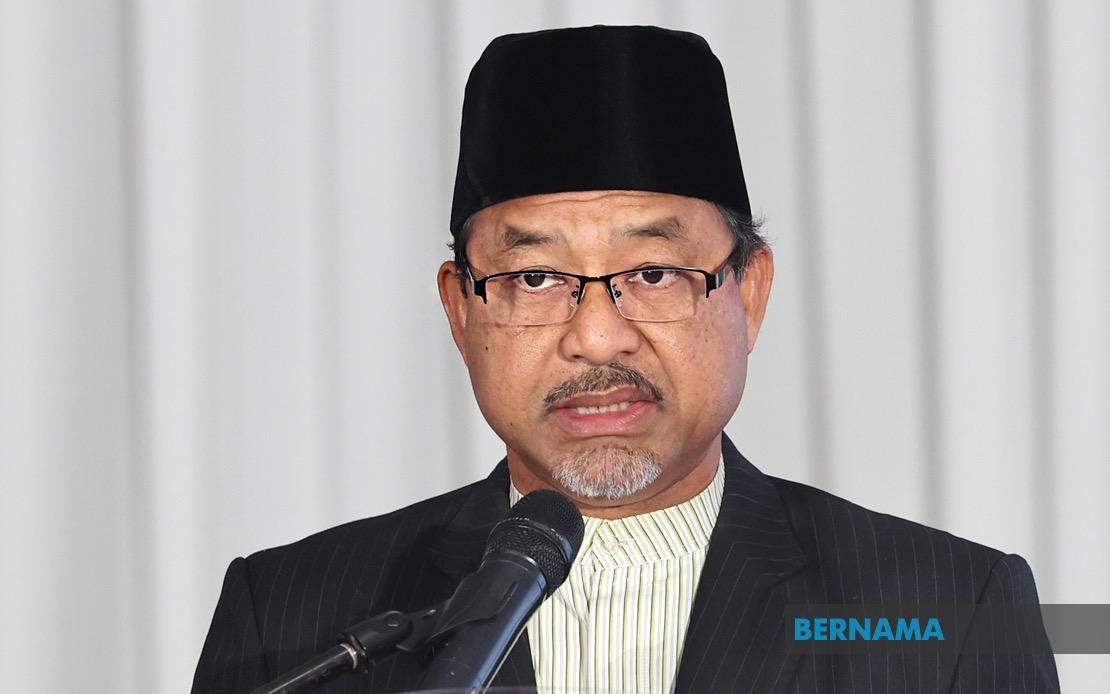
Kelantan's commitment to forest preservation appears firmly entrenched, with the state maintaining 778,708.34 hectares of forested terrain—representing 51.79 per cent of its total land area. This achievement, disclosed during a state legislative assembly session in Kota Bharu, positions Kelantan as compliant with the broader Peninsular Malaysia Forestry Policy, which mandates preserving at least half of the country's terrestrial space under forest and tree cover. Menteri Besar Datuk Mohd Nassuruddin Daud emphasised the significance of sustaining these figures whilst addressing concerns raised in the assembly.
The Malaysian forestry sector has long grappled with balancing conservation imperatives against economic pressures, particularly in resource-rich states like Kelantan. The 51.79 per cent benchmark is notable because it demonstrates that a state with substantial timber and agricultural interests can still maintain coverage above the statutory minimum. However, whether this threshold represents genuine forest health or merely bureaucratic compliance remains an important consideration for policymakers and environmental observers across Southeast Asia. The figure itself—presented with precision to two decimal places—suggests careful documentation, though critics of forest management often question whether official statistics adequately account for degradation within designated forest zones.
The state government's multi-pronged approach to forest stewardship reveals an evolving understanding of conservation challenges. Beyond passive maintenance, authorities are actively identifying government-held land suitable for gazetting as Permanent Reserved Forests (HSK). This proactive identification process indicates recognition that forest preservation requires deliberate administrative action rather than mere prohibition of further clearance. The integration of Section 10(1) of the National Forestry Enactment (Adoption) (Amendment) (No. 3) 2025 into Kelantan's framework demonstrates alignment with updated federal legislation, suggesting coordination between state and national forest governance structures.
Kelantan's participation in the Greening Malaysia campaign represents an additional layer of environmental commitment, encompassing both forest restoration and tree-planting initiatives. Such programmes carry particular significance for a state where land-use pressures from agriculture and development remain constant. The restoration component acknowledges that some forest areas may have suffered degradation requiring active rehabilitation, whilst tree-planting efforts expand the potential for future carbon sequestration and biodiversity support. For Malaysian policymakers, these initiatives offer a template for provinces seeking to demonstrate environmental stewardship without entirely abandoning economic development.
The stated philosophy of balanced development—preserving HSKs whilst pursuing economic growth in a sustainable manner—reflects international sustainability discourse permeating Malaysian governance. This framing aligns Kelantan's approach with global commitments to meeting present requirements whilst safeguarding future generations' capacity to meet theirs. However, the tension between these objectives remains acute in regions where timber extraction, palm oil cultivation, or agricultural expansion compete directly with forest conservation. The Menteri Besar's emphasis on sustainable development suggests awareness of this inherent conflict and an attempt to position Kelantan as navigating it responsibly.
Technological advancement in forest monitoring represents a significant operational shift. Deploying modern detection systems to identify changes in forest area and encroachment at early stages reflects investment in surveillance infrastructure beyond traditional patrol-based approaches. Such technology enables more rapid response to unauthorised land clearing or illegal logging, potentially preventing small-scale violations from escalating into substantial forest loss. For Malaysia's broader conservation agenda, particularly as states seek to attract international investment and climate financing, demonstrating technological sophistication in forest protection carries considerable diplomatic value.
The verification protocol—whereby detected changes or suspected encroachment undergo field inspection and patrols before enforcement—establishes a checkpoint against false positives or misinterpretation of satellite or aerial data. This methodical approach protects both the integrity of enforcement actions and the livelihoods of communities operating legitimately within or adjacent to forest zones. Land-use conflicts in Malaysia often arise from ambiguity or sudden enforcement against established practices, so formalising verification procedures may reduce tensions between conservation and rural communities dependent on forest-adjacent activities.
For Southeast Asian regional perspectives, Kelantan's forest maintenance carries implications beyond state boundaries. The broader Peninsular Malaysia forest policy influences how neighbouring countries perceive Malaysia's environmental commitments, particularly as international climate negotiations increasingly emphasise national forest coverage. Malaysia's standing as a repository of tropical biodiversity and a signatory to various environmental accords means that individual state performance metrics accumulate into national environmental credentials. Kelantan's adherence to the 50 per cent threshold contributes to Malaysia's overall narrative regarding forest stewardship.
However, observers should note that maintaining a percentage does not necessarily indicate qualitative forest health. A forest area might technically meet coverage targets whilst suffering reduced biodiversity, elevated fragmentation, or compromised ecological function. The statistics provided focus on quantitative extent rather than forest quality, ecosystem integrity, or the effectiveness of conservation in protecting endemic species or critical wildlife corridors. Malaysian environmental researchers increasingly emphasise that meaningful conservation requires metrics extending beyond areal measurement.
The involvement of the Kelantan Forestry Department in implementation underscores the institutional framework supporting these commitments. State-level forestry agencies possess detailed knowledge of local conditions, land tenure patterns, and community relationships that federal bodies cannot easily replicate. Strengthening these agencies through adequate resourcing, training, and autonomy becomes crucial for translating policy into sustained forest protection. Questions about the adequacy of such institutional support remain pertinent across Malaysian states, where competing budget priorities often disadvantage environmental enforcement.
Looking forward, Kelantan faces the challenge of maintaining these figures amid projected increases in development pressure and economic activity. Population growth, infrastructure expansion, and agricultural intensification will test whether current strategies suffice for long-term forest preservation. The state's approach of combining traditional enforcement with technological innovation and community-focused programmes offers a comprehensive model, yet success ultimately depends on political will, adequate funding, and stakeholder cooperation beyond government alone.
The Menteri Besar's response to the assembly query signals political attention to forest governance, which itself constitutes an enabling factor for implementation. When forestry issues reach legislative deliberation and receive ministerial attention, agencies typically receive stronger mandates and broader institutional support. This visibility also creates accountability mechanisms, as forest cover becomes a measurable indicator against which state government performance can be evaluated. For Malaysian constituents concerned with environmental protection, such legislative scrutiny of forest statistics represents an important mechanism for oversight and transparency.

