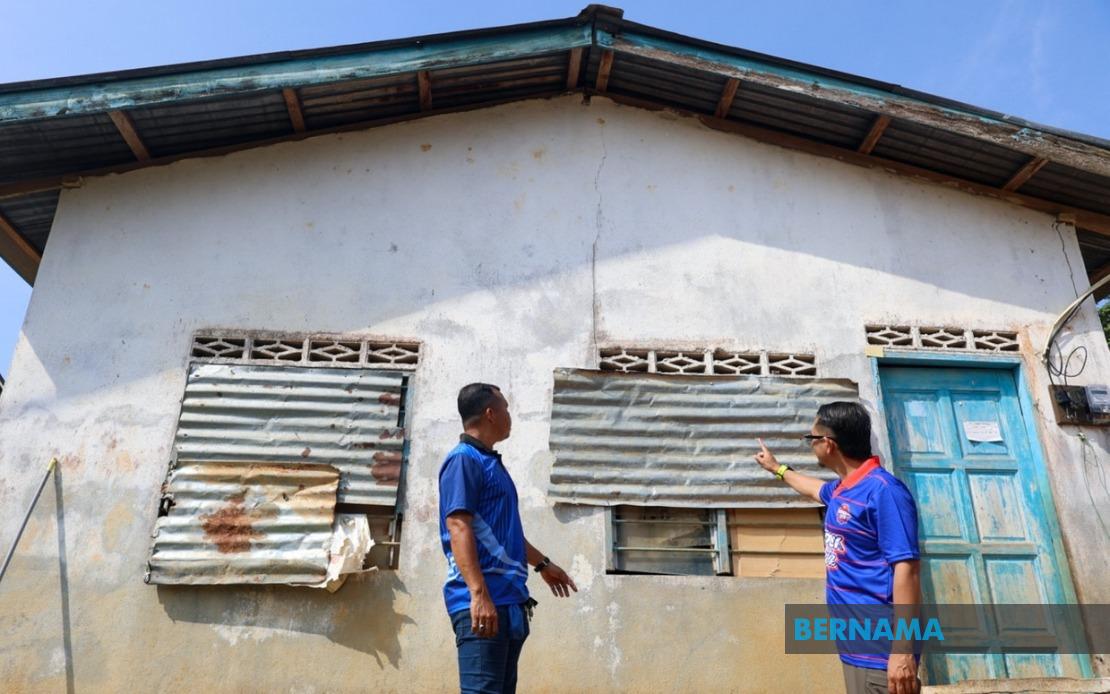
The Kelantan government has mapped out a targeted intervention strategy for two isolated Orang Asli communities totalling 1,524 residents, responding to widespread infrastructure deficits and safety challenges that have hampered development in these remote settlements. Following fieldwork visits to the Pasik Resettlement Scheme (RPS) and Kampung Kuala Wok, the state administration has crystallised five immediate action areas that will shape policy direction over the coming months. Nenggiri Assemblyman Mohd Azmawi Fikri Abdul Ghani announced the findings after on-ground assessments conducted in early August, underscoring official recognition that these communities require differentiated support reflecting their geographical and economic isolation.
The most pressing concern emerging from consultations involves the physical condition of residential structures across both settlements. Inspections revealed a pattern of deteriorating housing stock, with roofs requiring replacement, walls needing structural remediation, and electrical installations posing serious safety hazards to inhabitants. Beyond maintenance of existing dwellings, community members have articulated demand for new house construction to accommodate demographic expansion, particularly young families establishing independent households following marriage. This housing shortage compounds existing vulnerability in communities already grappling with limited economic opportunity and restricted access to employment. Mohd Azmawi Fikri flagged the need for dialogue with the Department of Orang Asli Development (JAKOA) to explore pathways for expanding the housing stock, recognising that shelter security forms the foundation for broader social stability.
A distinctive and destabilising threat has emerged over the past three years in the form of escalating human-wildlife conflict. Since 2022, wild elephants have encroached repeatedly on these settlements, destroying crops, damaging property, and creating an atmosphere of constant vigilance among residents. The psychological burden of unpredictable animal incursions has disrupted normal routines, constrained children's freedom of movement, and forced families to modify daily activities around elephant behaviour patterns. This represents an urgent conservation and safety challenge that demands coordinated intervention involving wildlife authorities, community participation in conflict mitigation, and possibly enhanced barrier infrastructure or deterrent systems. The situation reflects broader pressures on wildlife corridors across the peninsula as human settlement expands into traditional elephant ranges, requiring solutions that balance community protection with species preservation.
Access to reliable electrical supply ranks among the five priorities, reflecting the gap between basic development standards and current reality in these remote enclaves. Electricity availability is foundational to modern living standards, enabling household lighting, refrigeration for food preservation, and operation of essential appliances. The absence of dependable power infrastructure traps residents in a cycle of disadvantage, limiting educational opportunities for children and restricting productivity for adults attempting income-generating activities. Electrification also facilitates improved health outcomes through refrigeration of medicines and provision of adequate lighting in health facilities.
Equally significant is the government's commitment to expanding the Essential Goods Distribution Programme to these communities. Officials are examining a proposal to include RON95 petrol within the subsidy framework, addressing a concrete grievance emerging from resident consultations. The nearest petrol station lies approximately 50 kilometres distant, forcing inhabitants to undertake expensive and time-consuming journeys simply to refuel vehicles essential for transportation and livelihood activities. Inclusion of petrol in subsidised goods distribution would reallocate household resources toward other priorities and reduce the transaction costs associated with accessing fuel. Simultaneously, authorities are evaluating proposals to enhance the frequency of the distribution programme itself, recognising that periodic delivery schedules may not align with consumption patterns or urgent needs.
The Jualan Rahmah programme, a government initiative aimed at controlling prices of essential commodities, constitutes the fifth priority. This programme represents an attempt to shield lower-income households from inflationary pressures eroding purchasing power, particularly significant in communities with limited wage employment opportunities. For residents of RPS Pasik and Kampung Kuala Wok, participation in Jualan Rahmah markets depends on programme extension to their localities and frequency of operation sufficient to meet needs.
Underlying all five priority areas lies a fundamental infrastructure constraint: geographic isolation. Reaching these settlements requires approximately 200 kilometres of round-trip travel from Gua Musang, with the journey traversable only by four-wheel-drive vehicles navigating poor road conditions. This isolation functions as a multiplier of disadvantage, increasing costs of service delivery, restricting residents' ability to access external markets and employment, and complicating government efforts to implement programmes. The difficult terrain and distance explain why these communities have historically received less attention from development planners focused on more accessible populations.
The identification of these five priorities represents a shift toward evidence-based policy formulation for Orang Asli development in Kelantan. By conducting field visits and consulting directly with residents, the state government has moved beyond abstract planning to ground-truthed understanding of constraints and opportunities. This approach creates foundation for more effective interventions than top-down programmes designed without community input.
Implementation will require coordination across multiple government agencies, from JAKOA responsible for Orang Asli affairs to the Department of Wildlife and National Parks managing elephant conflict, to utility providers handling electrification. The state government's willingness to identify these needs publicly signals commitment to follow-through, though resource constraints and bureaucratic complexity may slow realisation of concrete improvements. For the 1,524 residents of these settlements, the next phase will test whether official acknowledgment of priorities translates into sustained material advancement.

