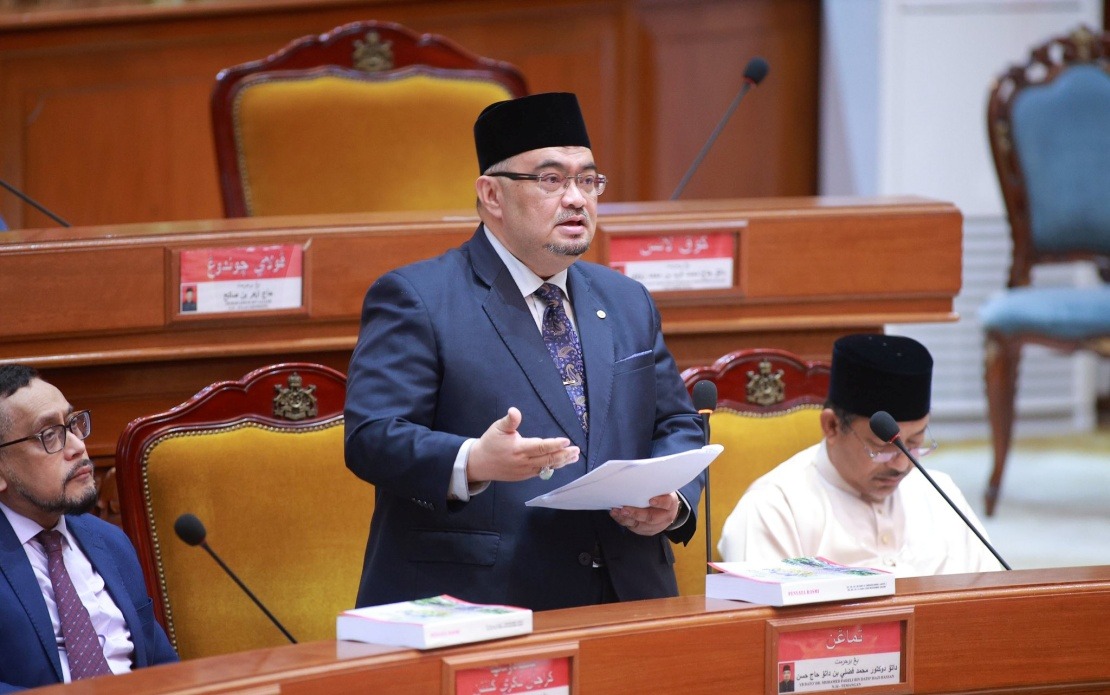
Kelantan's enforcement agencies have ramped up their crackdown on illegal land occupation and unauthorised mining, opening 63 investigation papers between 2025 and June following intensive field operations across the state. The escalation represents a significant effort by the Kelantan state government to combat what has become an increasingly persistent problem in the region, with Datuk Dr Mohamed Fadzli Hassan, the state's Deputy Menteri Besar, confirming the figures during a sitting of the Kelantan State Legislative Assembly in Kota Bharu today.
The enforcement campaign has concentrated on four districts particularly vulnerable to illegal mining and encroachment: Gua Musang, Kuala Krai, Jeli, and Tanah Merah. These areas, which have historically served as epicentres for such activities, were targeted through a series of 77 separate operations designed to disrupt illegal operations at their source. The geographical spread of these hotspots underscores how deeply embedded these illicit activities have become across Kelantan's landscape, extending beyond isolated pockets to affect multiple districts simultaneously.
The material impact of these enforcement efforts extends beyond mere case numbers. Authorities have seized a total of 65 excavators and heavy machinery, which analysts estimate at a combined value of RM15.8 million. This confiscation strategy targets the operational capacity of illegal miners and encroachers by removing their essential equipment, making it substantially more difficult to resume activities even after individuals are investigated or prosecuted. The seizures represent both a financial blow to those engaged in illegal operations and a practical mechanism for disrupting the infrastructure that enables large-scale unauthorised land use.
All investigation papers stemming from these operations have been forwarded to the Prosecution Unit of the Kelantan Land and Mines Office (PTG) for subsequent legal action. This transfer of cases to the prosecution unit marks a critical juncture in the enforcement pipeline, where investigative findings are evaluated for their sufficiency to support criminal proceedings. The PTG's involvement signals that cases are moving beyond initial investigation into the formal prosecution phase, though the eventual outcomes of these 63 cases remain to be determined through the legal process.
Beyond the immediate statistics, the state government has begun examining the broader ecosystem supporting illegal mining and encroachment activities. During the legislative assembly debate, Mohamed Fadzli acknowledged that investigations would specifically target middlemen, masterminds, organisers, and those providing protection to illegal operators. This recognition that such activities rarely operate in isolation is significant, as it reflects an understanding that combating these offences requires targeting not just the operational level but the networks that facilitate and profit from lawbreaking.
The approach to identifying higher-level actors relies partly on property ownership documentation. Officials have stated that because land ownership records exist, investigators possess a clear starting point for determining who ultimately benefits from illegal encroachment or mining operations on specific parcels. This investigative angle could potentially uncover cases where land nominally owned by one party is being exploited by another through formal or informal agreements, revealing layers of complicity that simple field enforcement cannot reach.
Authorities have also committed to lodging police reports and opening separate investigation papers when evidence suggests involvement by those beyond the direct operators. This multi-agency coordination—linking enforcement operations to police investigations—represents an effort to weave together different investigative mechanisms toward comprehensive accountability. However, the effectiveness of this approach depends on the quality of evidence gathered during initial enforcement operations and the priority assigned by police and prosecution units to these cases.
Recognising that penalties under existing legislation may be insufficient to deter repeat offences, the Kelantan state government has engaged in discussions with relevant authorities to review penalty structures. The state is seeking to introduce stricter consequences specifically for individuals or entities convicted multiple times of encroachment or illegal mining. Such graduated penalty schemes could theoretically improve deterrence by making the cumulative costs of continued illegal activity increasingly prohibitive.
The scale of the enforcement campaign and the volume of cases represent both a success in identifying and documenting illegal activities and a sobering reminder of how widespread these problems remain. The opening of 63 investigation papers in a matter of months indicates that illegal mining and encroachment are not marginal phenomena in Kelantan but rather systematic challenges requiring sustained attention and resources. For Malaysia's broader commitment to sustainable land management and environmental protection, developments in Kelantan carry significance beyond the state itself, as the region's experiences with enforcement effectiveness may inform national policy discussions.
For ordinary Malaysians, particularly those owning land in Kelantan or neighbouring states, these enforcement efforts carry implications for land security and property values. Unchecked encroachment and mining can degrade surrounding land, affect water supplies, and create environmental damage that imposes costs on adjacent property owners. The state's enforcement push, while incomplete, addresses at least part of this problem. However, the ultimate effectiveness of these investigations and prosecutions will only become apparent as cases progress through the legal system and outcomes are finalised, a process that typically unfolds over extended periods.
Looking forward, the challenge for Kelantan authorities lies not merely in opening investigation papers but in ensuring that prosecutions succeed and penalties sufficiently discourage future violations. The cases currently in the PTG's hands represent a test of whether the state's enforcement infrastructure can convert field operations into legal outcomes capable of genuinely reducing illegal mining and encroachment. This progression from enforcement to prosecution to sentencing will ultimately determine whether current efforts represent a temporary disruption or a meaningful turning point in controlling these activities.

