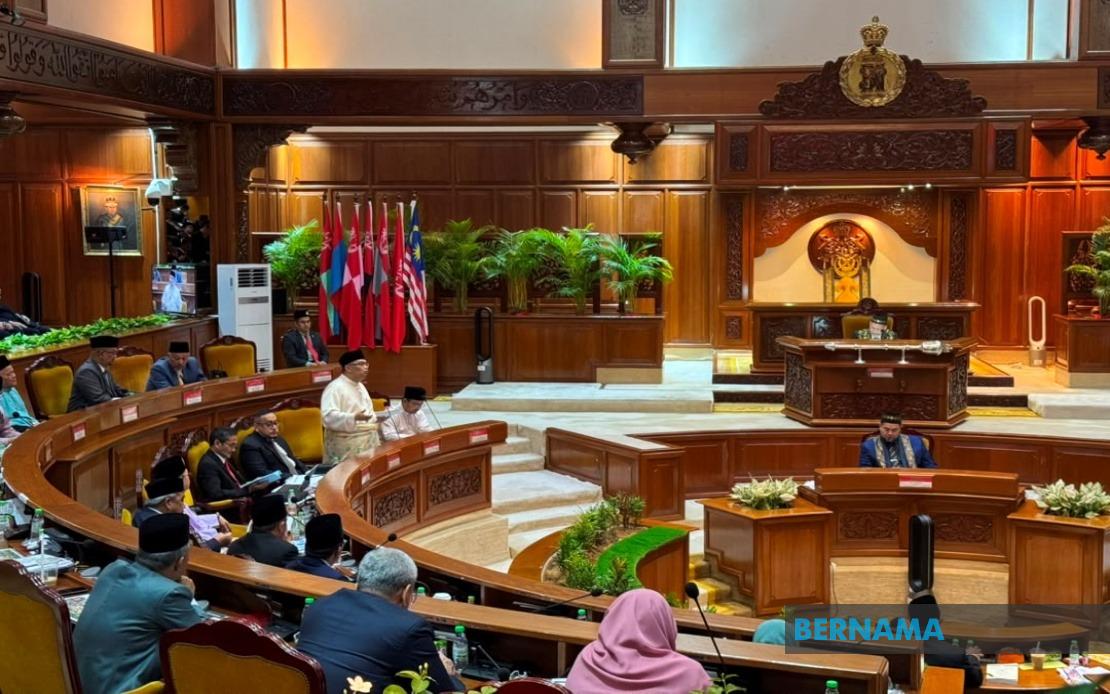
Kelantan's state legislative assembly has unanimously approved the Syariah Criminal Offences (Kelantan) Bill 2026, marking a significant step in the northeastern state's effort to rebuild its Islamic criminal law framework following a major constitutional defeat at the Federal Court last year. The bill, tabled by Deputy Menteri Besar Datuk Dr Mohamed Fadzli Hassan and subsequently passed by all lawmakers present, represents a carefully recalibrated approach to Islamic criminal legislation that senior state officials insist is more rigorous and constitutionally grounded than its predecessor.
The passage of the bill comes approximately eighteen months after the Federal Court's landmark 8-1 decision in February 2024, which struck down the majority of Kelantan's Syariah Criminal Code (I) Enactment 2019 on jurisdictional grounds. That ruling, which followed a constitutional challenge filed by a Kelantan-based lawyer, fundamentally reshaped the legal landscape by determining that state legislatures lack the authority to criminalise offences that fall within federal legislative competence. The decision sent shockwaves through Malaysia's Islamic legal establishment and prompted significant introspection across state governments with similar enactments.
Kelantan's Menteri Besar Datuk Mohd Nassuruddin Daud defended the new bill as a product of meticulous legislative planning rather than a hasty reaction to judicial criticism. He characterised the 2026 version as a natural evolution of Islamic criminal law in the state, grounded in constitutional principles rather than departing from them. According to Mohd Nassuruddin, the revised legislation incorporates the foundational spirit already present in the invalidated 2019 enactment while addressing the specific constitutional concerns that prompted the Federal Court's intervention. This framing suggests that Kelantan views the bill not as a radical reorientation but as a refinement aligned with Malaysia's constitutional architecture.
The substantive scope of the new bill is expansive, comprising nine distinct parts, sixty-two clauses, and a comprehensive schedule. The legislation incorporates multiple areas of Islamic criminal law, including provisions governing obligatory prayer observance, safeguarding of bodily integrity and private anatomy, protection of intellectual faculties, and restorative justice mechanisms. Of particular significance is the bill's emphasis on corporal punishment through whipping as a primary sanction and the incorporation of a compounding mechanism that allows certain offences to be resolved through financial settlement rather than court proceedings. These provisions reflect a careful calibration between punitive and restorative approaches to Islamic jurisprudence.
The debate within the assembly demonstrated broad political consensus among representatives from six constituencies—Pasir Tumboh, Melor, Galas, Jelawat, Kota Lama, and Chempaka—reflecting the cross-party backing that characterises religious legislation in Kelantan. The winding-up speeches delivered by both Mohd Nassuruddin and Mohd Fadzli emphasised the legislative process's rigour and the bill's constitutional propriety. This unanimous passage suggests confidence within the assembly that the 2026 version represents a defensible articulation of state Islamic criminal law that can withstand potential future legal challenge. Kelantan state assembly Speaker Datuk Mohd Amar Nik Abdullah presided over the proceedings as the bill advanced through its second and third readings without recorded dissent.
The constitutional question underlying this legislation remains fundamentally unresolved within Malaysia's federal system. The Federal Court's 2024 decision clarified that state assemblies cannot legislate offences that the Constitution reserves to Parliament, yet it left ambiguous the precise boundary between concurrent and exclusive federal criminal jurisdiction in the Islamic context. Kelantan's new bill presumably attempts to operate within the narrower space the Federal Court identified, focusing on offences that state legislatures can legitimately regulate. However, the absence of detailed judicial guidance on where exactly this boundary lies creates ongoing uncertainty for all state governments seeking to legislate Islamic criminal law.
For Malaysian legal observers and constitutional scholars, the Kelantan bill represents a test case in the evolving relationship between federal and state power in religious legislation. The state's evident confidence in the revised bill's constitutionality may reflect detailed advice from constitutional lawyers who believe the new provisions navigate the Federal Court's constraints more successfully than the previous enactment. Alternatively, it may reflect political determination to advance Islamic criminal law regardless of technical legal risk. The ultimate test will come if opponents mount another constitutional challenge, forcing the courts to articulate more precisely which Islamic criminal offences fall within state jurisdiction.
Beyond the constitutional dimension, the bill carries broader significance for Malaysia's Muslim-majority population and the wider Southeast Asian region. Kelantan's approach to Islamic criminal law, whether upheld or again struck down, influences how other states and nations assess the feasibility of comprehensive Islamic legal systems within secular or pluralistic constitutional frameworks. The sophistication of the 2026 bill—its nine-part structure, compounding mechanisms, and explicit attention to bodily safeguards—suggests that Malaysian Islamic legal theorists are engaging seriously with contemporary jurisprudential challenges rather than simply replaying earlier legislative battles.
The passage also reflects the particular political dynamics within Kelantan, where Islamic governance has historically been prioritised by the state government and electorate. Unlike some Malaysian states where Islamic criminal legislation remains politically contentious, Kelantan's assembly unanimously endorsed the new bill, suggesting that constituents expect their representatives to advance such measures. This political consensus provides the state government with a strong mandate to implement the legislation and defend it vigorously if legal challenges emerge. The unanimous passage signals to the federal government and courts that Kelantan views this as a matter of deep political and religious principle rather than marginal policy.
Moving forward, the 2026 bill must navigate multiple potential obstacles. Implementation will require regulatory framework development, training of Islamic judicial and enforcement personnel, and coordination between state and federal authorities where overlapping jurisdiction exists. Additionally, legal challenges seem probable, given the contentious constitutional history that preceded this legislation. Any new challenge would likely test whether Kelantan's reformulated approach successfully addresses the Federal Court's earlier concerns or whether the same jurisdictional problems resurface in revised form. The outcomes of such proceedings would have profound implications for Islamic criminal law across Malaysia and potentially throughout the Muslim world's engagement with constitutional constraints on religious legislation.

