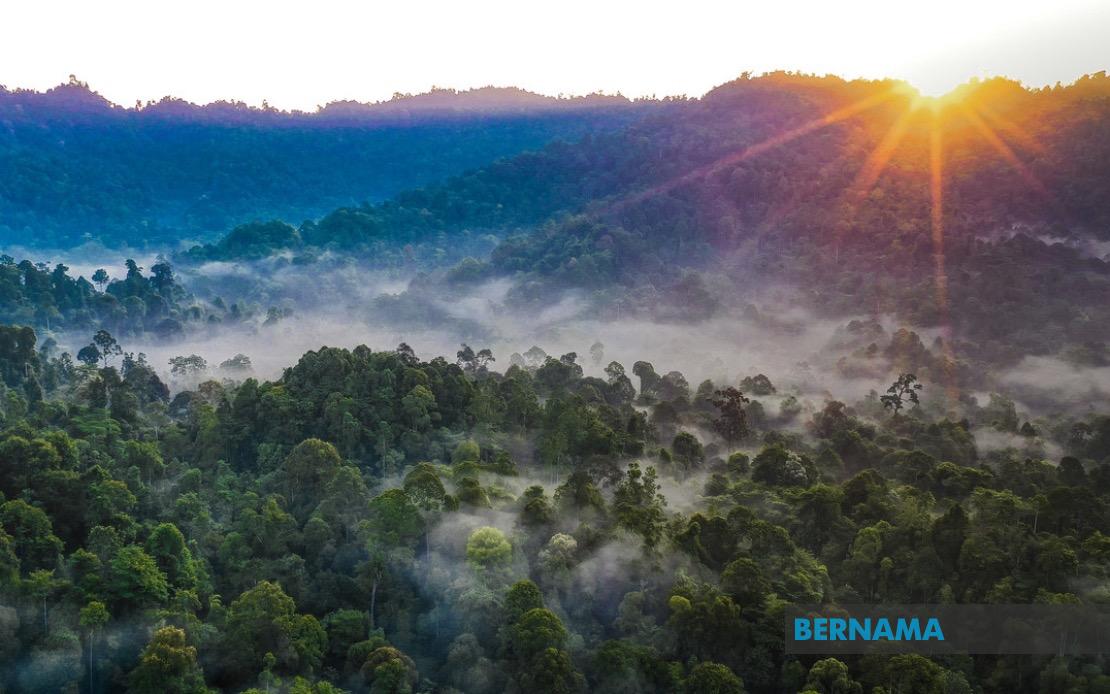
The Kelantan state government has committed to replacing every forest reserve area that loses its protected status due to development or extraction activities, according to assurances given by Deputy Menteri Besar Datuk Dr Mohamed Fadzli Hassan following an executive council meeting in Kota Bharu. The undertaking reflects growing awareness of environmental preservation even as economic development pressures mount across Malaysia's northeastern state.
The commitment directly addresses concerns regarding the Temangan Forest Reserve in Machang, which was recently degazetted to facilitate ongoing granite mining operations. The company undertaking these extraction activities initially received approval in 2009, but the reserve's formal removal from protected status only occurred recently to align regulatory frameworks with long-standing industrial permissions. This temporal gap between initial approval and official degazetting highlights the complex relationship between historical business licences and contemporary forest management regulations in Malaysian states.
Mohamed Fadzli explained that the degazetting process for Temangan became necessary to operationalise the mining permit granted over a decade ago. Rather than representing a sudden environmental reversal, the recent action formalised what had been an implicit commercial use of the land. The clarification suggests that the state government views the degazetting as a technical regularisation rather than a policy departure, though such distinctions carry limited weight among environmental advocates concerned with net forest loss.
The deputy state leader indicated he had specifically requested confirmation from the Kelantan State Forestry Department regarding replacement arrangements for degazetted areas. This engagement reflects an apparent effort to demonstrate governmental oversight and environmental stewardship in response to public scrutiny. The forestry department has reportedly assured officials that replacement reserves are mandatory whenever existing protected forests are removed from the gazette, suggesting an established procedural safeguard.
For Malaysian readers and environmental observers, the guarantee carries both substance and uncertainty. While formal policy apparently mandates replacement reserves, implementation timelines, site selection criteria, and quality comparisons between original and replacement areas remain largely unspecified. Environmental effectiveness depends heavily on whether replacement forests offer equivalent ecological value, biodiversity, watershed protection, and carbon sequestration capabilities. A replacement reserve in an already-degraded landscape may satisfy administrative requirements without delivering genuine conservation outcomes.
The Temangan situation reflects broader pressures confronting Malaysian states seeking to balance resource extraction revenues against forest preservation commitments. Granite mining generates employment and government revenue in resource-dependent regions, yet forest loss carries environmental costs including habitat destruction, soil degradation, and reduced carbon sequestration. Kelantan's position as a timber-producing state with significant mineral resources perpetually faces this tension between conservation rhetoric and extraction economics.
The government's public assurance suggests awareness of environmental concerns among Kelantan constituents and potentially external pressure from conservation organisations. By framing degazetting as inherently matched with replacement, officials attempt to present forest losses as economically net-neutral ecologically. However, critics argue that replacement forests cannot replicate the ecological functions of mature, intact reserves, particularly regarding biodiversity conservation and carbon storage in established tree systems.
Southeast Asian countries increasingly face scrutiny regarding forest management practices, particularly as regional and global climate commitments intensify. Malaysia's positioning as a relatively developed nation with significant forest coverage creates expectations of rigorous environmental governance. Kelantan's approach to balancing mining approvals with conservation commitments will likely feature in broader discussions about state-level environmental policy consistency across the peninsula.
The involvement of the Kelantan State Forestry Department in monitoring replacement commitments indicates recognition that environmental oversight requires dedicated institutional capacity. Whether the department possesses adequate resources, technical expertise, and political independence to enforce replacement obligations effectively remains an open question. State forestry agencies across Malaysia have historically operated with constrained budgets and competing pressures from resource extraction interests.
For investors and mining operators, the government's clear policy stance provides regulatory clarity regarding operational expansion within forest areas. Companies can anticipate that new or expanded extraction activities may require degazetting, provided replacement arrangements are formalised. This transparency potentially encourages investment while theoretically maintaining forest coverage through equivalent replacement areas.
The broader Malaysian context matters significantly for understanding Kelantan's position. As a state with Islamist governance, environmental management intersects with development priorities and religious perspectives on resource stewardship. Islamic environmental ethics emphasise custodianship and sustainable use, creating potential space for frameworks balancing extraction and conservation. How these principles translate into practice at the state level will shape environmental outcomes across Kelantan's forested landscape.
Moving forward, the critical measure of this government commitment will be whether replacement reserves actually materialise, when they are established, and whether their ecological characteristics match or exceed those of degazetted areas. Environmental observers and conservation groups will likely monitor implementation closely. The credibility of Kelantan's forest preservation claims depends on converting these assurances into measurable, verifiable outcomes that demonstrate genuine net conservation rather than merely administrative reclassification.
Ultimately, the Temangan case exemplifies tensions inherent in Malaysian resource governance, where established economic permissions frequently conflict with evolving environmental standards. How Kelantan navigates this intersection—through implementation of credible replacement programmes and adaptive management—will influence both local environmental outcomes and the state's broader reputation regarding conservation commitment in Southeast Asia.

