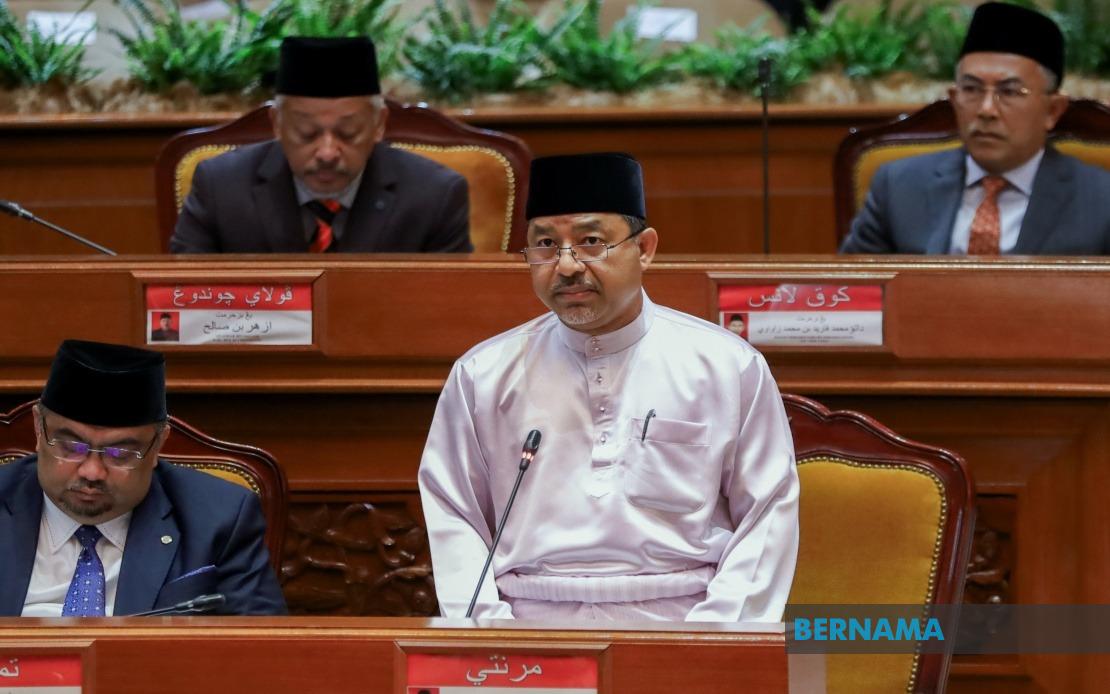
Kelantan has cemented its status as the state with the largest concentration of Malay reserve land in Peninsular Malaysia, according to figures presented by Menteri Besar Datuk Mohd Nassuruddin Daud in the State Legislative Assembly. The state holds 526,083 hectares designated as Malay reserves, accounting for 91.5 per cent of Kelantan's entire land area, distributed across 816,020 individual ownerships recorded up to June this year.
The remaining landholdings in the state comprise non-Malay reserve areas totalling 48,344 hectares or 8.4 per cent of the total, with 43,255 registered titles. Combined, these figures establish Kelantan's total land ownership at 574,427 hectares encompassing 859,275 titles. The overwhelming dominance of Malay reserve designations reflects both historical land administration policies and the state's demographic composition, positioning Kelantan distinctly ahead of its peers across the peninsula.
When examined by administrative district, the distribution of Malay reserve land reveals significant variation across Kelantan's eleven districts. Gua Musang emerges as the largest concentration point with 122,735 hectares of Malay reserve designation, substantially exceeding other districts. Pasir Mas follows with 56,656 hectares, while Tanah Merah registers 56,246 hectares and Kuala Krai holds 53,473 hectares. These four districts alone account for nearly half of the state's total Malay reserve land, reflecting both their geographical size and the historical pattern of reserve designations within them.
However, when measuring the proportion of Malay reserve land relative to each district's total area, the rankings shift considerably. Tanah Merah achieves the highest saturation rate at 99.9 per cent, indicating that virtually all its land falls under Malay reserve protection. Several other districts approach this near-total coverage: Tumpat, Pasir Puteh, Bachok, Pasir Mas, Kota Bharu, and Jeli all register substantially higher proportional percentages than Gua Musang, despite the latter's greater absolute area. This distinction between absolute land area and proportional coverage holds particular significance for land policy and availability analysis, as districts with lower proportional reserves may face different development pressures.
Under the legislative framework governing these designations, Kelantan operates under the Malay Reservations Enactment, which establishes the rules surrounding ownership and transaction within reserved areas. Section 13A of this enactment permits non-Malay individuals to own property within Malay reserve zones, introducing a degree of flexibility into what might otherwise appear as rigid categorical restrictions. This provision acknowledges the practical complexities of modern land markets while maintaining the protective intent of reserve designations.
Equally significant is the regulatory authority vested in state authorities under the same legislation. Beyond simply designating land as Malay reserves, the state government retains discretionary power to regulate and control transactions occurring within these areas. This encompasses the ability to scrutinise sales, leases, and other dealings to ensure compliance with reserve protections, and critically, to prohibit transactions deemed detrimental to the long-term interests of Malay reserve land as a collective resource. The Menteri Besar's remarks specifically emphasised that no reduction has occurred in Kelantan's Malay reserve land, suggesting proactive enforcement of these protective provisions.
For Malaysia more broadly, Kelantan's position carries implications extending beyond simple land statistics. Malay reserves represent a constitutionally recognised institution intended to safeguard the socioeconomic interests of Bumiputeras within the federal structure. Kelantan's substantial reserve holdings mean the state shoulders particular responsibility for demonstrating effective stewardship and management of these assets for community benefit. The scale of these landholdings—over half a million hectares—represents potential resource for agricultural development, settlement schemes, and other community-oriented initiatives.
The maintenance of reserve status without reduction also suggests that Kelantan has not experienced the pressures toward conversion or alienation of reserve land that have affected some other states experiencing rapid urbanisation. States like Selangor and Kuala Lumpur, facing intense developmental demand, have seen proportionally larger transfers of land from Malay reserve to general classification. Kelantan's retention of its full reserve area indicates either lower development pressure on such land or more stringent state administration policies protecting reserve designations from market pressures.
From a regional perspective, the news carries significance for how Malaysian states manage competing demands between land conservation for specific communities and economic modernisation. As Southeast Asia experiences accelerated urbanisation and rural-to-urban migration, questions of how states balance developmental imperatives against protective legislation for designated communities remain contentious. Kelantan's experience demonstrates that maintaining reserve protections remains administratively feasible even in contemporary contexts, though questions about the productive utilisation of such vast reserve holdings warrant ongoing attention.
The legislative power to regulate transactions within reserves, while preserving ownership flexibility, represents a middle-ground approach to reserve management. Rather than imposing blanket prohibitions on non-Malay ownership that might create rigidity, the framework allows targeted intervention when specific transactions threaten reserve interests. This discretionary model requires capable state administration to function effectively, placing the burden on government bodies to make sound judgements about which transactions warrant approval or prohibition.
Moving forward, Kelantan's stewardship of the nation's largest Malay reserve land area will likely invite examination of how these lands contribute to Bumiputera economic advancement. With 526,083 hectares under designation, opportunities exist for structured agricultural development, rural settlement schemes, and economic empowerment initiatives that could generate measurable community benefits. Conversely, if reserve lands remain underutilised despite their protective status, questions may emerge about whether the designation serves its intended protective purpose or merely prevents alternative uses without creating substantive community value.

