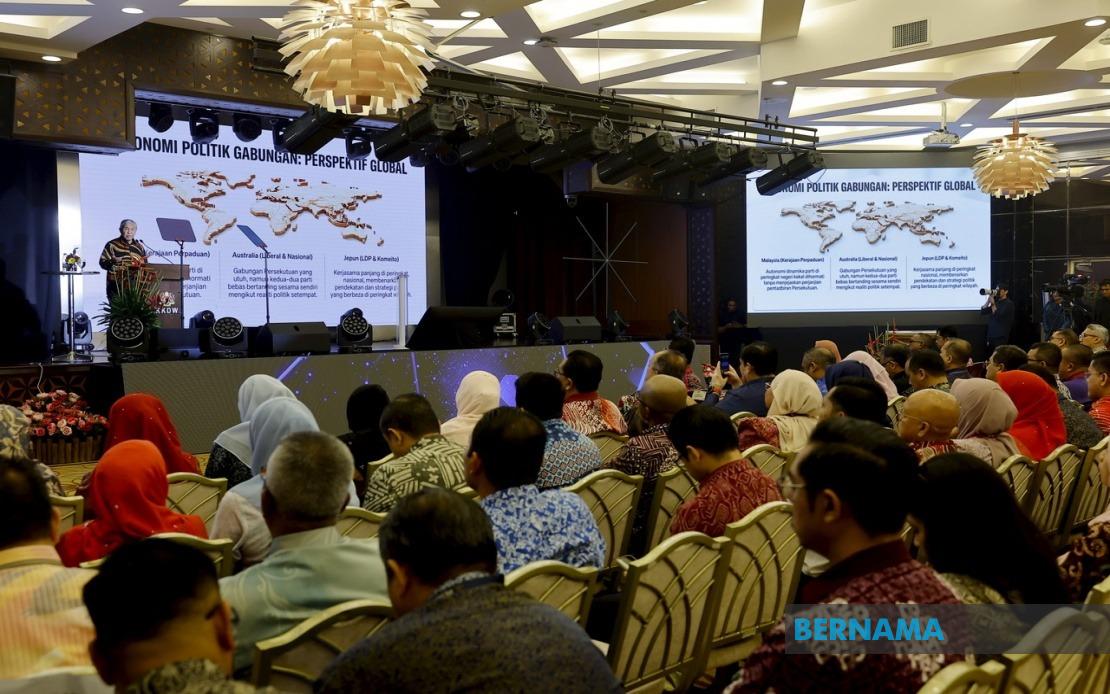
Malaysia's Community Development Department (KEMAS) is preparing for a significant nationwide expansion of early childhood education services for children with special needs, with Deputy Prime Minister Datuk Seri Dr Ahmad Zahid Hamidi outlining an ambitious timeline to place specialist kindergartens throughout the country's administrative districts by 2027. The Tabika Tunas Istimewa Programme represents a targeted effort to democratise access to specialised early learning, addressing a critical gap in rural and underserved communities where such services remain sparse and often prohibitively expensive.
Currently operating just 19 classes across Malaysia, KEMAS plans to nearly octuple this infrastructure by introducing up to 132 additional classes over the next three years through a combination of new facility construction and upgrades to existing buildings. This expansion strategy reflects a policy priority to embed special needs education within reach of families regardless of geographic location or economic circumstances. By establishing at least one specialised kindergarten per district, the government aims to eliminate the geographic lottery that currently forces many families in smaller towns and rural areas to either travel substantial distances or forgo specialist support altogether.
Affidability represents a cornerstone of the initiative's design philosophy. Ahmad Zahid, who serves concurrently as Rural and Regional Development Minister, emphasised that monthly fees will remain capped at RM100, a deliberate policy choice ensuring that financial constraints do not prevent access to early intervention services. For comparison, private special needs kindergartens in urban centres often charge ten times this amount monthly, making the government programme a lifeline for working-class and lower-income households seeking quality developmental support for their children.
The expansion initiative sits within a broader government philosophy about measuring success through tangible improvements in citizens' daily lives rather than abstract metrics. Ahmad Zahid articulated this perspective during a ministry gathering, arguing that governance performance should ultimately be evaluated by how effectively policies translate into better living standards and genuine opportunity creation for ordinary Malaysians. This framing suggests the special needs kindergarten expansion is not merely a social welfare programme but rather a strategic intervention designed to unlock potential within communities and equip families to participate more fully in economic and social life.
Rural and regional development features centrally in Ahmad Zahid's policy agenda, with special needs education expansion framed as part of comprehensive rural transformation strategy. His stated approach emphasises identifying "game changers"—interventions capable of generating genuine economic and social momentum within rural communities. Special needs kindergartens potentially serve this function by enabling parents, particularly mothers, to participate in workforce activities while their children receive appropriate developmental support, thereby increasing household incomes and community economic dynamism simultaneously.
Beyond kindergarten expansion, the broader rural development portfolio reveals interconnected strategies targeting economic activation and resource optimisation. Regional Development Authorities (LKW) have received directives to achieve Return on Assets targets of four to six per cent, a performance metric aimed at ensuring government-controlled assets generate productive returns benefiting rural communities rather than remaining dormant. This approach reflects a shift from conventional welfare-oriented rural policy toward asset-leveraging models that theoretically create sustainable rather than subsidy-dependent development.
The Rural Economic Council Executive Committee simultaneously approved measures to strengthen the Sustainable Village Programme through targeted cooperative development support. The creation of a dedicated task force to assist cooperatives across governance, branding, market access, and strategic networking suggests recognition that small-scale rural enterprises require institutional scaffolding beyond capital injection alone. This multi-pronged approach—combining early childhood services with cooperative strengthening and asset activation—reflects sophisticated understanding that rural transformation requires simultaneous intervention across social services, institutional capacity, and economic opportunity domains.
The Tabika Tunas Istimewa expansion carries particular significance for Malaysian families with disabled children, a demographic often experiencing severe service gaps and social exclusion. Early intervention research consistently demonstrates that specialist support during the critical zero-to-six age period dramatically improves developmental outcomes and educational achievement trajectories. Expanding access democratises these evidence-based benefits beyond affluent urban families, potentially reducing long-term inequality in outcomes for children with special needs across socioeconomic strata.
Geographic equity considerations underpin the district-by-district placement strategy. Malaysia's administrative geography is structured so that district headquarters contain sufficient population density to sustain kindergarten operations while remaining within reasonable travel distance for surrounding communities. This administrative scaffolding enables efficient, equitable distribution without requiring costly urban concentration of services. For rural families currently lacking specialist alternatives, the initiative represents transformative access to development support that could meaningfully alter their children's educational and economic futures.
Implementation timelines become critical given the scope of expansion envisioned. Establishing 132 new classes within three years requires sustained funding allocation, coordinated recruitment and training of qualified special needs educators, and construction or renovation of suitable facilities. The phasing strategy will likely prioritise districts with largest population concentrations and greatest service deficits initially, with subsequent waves reaching smaller administrative units. Success hinges on maintaining political commitment and budget priority across multiple electoral cycles and potential government transitions.
The affordability commitment deserves scrutiny regarding sustainability. Maintaining RM100 monthly fees while expanding nationwide requires either substantial government subsidy or remarkable operational efficiency. Private-sector kindergartens operating at comparable quality typically charge substantially higher fees, suggesting either government willingness to absorb significant costs or expectations that KEMAS can deliver comparable services more cost-effectively through economies of scale or leaner administration. This economic model requires careful monitoring to prevent quality deterioration as expansion accelerates.
For Southeast Asian regional context, Malaysia's special needs education expansion aligns with broader Association of Southeast Asian Nations trends toward inclusive education and disability rights integration. Several neighbouring countries—Thailand, Indonesia, and the Philippines—face similar challenges in rural special needs service delivery. Malaysia's district-based approach and affordability-first philosophy could potentially offer replicable models addressing similar gaps elsewhere in the region, though adaptation would require accounting for differing administrative structures and resource availability across jurisdictions.

