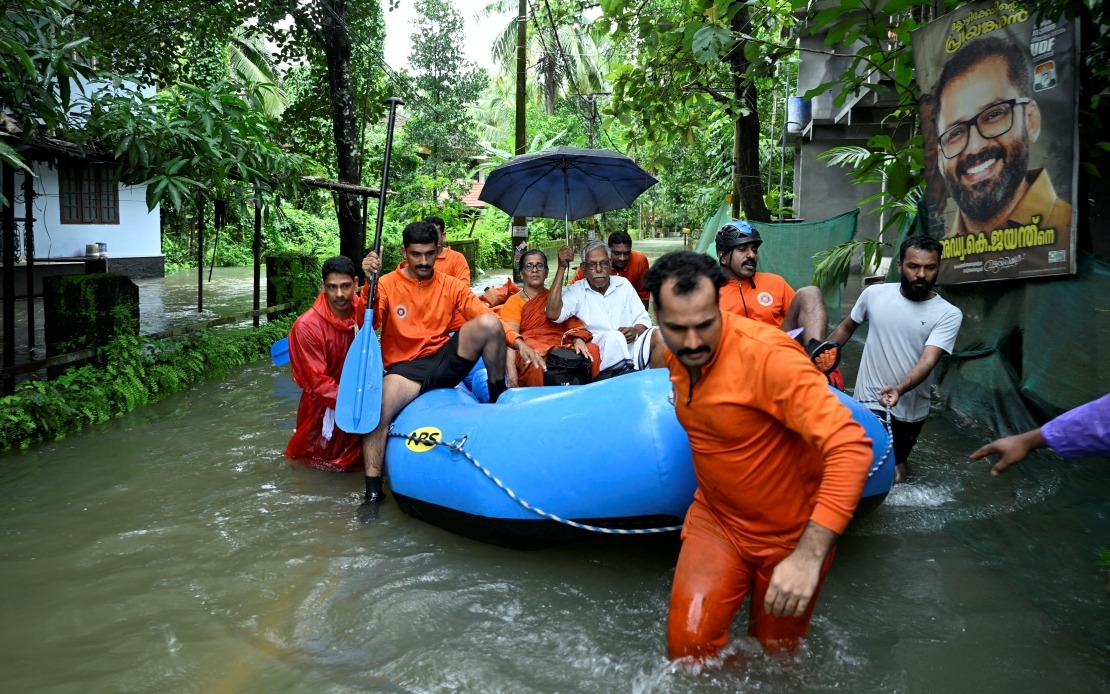
Kerala's struggle against incessant rainfall has turned catastrophic, with the southwestern Indian state reporting 26 fatalities from weather-related incidents as of Wednesday. The mounting casualty figures reflect the severity of the monsoon deluge sweeping through the region, which has simultaneously left 11 people injured and another four unaccounted for. Chief Minister V D Satheesan disclosed these grim statistics during a media address following high-level consultations on the unfolding disaster, underscoring the state administration's efforts to coordinate response mechanisms across affected districts.
The scale of displacement has proven equally alarming, with approximately 27,048 residents driven from their homes by the relentless downpour. To accommodate this sudden surge of homeless individuals, Kerala has established 462 relief camps spanning the length and breadth of the state. These temporary shelters have become crucial lifelines for displaced families who lost access to their residences either through inundation or structural damage caused by flooding and associated hazards. The logistical challenge of managing such a dispersed relief operation highlights the strain placed on state resources during rapid-onset disasters.
Beyond immediate human casualties and displacement, the agricultural sector faces substantial losses that will have rippling effects across Kerala's rural economy. The Chief Minister reported that crop damage has affected 1,882 hectares of agricultural land, impacting the livelihoods of 23,537 farming families. These smallholder cultivators, already vulnerable to climate variability, now face the dual burden of destroyed harvests and uncertain recovery prospects. The agricultural damage underscores how monsoon crises in India extend far beyond dramatic rescue operations, fundamentally disrupting food security and income streams for rural communities dependent on seasonal cultivation cycles.
In response to the mounting crisis, Satheesan announced a comprehensive relief package designed to assist affected populations. The enhanced compensation scheme targets families bereaved by the flooding, those who experienced complete loss of residential property, and households whose personal possessions were destroyed. Such financial interventions, while necessary, often fall short of fully addressing the complex trauma and economic displacement triggered by major natural disasters. Policymakers must grapple with balancing immediate relief disbursement against longer-term rehabilitation investments that would enable sustainable recovery.
The India Meteorological Department has cast a sobering shadow over recovery efforts by issuing an orange weather alert for Wednesday, signalling that the worst may not yet have passed. Official forecasts predict widespread rainfall across Kerala, coastal Karnataka, and Telangana from August 5 through August 11, suggesting that at least one additional week of heavy precipitation awaits the region. This extended forecast implies that existing infrastructure may face further strain and that rescue operations could be prolonged considerably beyond initial expectations.
Northern Kerala districts have borne the brunt of the meteorological onslaught, with areas surrounding Kozhikode and Kannur experiencing sustained heavy rainfall since August 1. The geography of these regions, characterised by high-range terrain and river systems with limited capacity during monsoon peaks, has amplified the disaster's severity. Flooding has triggered secondary hazards including landslides that have isolated communities and destroyed critical transport links. In many low-lying localities, floodwaters remain elevated, leaving thousands of residential structures waterlogged and uninhabitable.
For Malaysian observers, Kerala's predicament offers sobering lessons about climate vulnerability in densely populated, monsoon-affected regions. Southeast Asia, sharing similar geographic and meteorological characteristics with Kerala, faces comparable flood risks during peak rainfall seasons. The Indian state's experience demonstrates how rapid urbanisation and inadequate drainage infrastructure can compound natural hazards. Furthermore, Kerala's predominantly agricultural hinterland mirrors conditions across rural Malaysia, suggesting that monsoon failures here could similarly devastate farming communities and threaten national food security.
The coordination challenges evident in Kerala's response underscore the importance of pre-disaster institutional preparedness. Managing 462 simultaneous relief operations requires sophisticated logistics, clear command structures, and pre-positioned resources. Malaysia's own disaster management architecture, while relatively advanced, faces similar scaling challenges during large-scale events. The Kerala example suggests that investment in early warning systems, evacuation planning, and decentralised relief capacity serves as cost-effective insurance against catastrophic scenarios.
Longer-term recovery in Kerala will demand substantial reconstruction investment and careful attention to building resilience against future monsoon extremes. Climate scientists project that changing precipitation patterns may intensify rainfall peaks in South Asian monsoon regions, potentially making events like Kerala's current crisis more frequent. For the region spanning from South Asia through Southeast Asia, this reality necessitates fundamental rethinking of infrastructure design, land-use planning, and emergency preparedness frameworks. Without such preventive adaptation, communities will remain perpetually reactive rather than proactive in addressing climate-modulated disasters.

