Malaysia's Ministry of Human Resources has unveiled a comprehensive response to labour market disruptions stemming from the global supply chain crisis, committing to retrain affected workers through accredited Technical and Vocational Education and Training courses. Minister Datuk Seri R. Ramanan announced the initiative during ceremonies in Johor Bahru on June 23, addressing growing concerns about employment stability in sectors facing operational pressures from international logistics challenges and shifting manufacturing patterns.
The programme targets workers displaced from three critical economic sectors: services, manufacturing, and construction. These industries have faced particular headwinds from ongoing supply chain volatility that has persisted since the COVID-19 pandemic, with many companies restructuring operations and workforce requirements. By offering reskilling pathways, KESUMA aims to prevent long-term unemployment and help affected workers transition into emerging job categories aligned with Malaysia's economic transformation priorities.
Beyond classroom training, the ministry will facilitate employment placement through the Social Security Organisation's MYFutureJobs platform, a digital labour exchange that connects job seekers with available positions across multiple sectors. The approach incorporates active job matching services designed to ensure workers receive suitable placement opportunities reflecting their newly acquired skills and existing experience. This integration of training with employment services represents a more holistic intervention than traditional upskilling programmes, reducing the period between skill acquisition and labour market re-entry.
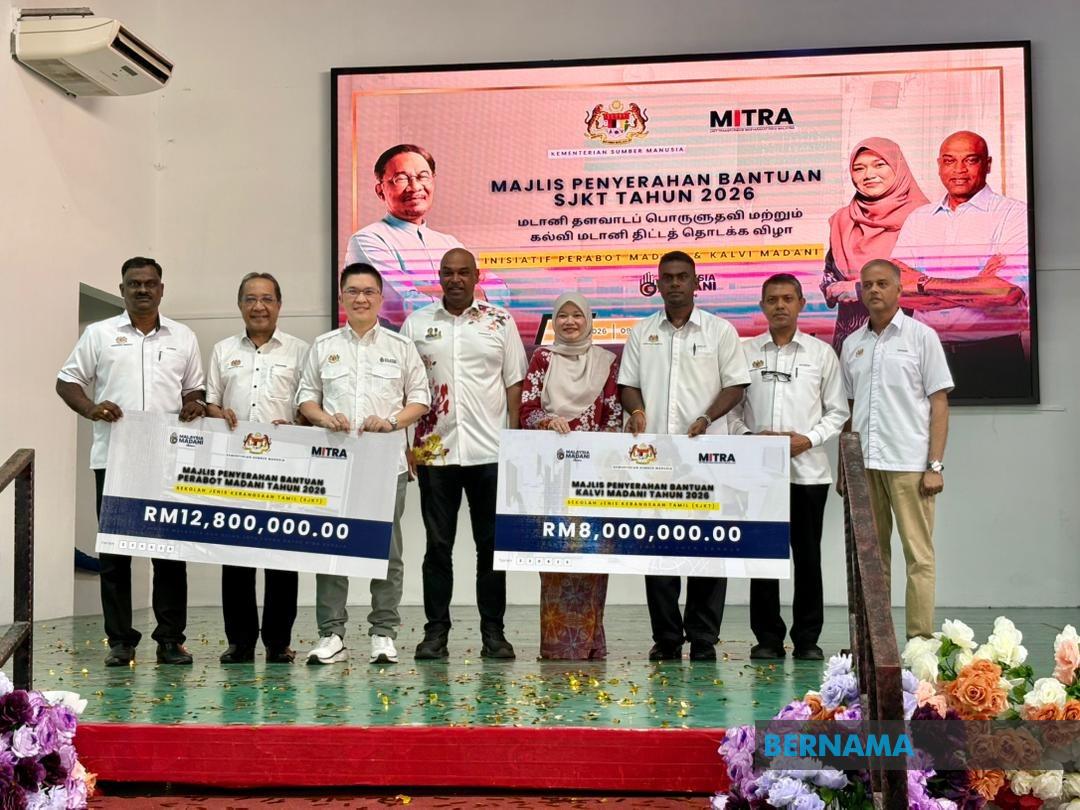
Simultaneously, KESUMA announced the launch of the MADANI Furniture Initiative targeting Tamil vernacular schools, addressing long-standing infrastructure gaps in these educational institutions. The RM12.8 million programme will supply high-quality furniture and learning equipment to 361 government-aided Tamil schools, benefiting approximately 39,692 pupils and 5,290 teachers. The initiative represents official recognition that vernacular schools serving Malaysia's Indian community face resource constraints limiting educational quality and student learning outcomes.
The furniture deployment spans multiple months beginning June through August, introducing fourteen different types of items including desks, seating, storage cabinets, and cooling fans into classrooms. These material improvements address basic environmental conditions necessary for effective teaching and learning, from ergonomic furniture supporting student posture during extended study sessions to ventilation equipment essential in Malaysia's tropical climate. Such infrastructure investments often receive insufficient priority in government budgeting despite their measurable impact on student concentration, attendance rates, and academic performance.
Complementing the furniture initiative, the RM8 million KALVI MADANI Programme targets the educational and welfare needs of Indian pupils attending vernacular schools. The scheme encompasses multiple intervention streams including subsidised tuition classes, nutritional support programmes addressing malnutrition concerns that disproportionately affect lower-income student populations, distribution of learning technology devices facilitating digital education access, and teacher welfare initiatives recognizing educator morale and compensation challenges. The programme specifically targets 10,410 Indian pupils enrolled across 315 selected Tamil schools, representing strategic focus on communities where educational attainment gaps remain pronounced.
The education initiatives reflect broader government policy toward vernacular education within Malaysia's multilingual schooling framework. Tamil vernacular schools serve as cultural and linguistic anchors for the Indian Malaysian community while providing educational pathways for students whose home language is Tamil. However, these institutions have historically received proportionally less public investment compared to national schools, contributing to infrastructure deficits and educational outcome disparities that compound socioeconomic disadvantages faced by many enrolled students.
Education Minister Fadhlina Sidek and Deputy Education Minister Wong Kah Woh participated in the initiative launch, signaling inter-ministerial commitment to improving vernacular school conditions. This collaborative approach between the Human Resources Ministry and Education Ministry suggests coordinated government strategy around skills development and educational equity, though implementation effectiveness depends on sustained resource allocation and administrative capacity across multiple agencies.
The supply chain retraining and vernacular school support initiatives illustrate Malaysia's multifaceted approach to economic disruption and social cohesion. Rather than viewing labour displacement and educational infrastructure as separate policy challenges, the government increasingly recognises interconnections between workforce preparedness, educational quality, and inclusive economic participation. For Malaysian readers, these programmes signal policy recognition that economic transformation creates both winners and displaced workers requiring active state intervention, while vernacular education communities merit sustained investment in institutional capacity.
The effectiveness of the TVET upskilling programme will depend on course quality, trainer competence, and alignment between training curricula and actual labour market demand across services, manufacturing, and construction sectors. While vocational education traditionally faces perception challenges in Malaysia's education hierarchy favouring academic credentials, genuine labour shortages in skilled trade occupations and technical roles create genuine employment opportunities for motivated graduates. Success requires sustained employer engagement in curriculum design and placement partnerships ensuring training remains responsive to evolving industry needs rather than perpetuating mismatches between graduate skills and available positions.