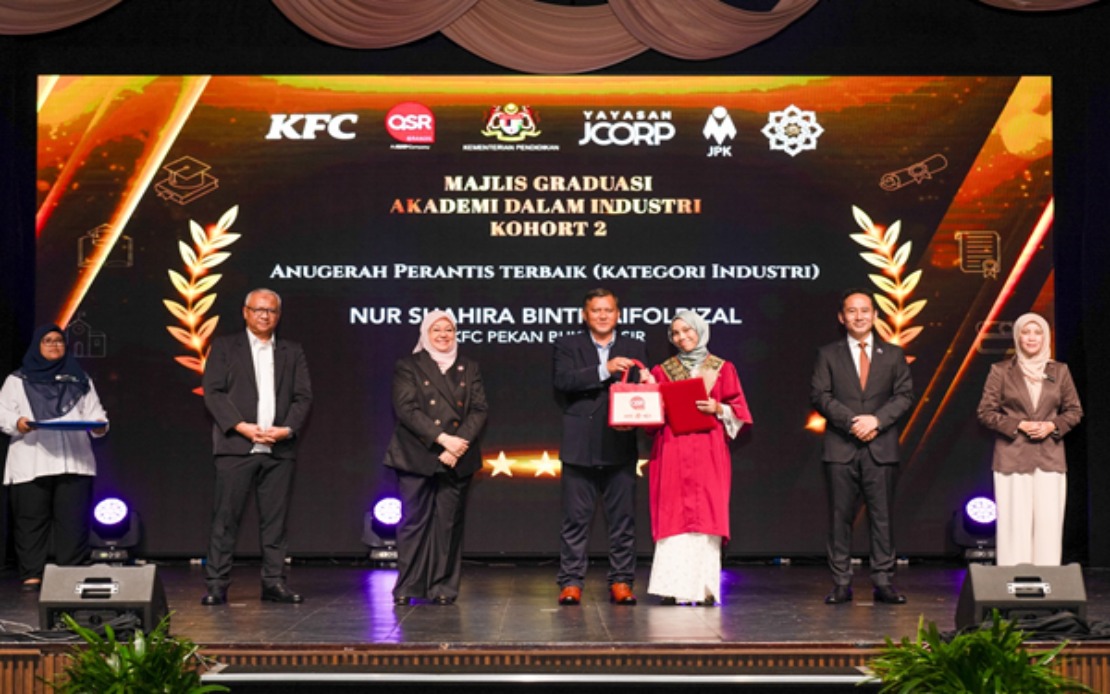
The Applied Dual Intervention (ADI) programme has produced its second cohort of 37 skilled graduates in collaboration between QSR Brands, KFC Malaysia, and Yayasan JCorp, cementing the partnership's role in reshaping Malaysia's approach to workforce development. This second intake follows the initial group of 23 students who completed their industrial training in March 2025, elevating the cumulative total of programme graduates to 60 and demonstrating sustained momentum in what has become a flagship model for vocational education in the quick-service restaurant sector.
The ADI initiative represents a deliberate shift in Malaysia's technical and vocational education landscape, merging classroom instruction with genuine workplace experience in a structured apprenticeship format. By positioning students within actual KFC restaurant operations in Johor Bahru, the programme ensures that theoretical knowledge gained through the vocational syllabus for Fast Food Preparation and Service translates directly into competency applicable on the job. This immersive approach addresses a longstanding gap in Malaysia's TVET sector, where critics have frequently highlighted the disconnect between institutional training and industry requirements.
Ministry of Education Technical and Vocational Education and Training director Zulkernai Fauzi endorsed the programme as a benchmark for industry-education collaboration, signalling government backing for this integration model. His remarks suggest that the Ministry sees the ADI approach as replicable across other sectors and educational institutions, potentially influencing policy direction for technical and vocational training nationwide. Such endorsement carries weight in Malaysia's education ecosystem, where government validation can accelerate adoption and provide institutional credibility.
The second cohort's performance metrics reveal substantial achievement. A perfect 100 per cent pass rate in Vocational Stream Subjects (MPAK) alongside Malaysian Skills Certificate (SKM) Level 2 and Level 3 certifications indicates rigorous curriculum delivery and student commitment. The 95 per cent SPM examination pass rate further demonstrates that the dual-track model does not compromise academic standards while developing vocational competencies. Each graduate earned five distinct qualifications, creating a comprehensive credentials portfolio that enhances employability across multiple recognition frameworks.
Yayasan JCorp chairman Rozaini Mohd Sani framed the programme within a broader social mobility narrative, emphasizing how the ADI initiative enables young people from diverse socioeconomic backgrounds to gain practical skills and self-confidence. This inclusive dimension addresses Malaysia's ongoing challenge of ensuring equitable access to quality training opportunities beyond major urban centres and traditional educational pathways. For youths in smaller cities like Johor Bahru, the programme offers a tangible alternative to migration toward Kuala Lumpur or overseas employment.
QSR Brands chief human resources officer Dr Sharifah Musainah Syed Alwi articulated the distinction between certificate presentation and genuine skill acquisition, underscoring that graduates have functioned within authentic restaurant environments managing actual operational demands. This emphasis on real-world competency rather than credentials alone reflects industry thinking that Malaysia's skills shortage stems partly from qualification inflation without corresponding practical capability. The programme deliberately counters this by validating students who have demonstrated sustained performance in commercial settings.
The curriculum exposed students to restaurant operations, customer service protocols, food preparation techniques, and workplace compliance standards—a comprehensive skill set spanning technical, interpersonal, and professional dimensions. This multi-faceted training addresses employer feedback indicating that quick-service restaurant positions require employees capable of managing diverse responsibilities simultaneously. The curriculum design therefore reflects industry input and practical labour market conditions.
The programme's institutional pedigree strengthens its credibility within Malaysia's education and employment ecosystems. Launched in June 2023 through collaboration between KFC Malaysia, the Department of Skills Development under the Ministry of Human Resources, and the Ministry of Education, the ADI initiative commands support from multiple government entities. This multi-ministry backing suggests strategic alignment at policy levels and reduces risk that programme advantages might be viewed as isolated corporate initiatives rather than systemic reforms.
The graduation ceremony incorporated recognition awards—Best Apprentice Award categories for both industry and SPM performance, plus a Best Apprenticeship Documentation Award—acknowledging standout achievement and creating aspirational benchmarks for future cohorts. Such recognition ceremonies amplify positive messaging around TVET pathways and potentially influence peer perception of technical education within school communities, where vocational routes often carry lower prestige than academic streams despite greater labour market demand.
For Malaysian employers facing persistent skills shortages in hospitality and food service sectors, the ADI programme offers a recruitment pipeline of pre-trained, certified candidates requiring minimal onboarding. This employer benefit reinforces economic rationality for continued corporate participation, distinguishing the programme from corporate social responsibility initiatives lacking direct business benefits. QSR Brands' sustained commitment thus reflects both social responsibility and talent acquisition strategy alignment.
The programme's expansion trajectory—from 23 to 60 graduates across two cohorts within approximately 18 months—indicates scalability potential, though implementation constraints merit consideration. Dedicating restaurant facilities to training, assigning supervisory oversight, and maintaining curriculum delivery requires resource commitment beyond typical hiring processes. Sector-wide replication would demand competing employers coordinate training burdens or government subsidy to offset costs, suggesting that rapid expansion faces practical constraints despite policy enthusiasm.
Within Southeast Asia's broader development context, Malaysia's ADI model addresses labour force quality challenges common across the region. As automation intensifies pressure on low-skill employment, Thailand, Indonesia, and the Philippines confront similar needs for upskilled hospitality workforces. Malaysia's demonstrated success in marrying corporate investment, government coordination, and educational reform may offer a replicable regional template, potentially positioning Malaysian TVET approaches as exportable technical expertise.
Looking forward, programme sustainability depends on demonstrating genuine employment outcomes for graduates and measurable returns for employer partners. The initial cohorts' labour market absorption rate, wage trajectories, and career progression within KFC Malaysia or competing firms will determine whether the ADI model becomes permanent infrastructure or successful demonstration project. Government and industry stakeholders monitoring these outcomes will inform decisions on expansion funding and policy incentives for similar initiatives across other vocational domains.

