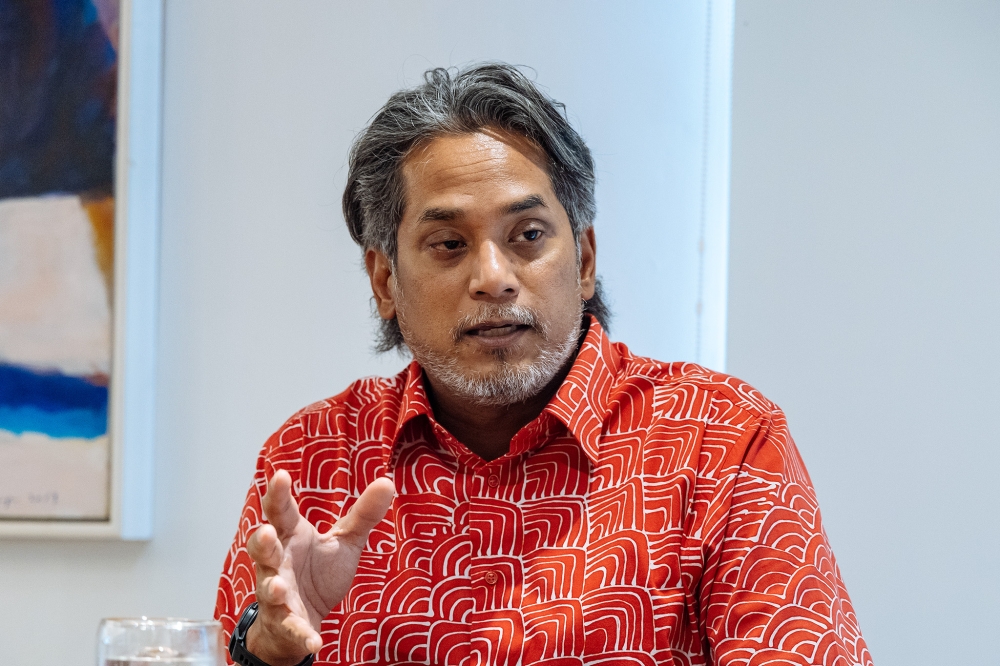
Seremban insiders suggest that Khairy Jamaluddin, the high-profile former leader of Umno's youth wing, has entered the frame as a potential representative for the Rembau state assembly seat under the Barisan Nasional banner. The prospect of his nomination has triggered wider discussion about his longer-term political trajectory in Negeri Sembilan, with party figures speculating whether a state legislative seat could serve as a launching pad for higher office.
The positioning of Khairy at the state level marks a notable shift for a politician who has commanded considerable influence within federal party structures. His previous roles have established him as a significant figure in Umno's internal machinery, giving him both credibility and organisational reach across the peninsula. Any move to contest at the state assembly level would represent a recalibration of his political base, potentially strengthening his standing in Negeri Sembilan politics where Barisan Nasional remains a formidable force.
Negeri Sembilan holds particular strategic importance in the broader Malaysian political landscape. The state has been a consistent Barisan stronghold, and control of its state government carries implications for the coalition's overall parliamentary positioning. Should Khairy secure the Rembau nomination and win the seat, his elevation within state politics could accelerate rapidly, especially given his seniority and track record in party management.
The speculation regarding a potential chief minister candidacy reflects deeper calculations within Barisan Nasional circles about succession planning and political viability. The menteri besar post represents considerable executive authority at state level, overseeing development portfolios, state revenues, and direct engagement with local constituencies. For an experienced operator like Khairy, such a position would provide both a platform for demonstrating governance capacity and a base from which to influence broader party strategy.
Khairy's political profile offers distinct advantages for Barisan in Rembau and beyond. His communications skills and relative youth compared to many senior coalition figures position him to appeal to diverse voter demographics. His background in policy discussion and strategic thinking aligns with contemporary expectations for state-level leadership, particularly in an era where voter sophistication has increased substantially across Malaysian constituencies.
However, any Barisan nomination strategy involving Khairy must account for internal party dynamics within Umno and among coalition partners. State-level candidacies are rarely decided in isolation; they reflect negotiations across multiple power centres within the broader coalition framework. The timing of such a move would also carry significance, as it could signal shifting priorities in how Barisan allocates its strongest candidates across federal and state contests.
The Rembau constituency itself represents a meaningful electoral battleground. Located in the heart of Selangor's neighbouring state, the seat carries demographic and economic characteristics that make it strategically valuable. A politician of Khairy's stature winning such a seat would substantially reshape the competitive landscape in Negeri Sembilan politics and potentially influence how other parties approach their candidate selection in the state.
For Malaysian political observers, the possibility of Khairy's nomination highlights broader patterns in how established politicians navigate their careers across different levels of government. Rather than remaining confined to federal structures, senior figures increasingly seek territorial bases at state level, using them as platforms for enhanced influence and positioning. This trend reflects the maturation of Malaysian federalism, where state governments command greater autonomy and resources than they historically did.
The connection drawn between a state assembly seat and the menteri besar position underscores how Malaysian state politics functions as an integrated system. Chief ministers typically emerge from the ranks of sitting state assemblypeople, making initial legislative nomination the critical first step in any trajectory towards executive office. For Khairy, securing the Rembau ticket would represent the beginning rather than the culmination of a state-level political journey.
Barisan Nasional's calculations regarding candidate placement in Negeri Sembilan must also account for the broader regional political environment. Selangor, Kuala Lumpur, and Putrajaya's proximity to Negeri Sembilan creates overlapping political influences and voter attention patterns. How the coalition deploys experienced figures like Khairy will influence perceptions of its strength across this crucial metropolitan region.
The timing of these discussions within Barisan structures remains unclear, but the emergence of Khairy's name in connection with Rembau signals active deliberation about the coalition's state-level positioning. Whether these considerations translate into formal nomination remains dependent on multiple variables, including party consensus, ground conditions in the constituency, and broader electoral calculations that will only fully crystallise as formal election processes approach.

