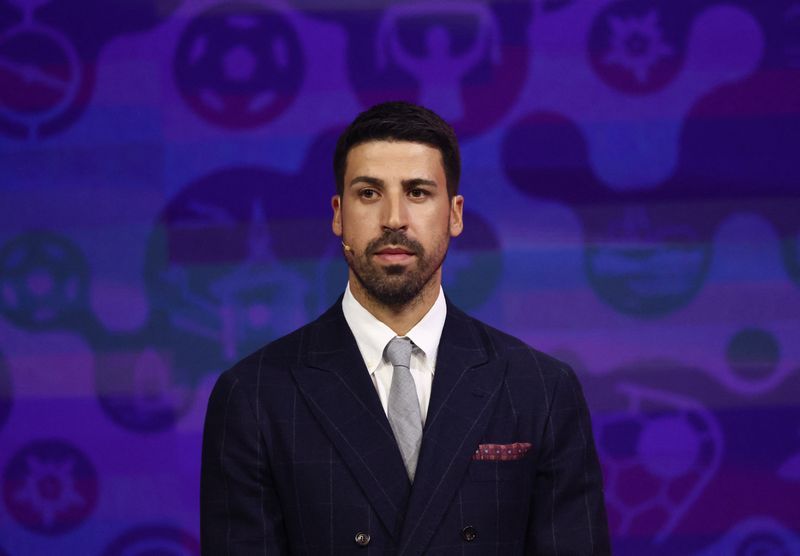
Sami Khedira, who won the World Cup with Germany in 2014, has weighed in on a distinctive phenomenon unfolding across global football: siblings representing opposing nations at international tournaments. The midfielder, whose own brother Rani plays for Tunisia at the World Cup, views the trend not as an identity crisis but as a powerful statement about contemporary sport and the families who populate it. Speaking at the Home of Football museum in New York, Khedira articulated a worldview increasingly common among footballers navigating multiple cultural inheritances.
For Khedira, the sight of brothers donning different national jerseys reflects something deeper than sporting ambition. His perspective stems from lived experience: born and raised in Germany to a German mother and Tunisian father, he has navigated the question of belonging throughout his career. When pressed on whether carrying two nations in his heart creates internal conflict, he rejected the premise entirely. Instead, Khedira frames dual nationality as an asset, a reflection of the interconnected world in which modern athletes operate. The notion that one must choose a single identity to claim authenticity, he suggests, misunderstands how millions of people actually live.
Khedira acknowledged that his own identity has been questioned from multiple directions. In Germany, his name and appearance occasionally prompted scepticism about his German credentials, while in Tunisia he might be perceived primarily as an outsider. Rather than viewing these tensions as problematic, he treated them as inevitable consequences of straddling two worlds. His conclusion was straightforward: both identities are equally valid and can coexist naturally. This perspective carries particular relevance across Southeast Asia and the broader region, where migration, intermarriage, and diasporic communities create similar questions of belonging among young athletes.
The 2026 World Cup will showcase at least eight pairs of brothers competing internationally, with four playing alongside each other and four representing different nations. The cases are diverse and instructive. Iñaki and Nico Williams represent perhaps the most visible example: both play for Athletic Bilbao at club level but have chosen competing international paths, with Iñaki representing Ghana and Nico representing Spain. Similarly, Guela and Désiré Doué are split between Ivory Coast and France, a division that proved emotionally resonant when both sang their respective national anthems before a friendly match between their countries this month. Other pairs include the Souttar brothers, divided between Australia and Scotland; Derrick Luckassen and Brian Brobbey, who compete for Ghana and the Netherlands respectively despite sharing maternal heritage; and multiple sibling pairs from smaller football nations.
Khedira found profound beauty in the image of the Doué brothers performing both anthems before their nations faced off. The moment, he reflected, captured something far larger than football itself—a visual representation of how sport can embody the genuine complexity of modern identity. He emphasised that this multicultural dimension carries a powerful message globally, particularly given football's outsized cultural influence. In regions like Southeast Asia, where many nations have significant diaspora communities and where club football draws players from across the world, such imagery resonates with millions navigating similar questions of national belonging and familial divided loyalties.
Khedira also highlighted how the expanded 48-team World Cup format has enabled emerging footballing nations to compete on football's grandest stage. Countries such as Cape Verde, Curaçao, and Haiti now have genuine opportunities to prove themselves against traditional powerhouses. This structural change has broader implications for global football development, allowing smaller nations to build competitive experience and attract investment in local infrastructure. Additionally, Khedira observed that African and Asian teams have been progressively narrowing the historical gap that once separated them from European and South American dominance. Improved coaching, education systems, and institutional investment have begun to yield measurable results on the pitch.
Yet Khedira advocated for greater responsibility from established footballing nations. Europe, in particular, benefits tremendously from dual-nationality players who strengthen national squads while maintaining connections to their heritage countries. This relationship, he suggested, should be reciprocal. Rather than simply harvesting talented players from emerging nations through ancestry rules, established footballing countries bear an obligation to invest in development at source. Such support—whether through coaching exchanges, infrastructure assistance, or competitive opportunities—represents a moral dimension to the global game that transcends commercial interest.
The most challenging aspect of international football's multicultural landscape, according to Khedira, falls upon young players themselves. Teenagers frequently find themselves courted by multiple federations, pressured to commit to nations before they have fully matured or understood the implications of such decisions. The choice cannot and should not be dictated by politics, parental heritage, or external pressure alone. Instead, Khedira argued, the decision must emerge from an internal compass—a gut feeling that pulls an individual toward one national community over others. He reflected on his own decision at eighteen, describing it as genuinely difficult despite feeling like the right choice.
Khedira acknowledged speaking respectfully with Tunisia's football federation during his own career considerations, recognising that such conversations deserve dignity and candour. However, he stressed that no external force should manipulate young players into decisions they are not emotionally prepared to make. The pressure placed on teenagers to commit their international futures represents a genuine hardship in modern football, one that affects not only players themselves but their families and the nations competing for their talents. His comments suggest that the beautiful game, for all its global reach and commercial sophistication, still grapples with deeply human questions about identity, loyalty, and belonging that no rulebook can adequately address.