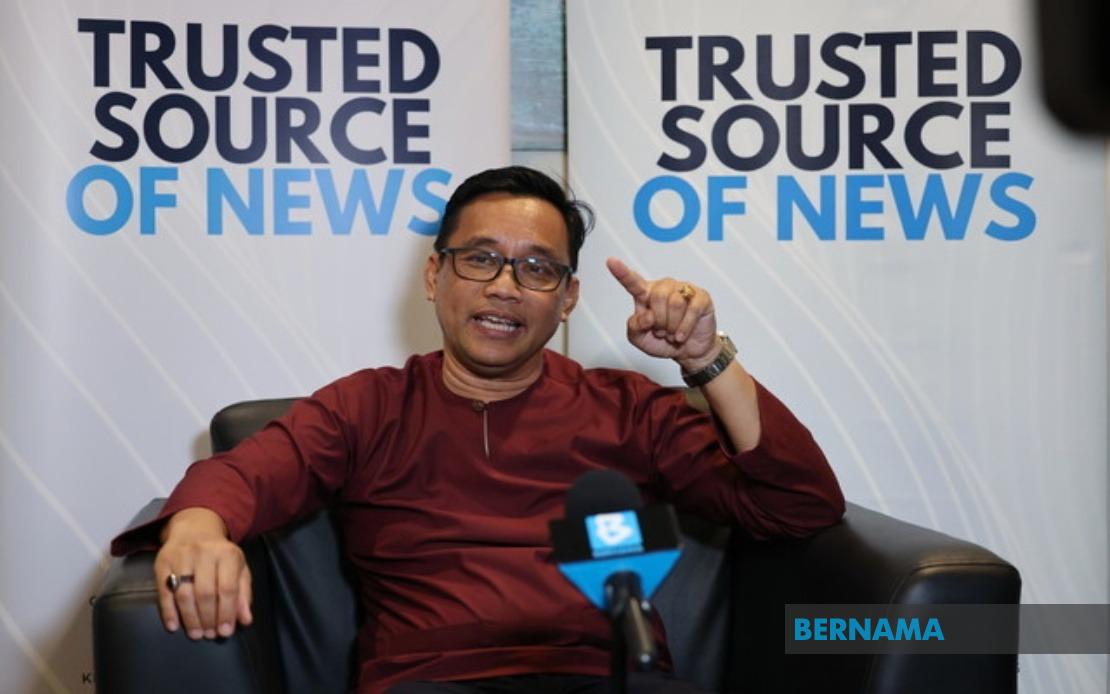
Mohd Khuzzan Abu Bakar, the Pakatan Harapan candidate for Semerah in the upcoming 16th Johor state election, frames his political comeback not as an attempt to avenge his previous loss but as an unfinished chapter in public service. Having tasted electoral victory before losing the seat in the most recent state polls, the 58-year-old is stepping forward with a tangible agenda: to resurrect and complete development projects that stalled when his coalition departed from state government in 2020. His return to electoral politics centres on a straightforward premise — that voters deserve the benefits they were promised, regardless of political circumstances beyond their control.
The former Johor Youth, Sports, Culture and Heritage Committee chairman has identified several immediate priorities that speak to concrete community needs in his constituency. Foremost among these is the restoration of the Taman Sri Sulong Youth Mini Complex, a facility designed to serve the district's younger residents. Beyond infrastructure, Khuzzan is addressing endemic challenges that have plagued Semerah residents for years, particularly chronic water supply problems affecting households and the recurring flash floods that devastate Batu Pahat and Tanjung Laboh during heavy rainfall. These are not novel concerns but persistent issues that have accumulated during the three-year interim, making their resolution a credible campaign focal point.
Khuzzan's personal connection to the constituency adds an emotional dimension to his political narrative. Born in Jalan Mesjid, Batu Pahat, and married to a Semerah native, he positions himself not as a distant politician parachuted into the district but as someone with genuine community roots. This biographical grounding is particularly relevant in Malaysian politics, where perceived localness and family ties to a constituency carry significant voter weight. His willingness to contest again despite his previous defeat demonstrates either confidence in changed political conditions or determination to serve beyond electoral convenience — a distinction that voters will assess during the campaign.
Economic rejuvenation forms another pillar of Khuzzan's platform, reflecting broader pressures facing voters in a state increasingly shaped by investment and technological advancement. He proposes generating more employment opportunities for young people, acknowledging that Johor's economic transformation creates both promise and anxiety among residents concerned about whether growth benefits will reach their communities equitably. Drawing on his background as a former banking officer, Khuzzan brings sector-specific expertise to discussions about financial literacy and business expansion, positioning himself as someone who understands corporate finance and government support mechanisms beyond theoretical knowledge.
A notable aspect of Khuzzan's campaign approach is his acknowledgement of how electoral competition has fundamentally changed. Rather than dismissing digital engagement as peripheral, he has embraced social media platforms including TikTok, Instagram and Threads as essential campaign infrastructure. The fact that he has attracted senior citizen followers on TikTok surprised him personally, yet it reflects a genuine demographic reality: digital platforms have transcended age barriers in Malaysia, and candidates ignoring these channels forfeit opportunities to communicate directly with voters across generations. This strategic pivot suggests a campaign that has learned from previous electoral cycles about voter communication preferences.
Ground-level engagement complements the digital strategy. Khuzzan has organised youth-focused activities ranging from e-sports and sepak takraw to carrom tournaments, while simultaneously introducing exposure programmes on artificial intelligence and digital technology. This bifurcated approach attempts to meet voters where they are — providing immediate recreational engagement for some while offering forward-looking skills development for others. The emphasis on AI and digital literacy particularly resonates in the Malaysian context, where government rhetoric consistently emphasises technology-driven economic transition yet younger voters often lack structured access to such knowledge.
The candidate's proposals for small and medium enterprise support warrant closer examination as they address a chronic gap in Malaysia's support ecosystem. Khuzzan suggests that funding programmes through TEKUN Nasional and Amanah Ikhtiar Malaysia, while valuable, often leave entrepreneurs underequipped for sustained financial management. His proposal for structured, ongoing guidance to complement initial funding acknowledges a reality many business owners face: securing capital represents only the beginning; navigating cash flow, tax obligations, and growth financing proves equally challenging. This focus on sustainable entrepreneurship rather than mere loan distribution demonstrates practical understanding of business dynamics in the constituency.
The electoral mathematics for Semerah reveal both opportunities and challenges. With 47,431 registered voters, the constituency contains a substantial youth demographic — approximately 37.4 percent are aged between 18 and 39, suggesting that candidates' ability to communicate technology and employment-focused policies will significantly influence results. The 2022 outcome saw Barisan Nasional's Mohd Fared Mohd Khalid prevail with a majority of 4,041 votes, a margin neither insurmountable nor insignificant. Khuzzan's path to victory requires energising this younger voter cohort while reclaiming support from the broader electorate, particularly among middle-income households affected by water and flood issues.
Khuzzan's confidence appears anchored in perceived momentum during the campaign, particularly encouragement from lower-income voters and e-Kasih recipients — the B40 group that represents a constituency segment concentrated in the state's lower-income neighbourhoods. These voters frequently prioritise material improvements over ideological messaging, making Khuzzan's emphasis on completed projects and infrastructure restoration strategically sound. Whether this reported enthusiasm translates into actual electoral support will depend on whether voters genuinely believe Pakatan Harapan's renewed opportunity in state government would prioritise these constituencies against competing demands.
The 16th Johor state election itself presents a distinct political moment compared to the 2022 polling cycle. The intervening period has witnessed shifting state-level dynamics, evolving voter preferences following post-pandemic recovery, and potentially altered expectations about what state government can deliver. Khuzzan anticipates higher voter turnout than previously recorded, including diaspora voters working in Singapore — a practical expectation given that polling on July 11 falls during a period when Johoreans employed across the causeway might arrange leave to vote. This constituency includes economically mobile voters whose migration patterns and employment circumstances have changed since the previous election.
The broader context of 172 candidates competing for 56 seats across Johor indicates a crowded political marketplace where candidate differentiation becomes critical. Khuzzan's strategy attempts this differentiation through specific project completion commitments, digital campaign sophistication, and personal constituency connection. However, he operates within a state political context where Barisan Nasional currently holds the administration, requiring him to overcome incumbent advantages while articulating why his coalition deserves restored opportunity. The election scheduled for July 11, with early voting on July 7, will determine whether voters accept his framing of his candidacy as unfinished business worth completing or view it as yesterday's politics attempting to reclaim yesterday's power.

