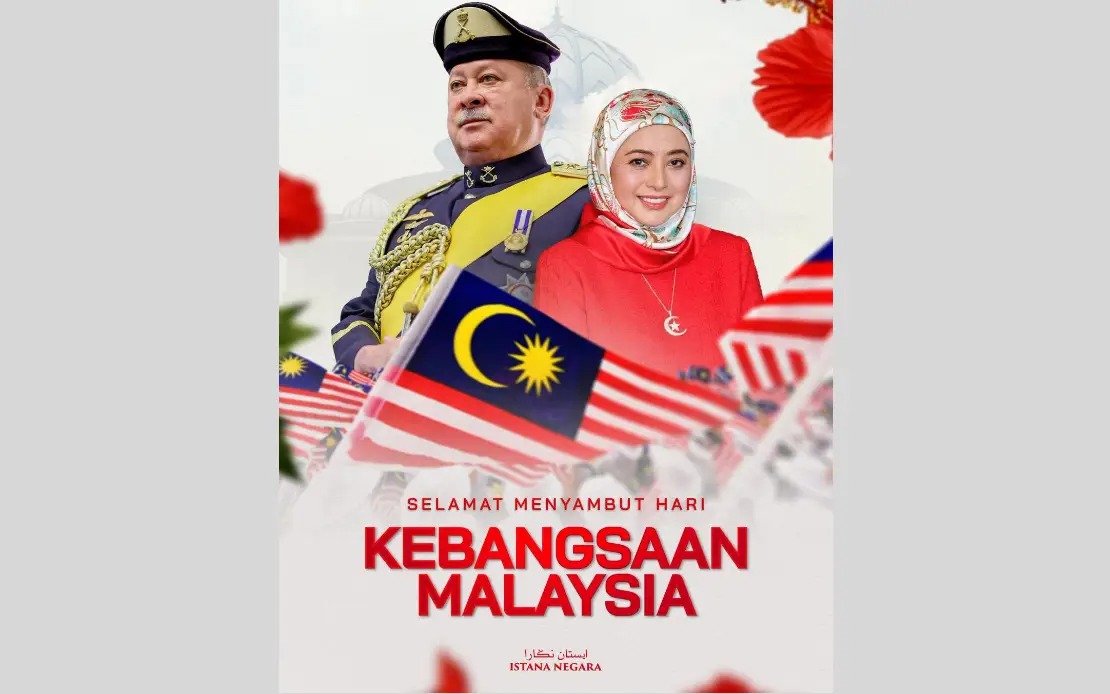
Sultan Ibrahim and Raja Zarith Sofiah, Malaysia's Yang di-Pertuan Agong and Queen, have sent their National Day greetings to the nation as it commemorates its 69th year of independence. The royal message, shared via the King's official Facebook platform, underscores the continuing bond between the monarchy and the Malaysian people during this significant annual observance.
The royal couple arrived at the main National Day celebration held in Putrajaya at 8 am, where they were formally received by Prime Minister Datuk Seri Anwar Ibrahim accompanied by his wife Datuk Seri Dr. Wan Azizah Wan Ismail. Communications Minister Datuk Seri Fahmi Fadzil, who chairs the Main Committee overseeing National Day and Malaysia Day observances through 2026, was also present for the reception. This high-level attendance reflects the ceremonial importance placed on the occasion within Malaysia's political and constitutional framework.
Central to this year's celebration is the theme "Malaysia MADANI: Kesejahteraan Dinikmati", which translates to enjoying shared prosperity. This framing connects the current administration's governance vision to the broader national narrative, emphasising that advancement must translate into tangible improvements in citizens' quality of life. The MADANI framework, introduced by the Anwar Ibrahim government, positions itself as distinct from previous policy approaches by prioritising inclusive development and social wellbeing across all demographic groups.
The festivities commenced with formal military pageantry, establishing the ceremonial tone that characterises Malaysia's National Day observances. What followed was a carefully choreographed sequence of cultural performances and a vibrant procession that sought to encapsulate the nation's diversity and forward-looking aspirations. These performances typically blend traditional Malaysian art forms with contemporary expressions, creating a visual narrative that appeals to audiences spanning multiple generations and cultural backgrounds.
The scale of the parade demonstrated the logistical coordination required for such national events. Approximately 10,819 participants marched across 76 separate contingents, each representing various government agencies, civil society organisations, and community groups. These contingents were accompanied by 22 brass bands providing musical accompaniment, creating a dynamic soundscape throughout the procession. The parade also featured 11 decorated vehicles, which often serve symbolic purposes in representing national themes or particular sectors of society.
Beyond ground-level participants, the celebration incorporated an impressive array of military assets. A total of 328 land, sea, and air assets participated in the display, ranging from ground vehicles to naval vessels and aircraft. Additionally, 112 service animals—typically comprising mounted police units and ceremonial horses—added another dimension to the pageantry. Notably, the organisers incorporated 22 electric vehicles into the parade, reflecting growing environmental consciousness in how Malaysia presents its national identity and commitment to sustainable practices.
A particularly innovative element was the human graphic display arranged across the terrace seating areas. This formation involved spectators and performers creating 26 distinct patterns that collectively illustrated Malaysia's multicultural character. Such displays require extensive coordination and rehearsal, as participants must maintain precise positioning to create coherent visual designs when viewed from elevated vantage points. This approach transforms the audience itself into active participants in the ceremonial narrative rather than passive observers.
The emphasis on Malaysia's multicultural identity within the celebration framework holds particular resonance given contemporary regional dynamics. Southeast Asia has witnessed increased attention to questions of social cohesion, religious harmony, and inclusive governance. Malaysia's public affirmation of its diversity through such high-profile national ceremonies serves multiple functions: it reaffirms constitutional commitments to pluralism, provides reassurance to minority communities, and projects an image of stability to international observers.
The choice to centre this year's celebration on the Malaysia MADANI concept suggests the government views National Day as an opportunity to reinforce its policy agenda and governance philosophy. By linking prosperity and wellbeing explicitly to diversity and inclusivity, the administration frames these not as competing values but as complementary elements of a coherent national strategy. This messaging becomes particularly significant in the context of broader Southeast Asian trends toward greater political polarisation and identity-based political competition.
For Malaysian citizens and regional observers, the participation of the monarchy in these proceedings carries constitutional and symbolic weight. The Yang di-Pertuan Agong's presence and delivery of greetings emphasise the continuing relevance of Malaysia's constitutional monarchy and its role as a unifying national institution transcending partisan political divisions. This ceremonial function remains significant even as Malaysia navigates complex questions about governance, economic development, and social integration.
The scale and sophistication of the Putrajaya celebration reflect substantial investment of both financial and organisational resources. Such events require months of planning involving multiple government agencies, security services, and civil society groups. The decision to continue this tradition annually, despite considerable expense, indicates official judgment that the symbolic value and national cohesion effects justify the outlay. From a regional perspective, Malaysia's ability to conduct such celebrations peacefully and inclusively distinguishes it from neighbours facing greater political fragmentation.
Looking forward, the establishment of the Main Committee overseeing National Day and Malaysia Day celebrations through 2026 suggests continuity in how these observances are organised and themed. The specific focus on Malaysia MADANI across multiple years indicates this concept will likely remain central to official national narrative and messaging through the medium term. This sustained emphasis provides opportunities for policies and programmes to develop along lines consistent with the stated philosophical framework.

