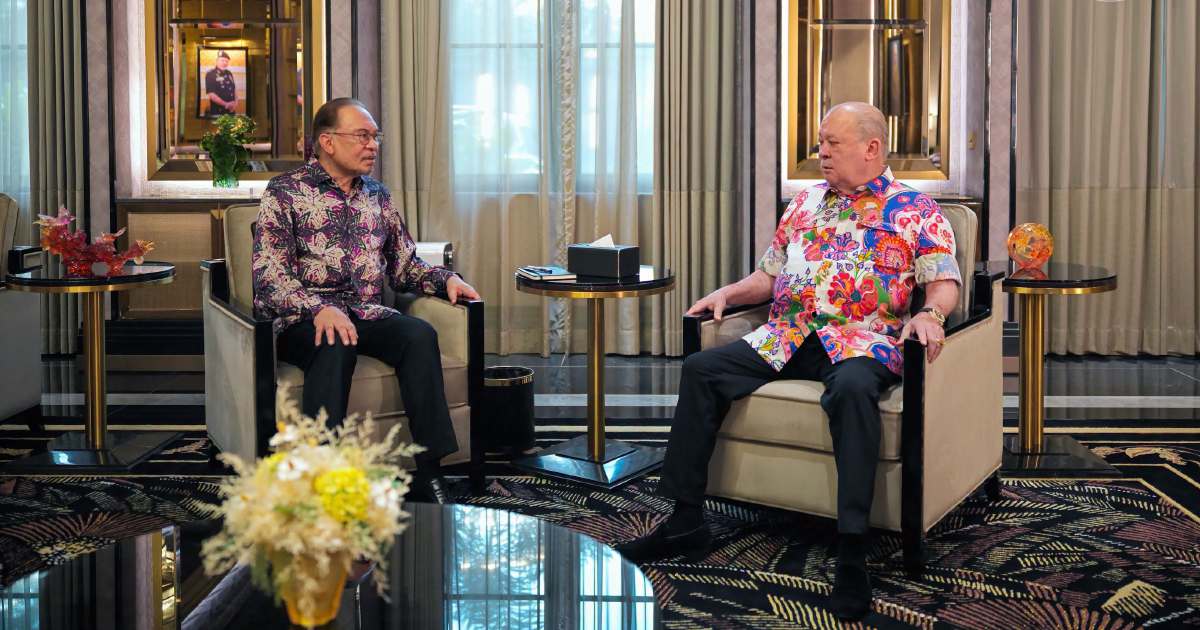
The King of Malaysia, Sultan Ibrahim Ibni Almarhum Sultan Ismail, formally received Prime Minister Datuk Seri Anwar Ibrahim in audience at the royal residence of Istana Bukit Tunku on Monday, marking a significant pre-Merdeka engagement between the nation's two highest-ranking officials. The scheduled audience took place as Malaysia prepared to mark its 69th year of independence, a milestone celebration that will see nationwide commemorative activities across the country.
The royal reception at the iconic palace, situated in the heart of Kuala Lumpur, underscores the constitutional framework of Malaysia's parliamentary monarchy, where formal interactions between the Sovereign and the head of government serve both ceremonial and strategic purposes. Such audiences typically provide opportunities for senior government officials to brief the King on important matters of state and policy developments affecting the nation.
As Malaysia approaches its annual National Day observance, these pre-celebration meetings have traditionally been occasions for the government to align on key messaging and national priorities for the forthcoming year. The timing of this particular audience reflects the significance accorded to the Merdeka period in Malaysia's political calendar, when constitutional matters, governance initiatives, and future policy directions are often emphasised.
The 69th National Day represents a significant historical juncture for the nation, which declared independence on August 31, 1957. Over nearly seven decades, Malaysia has evolved from a newly independent nation into a regional economic powerhouse with one of Southeast Asia's largest economies, though the country continues to navigate complex challenges ranging from religious and ethnic harmony to economic competitiveness and technological advancement.
Prime Minister Anwar Ibrahim, who has held the top executive position since November 2022, has emphasised themes of economic reform, anti-corruption measures, and inclusive governance since assuming office. His administration has pursued initiatives aimed at strengthening institutional accountability and addressing fiscal challenges inherited from previous administrations, while simultaneously seeking to maintain investor confidence and social stability across Malaysia's diverse population.
The audience with His Majesty provides a formal setting through which the Prime Minister can apprise the Crown on government performance metrics, upcoming policy initiatives, and strategic priorities that will guide the nation's trajectory. Such interactions remain central to Malaysia's system of governance, reflecting the constitutional role of the Yang di-Pertuan Agong as head of state and ceremonial guardian of the nation's fundamental principles.
National Day celebrations in Malaysia typically feature flag-raising ceremonies, military parades, cultural performances, and public events held simultaneously across federal territories and state capitals. These commemorations serve to reinforce national identity and shared values among Malaysia's multiethnic and multireligious population, comprising Malays, Chinese, Indians, and indigenous groups, each contributing distinct cultural elements to the nation's identity.
The significance of marking Merdeka through high-level government engagements extends beyond ceremonial formality, as it provides occasions for public reflection on national achievements and areas requiring continued attention. For Malaysia, which faces regional competition and evolving global dynamics, maintaining internal cohesion and demonstrating effective governance remain essential components of sustained national progress.
The royal audience also reflects the protocol and constitutional customs that have governed Malaysia's political system since independence. The monarch's receptiveness to meetings with the Prime Minister reinforces the institutional balance between the executive branch and the constitutional monarchy, a relationship that has remained relatively stable despite occasional constitutional debates and political transitions across Malaysia's post-independence history.
With the 69th National Day now at hand, the nation will gather to commemorate the declaration of independence that fundamentally transformed Malaysia's political status and international standing. The pre-Merdeka audience between the King and Prime Minister symbolises the continuity of institutional engagement and governmental commitment to national celebrations that unite Malaysians across regional, ethnic, and religious divides.
Looking forward, the audience serves as a reminder of the importance Malaysia places on maintaining constructive relationships between its constitutional institutions and elected government bodies. As the nation progresses beyond seven decades of independence, such ceremonial interactions and formal governmental engagement remain integral to Malaysia's political framework and its evolution as a functioning parliamentary democracy within Southeast Asia's diverse regional ecosystem.

