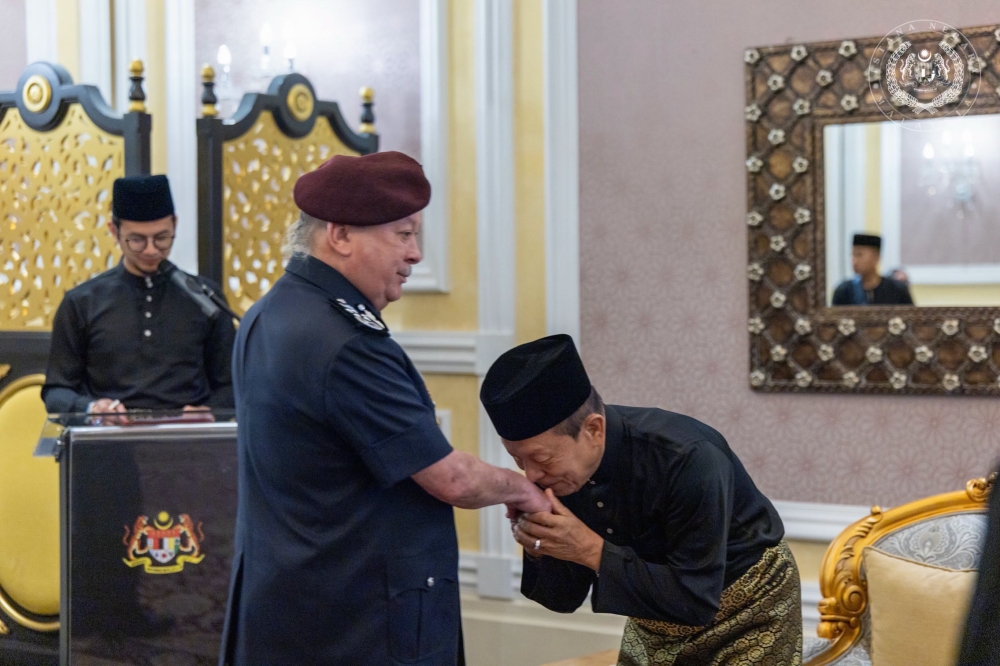
His Majesty Sultan Ibrahim, King of Malaysia, met with Malaysian Anti-Corruption Commission (MACC) chief Abdul Halim Hashim on July 14 to receive a comprehensive briefing on the commission's latest operational developments and anti-corruption efforts. The audience, held at Istana Negara, represents part of the King's regular engagement with key government institutions tasked with upholding public accountability and integrity across the nation.
The meeting underscores the monarchy's continuing interest in the work of Malaysia's principal anti-corruption enforcement body, particularly as the MACC has expanded its investigative scope and refined its operational strategies in recent years. Such high-level audiences provide the commission with a direct channel to inform the head of state about significant developments, caseload trends, and institutional challenges affecting anti-corruption work at the national level.
Since Abdul Halim assumed his position as MACC chief, the commission has navigated a complex landscape of high-profile investigations involving public officials and prominent figures. These briefings to the monarchy reflect the constitutional importance of maintaining transparent communication between anti-corruption authorities and the institution of the King, who serves as a custodian of the nation's constitutional framework and democratic institutions.
The timing of such audiences often coincides with significant shifts in the commission's priorities or when substantial cases reach critical junctures. The MACC's mandate encompasses investigating allegations of corruption, abuse of power, and misconduct among civil servants and public officials, making regular updates to the King relevant to the broader governance agenda and the government's commitment to fighting graft.
Malaysia's anti-corruption framework has evolved considerably over the past decade, reflecting both international pressure and domestic demands for stronger accountability mechanisms. The MACC operates with considerable investigative independence, though it remains subject to oversight structures that include parliamentary committees and the Attorney-General's chambers. Royal audiences serve as an informal mechanism through which the commission can highlight systemic issues, resource constraints, or legislative gaps that impede its effectiveness.
The briefing likely covered recent cases, enforcement statistics, and strategic initiatives designed to strengthen Malaysia's anti-corruption architecture. The commission has increasingly focused on preventive measures, institutional capacity-building, and coordinating with other enforcement agencies to create a more comprehensive ecosystem against corrupt practices. Such discussions with the King help align these priorities with broader national development goals and the government's governance reform agenda.
For Malaysian citizens, these regular engagements between the MACC chief and the monarchy carry symbolic importance, signalling that anti-corruption work remains a priority concern at the highest institutional levels. The visibility of such audiences, through official announcements and palace communiqués, reinforces public perception that accountability mechanisms function with executive backing and constitutional endorsement.
Regionally, Malaysia's approach to anti-corruption enforcement—including direct communication between anti-corruption bodies and the monarchy—reflects a particular institutional model that blends Westminster parliamentary tradition with the constitutional role of the Yang di-Pertuan Agong. This arrangement distinguishes Malaysia from some neighbouring countries where the independence and access of anti-corruption commissions to senior leadership structures may be more constrained or differently configured.
The MACC's effectiveness ultimately depends on multiple factors beyond its own institutional capacity: cooperation from law enforcement agencies, judicial independence, prosecutorial discretion, and political will to pursue cases impartially. When senior MACC leadership briefs the monarchy, these conversations often touch on obstacles to investigation and prosecution, the coordination gaps between agencies, and the need for legislative amendments to strengthen enforcement tools.
Looking forward, the MACC faces sustained pressure to demonstrate consistent application of anti-corruption law across all segments of society, from the highest echelons of government to lower-ranking officials. High-level audiences with the King provide the commission an opportunity to communicate progress, but also to signal areas where systemic improvements—whether institutional, legislative, or administrative—remain necessary to enhance public trust in anti-corruption efforts.
The audience reflects Malaysia's constitutional design, in which the King remains symbolically and constitutionally above partisan politics while remaining informed about critical state functions. Regular briefings ensure that the monarchy understands the contemporary challenges facing anti-corruption enforcement and can appropriately exercise its ceremonial and constitutional prerogatives with full knowledge of institutional realities.

