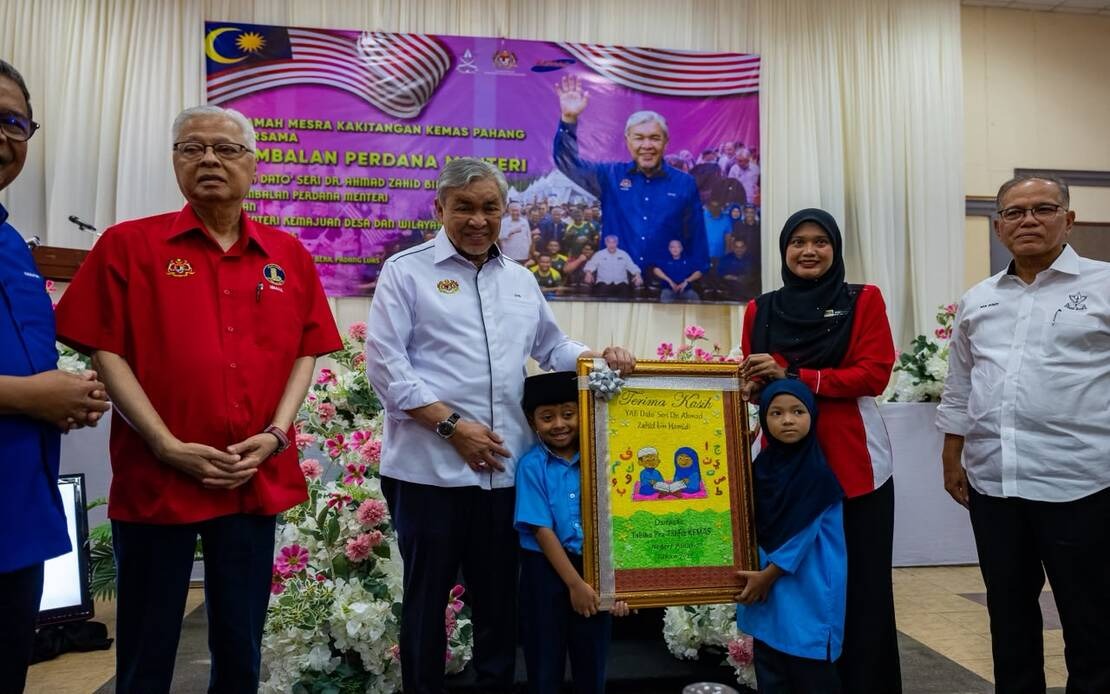
The Rural and Regional Development Ministry (KKDW) is embarking on a significant overhaul of early childhood education delivered through KEMAS, seeking to blend technological advancement with religious and values-based learning. Speaking during the Pahang KEMAS Community Engagement Programme in Bera, Deputy Prime Minister Datuk Seri Dr Ahmad Zahid Hamidi outlined an ambitious transformation agenda that recognises the shifting landscape of Malaysia's education system and the heightened role of pre-school institutions in national development.
The impetus for this strategic shift stems from recent policy changes that have lowered Malaysia's school entry age from seven to six years old, creating both opportunity and urgency. This modification has effectively expanded the importance of KEMAS-managed kindergartens (Tabika) and childcare centres (Taska) as foundational educational providers. With this compressed timeline, the ministry recognises that these institutions must now deliver more comprehensive preparation for primary school readiness, making the modernisation programme not merely aspirational but operationally necessary.
At the heart of the KKDW's vision is the integration of what Ahmad Zahid termed "keeping pace with technological advances." The ministry plans to accelerate implementation of Smart Class initiatives and smartboards across its kindergarten network. This pivot toward digital learning infrastructure reflects broader global trends in early childhood education, where interactive technology is increasingly viewed as a tool for enhancing cognitive development and engagement. However, the Malaysian approach appears distinct in its explicit commitment to balancing tech adoption with traditional values, rather than allowing digitalisation to dominate pedagogical philosophy.
The religious education component of this transformation represents a deliberate institutional choice that distinguishes Malaysia's public early learning system. Ahmad Zahid proposed expanding a memorisation programme that would see KEMAS kindergarten children, beyond the existing curriculum focused on Part 30 of the Quran, now undertake memorisation of complete surahs including Yasin, Al-Waqiah, Al-Mulk and As-Sajdah. This expansion signals an investment in Islamic literacy from the earliest stages of formal education, framed as essential to developing children's "strong values and identity" in an increasingly complex world.
Crucially, the ministry has identified teacher capacity as the bottleneck in this initiative. Ahmad Zahid stressed that KEMAS educators must themselves master the memorisation protocols before implementation can be rolled out systematically. This acknowledgment reveals a realistic assessment of the challenges involved in curriculum transformation: policy ambition often exceeds the ability of frontline staff to execute it. The emphasis on structured, effective teacher training suggests the ministry understands that hastily implemented programmes, however well-intentioned, risk disappointing outcomes.
The financial and infrastructure dimensions of this modernisation cannot be overlooked. Ahmad Zahid specifically commended the Pahang state government for securing land titles, providing grants for facilities, and funding renovation and improvement works. This multi-layered approach—combining federal policy direction with state-level operational support—reflects Malaysia's federal system's realities. For rural and regional KEMAS centres, which typically operate with constrained budgets and aging infrastructure, sustained funding commitment is as vital as curriculum innovation. The absence of inter-governmental coordination has historically undermined such programmes, making this cross-level collaboration noteworthy.
From a developmental perspective, KEMAS's reach is formidable. The programme has served approximately 8.4 million children since establishment, making it a genuinely mass-market educational intervention in Malaysia. This scale means that changes to KEMAS curriculum and delivery directly influence the foundational knowledge and values instilled in millions of Malaysian children. The institutional responsibility is correspondingly immense, as is the opportunity to shape long-term human capital outcomes across socioeconomic and geographical divides.
The timing of this transformation agenda also reflects political considerations. Ahmad Zahid emphasised that "political stability, cooperation across all levels of government and a willingness to embrace reform" were prerequisites for advancing early childhood education comprehensively. This framing, while diplomatically phrased, implicitly acknowledges that educational transformation requires sustained commitment across electoral cycles and coalition shifts. In Malaysia's often fractious political environment, programmes that depend on continuity across different administrations face inherent fragility. By securing buy-in from federal officials, the Pahang Menteri Besar, and the Bera MP in a single programme, the ministry appears to be building a coalition of stakeholders invested in the initiative's success.
The philosophical integration of technology and religion in KEMAS reflects broader questions about Malaysia's educational identity. As the country aspires to higher-income status and greater technological competitiveness, there is also consciousness that rapid modernisation can erode cultural and religious anchoring. The KKDW's approach suggests an attempt to thread this needle—embracing smart technology and 21st-century skills while simultaneously deepening Islamic education. Whether this synthesis can be achieved in practice, and how different stakeholders will view the balance struck, remains an open question with implications extending well beyond early childhood education into broader conversations about Malaysian identity and development priorities.

