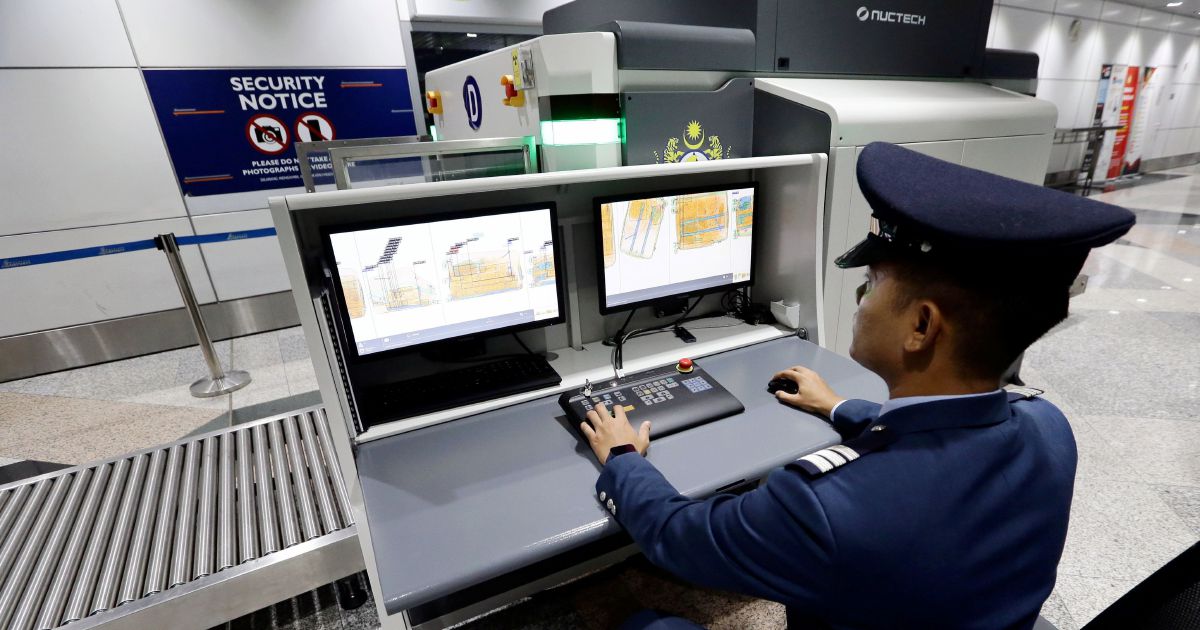
Kuala Lumpur International Airport's state-of-the-art scanning equipment possesses the technical capability to identify smuggled drugs and other contraband, according to Home Minister Datuk Seri Saifuddin Nasution Ismail, who attributed recent detection failures not to machinery shortcomings but to how security protocols are currently structured and implemented.
The minister's statement, delivered in Putrajaya, addresses mounting concerns about drug smuggling operations passing through the nation's premier aviation hub. Rather than pointing to equipment inadequacy, Saifuddin identified the underlying problem as a systematic misalignment of screening priorities, where existing standard operating procedures have been calibrated to emphasise weapons interdiction at the expense of narcotics detection.
This distinction carries significant implications for Malaysia's border security strategy. The revelation suggests that the country possesses the technological infrastructure necessary to combat drug trafficking but faces operational bottlenecks in translating that capability into effective enforcement. For frequent travellers and the aviation industry, this clarification matters: hardware upgrades may not be the solution, but rather a recalibration of how existing systems are deployed.
KLIA, handling millions of passengers annually and serving as a critical transit point in Southeast Asia's air travel network, represents a vulnerable choke point for international drug cartels. The airport's position on major trafficking routes between source countries in the Golden Triangle and destination markets across Asia, Australia, and beyond makes its screening procedures a frontline defence for the region. When that defence exhibits gaps, the consequences ripple across multiple nations grappling with opioid and synthetic drug epidemics.
The minister's acknowledgment of procedure-based rather than equipment-based deficiency opens pathways for remedial action that may be faster and less capital-intensive than infrastructure overhauls. Adjusting screening protocols does not require purchasing new scanners or renovating terminals; instead, it demands reviewing how security personnel prioritise different threat categories, retraining staff, and potentially redeploying resources to strengthen narcotics detection workflows.
However, the statement also raises questions about why such protocols evolved in their current form. International aviation security standards have historically emphasised weapons prevention following high-profile aviation attacks and hijackings. Drug smuggling, though economically enormous, has traditionally been treated as a secondary concern within airport screening hierarchies. Shifting that balance requires not just administrative adjustment but a strategic reorientation of how Malaysia weights different security threats.
For regional partners and trading nations, the minister's disclosure signals that Malaysia recognises the problem and is contemplating solutions. ASEAN nations increasingly collaborate on drug interdiction, and transparency about screening procedures—and their limitations—facilitates better coordination. Thailand, Singapore, and Indonesia, all grappling with synthetic drug trafficking, may view KLIA's procedural vulnerabilities as a shared regional challenge requiring collective attention.
The timing of this clarification is noteworthy. Recent high-profile drug seizures and detection failures at KLIA have attracted political scrutiny and raised public anxiety about airport security effectiveness. By isolating the issue to procedural gaps rather than technological deficiency, Saifuddin positions the government as capable of rapid corrective action without admitting to systemic incompetence or requiring substantial budget allocations during economically constrained times.
Implementing revised screening protocols demands careful coordination between airport authorities, customs, federal police narcotics units, and aviation security agencies. Standard operating procedures must be rewritten to elevate drug detection priorities without compromising weapons interdiction effectiveness. Staff training programmes must be recalibrated to equip screeners with knowledge to identify emerging drug packaging techniques and trafficking methods.
The minister's statement also reflects Malaysia's broader commitment to combating the regional methamphetamine and heroin crises that have created public health emergencies across Southeast Asia. By acknowledging KLIA as a vulnerability point and committing to procedural reform, the government demonstrates responsiveness to both international pressure and domestic constituents increasingly concerned about drug availability and addiction impacts within their communities.
Moving forward, the effectiveness of any protocol revision will depend on implementation rigour and sustained resource commitment. Screening procedures are only effective when personnel are adequately trained, sufficiently staffed, and motivated to enforce standards consistently. Without attention to these operational realities, even perfectly designed procedures may fail in execution.
The Home Minister's clarification thus marks not an endpoint in discussions about KLIA security but rather a beginning. It identifies the problem and implicitly commits to solving it through procedural means. The next phase involves concrete actions—revised protocols, staff retraining, and demonstrable improvements in drug detection rates—that will ultimately determine whether this acknowledgment translates into enhanced security outcomes for Malaysia and the broader region.

