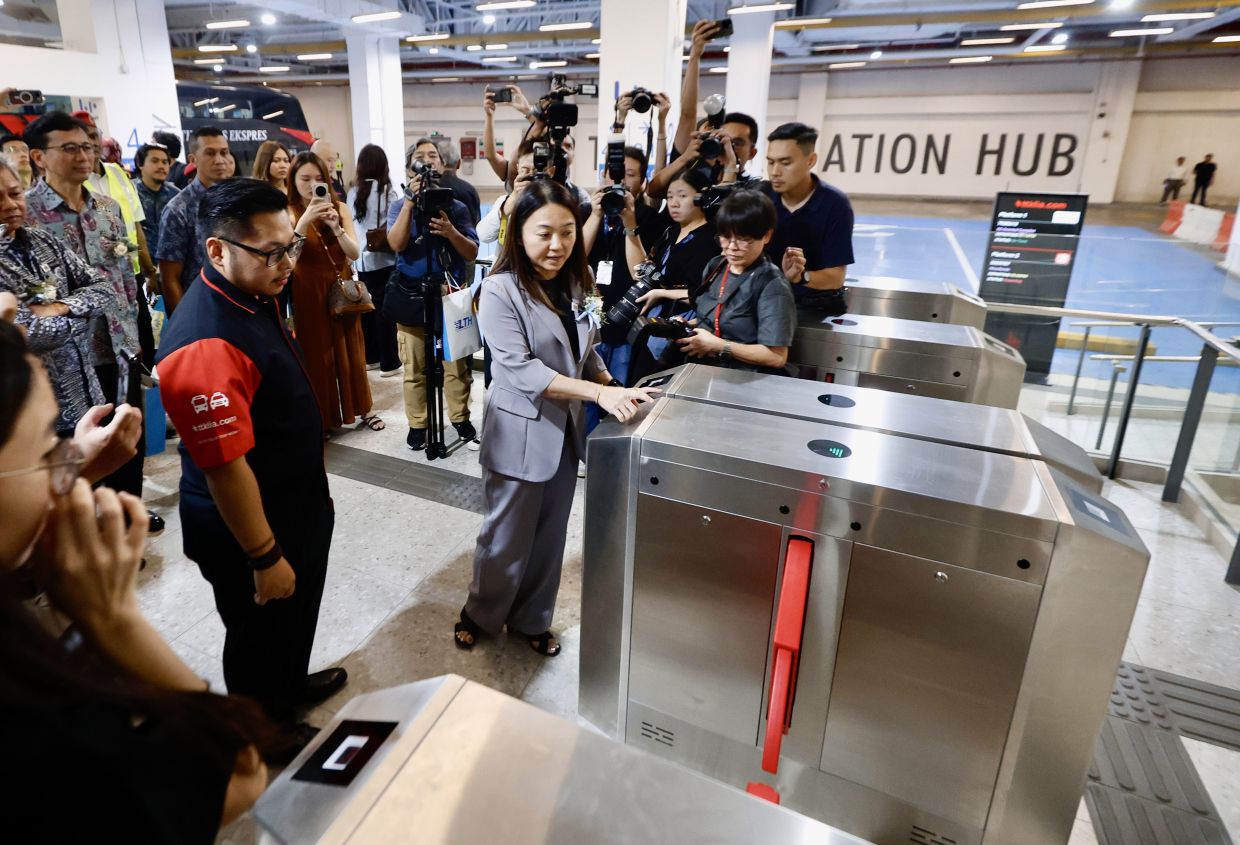
Kuala Lumpur's newest intermodal transport facility, the LaLaport Transportation Hub at Bukit Bintang City Centre, is positioning itself as a centralised departure point for express bus services across the capital. The facility, which received its official launch on July 16, is expected to coordinate approximately 30 licensed bus operators and handle roughly 3,000 passengers each day, with planners confident the infrastructure can expand operations to accommodate 10,000 daily travellers as demand grows.
Minister in the Prime Minister's Department (Federal Territories) Hannah Yeoh highlighted the hub's significance during the launch ceremony, framing the investment as a critical response to Kuala Lumpur's mounting transport pressures. According to data compiled by Kuala Lumpur City Hall (DBKL), the capital experiences an average of 1.2 million vehicles entering its boundaries each day, coupled with approximately 5.5 million individual journeys moving in and out of the city. These figures underscore the rationale behind prioritising urban mobility infrastructure improvements, as Yeoh noted, painting a picture of a metropolis wrestling with congestion and the need for organised transit solutions.
The hub itself represents a phased development that has been gradually accepting bus operators since February of this year, though the full operational launch occurred in mid-July. Licensed through the Land Public Transport Agency (Apad), the facility occupies Level LG1 within LaLaport BBCC's East Atrium, a strategic location within a major shopping destination that capitalises on foot traffic and commercial synergies. The design incorporates 11 dedicated bus bays to handle simultaneous departures and arrivals, a climate-controlled waiting lounge for passenger comfort, multiple ticketing counters, automated self-service machines, and real-time passenger information displays that relay bus schedule updates and service announcements.
The geographic positioning of this hub within a commercial mall in Bukit Bintang reflects an evolving approach to public transport infrastructure in Malaysia's capital. Rather than constructing a standalone transport terminal, the decision to embed the facility within LaLaport BBCC creates a multipurpose destination where travellers can combine their transit needs with shopping, dining, or entertainment activities. This integration addresses a practical reality in modern urban centres, where transport hubs increasingly function as social and commercial spaces rather than purely functional transit points.
Connectivity to other transport networks represents a significant advantage of the LaLaport hub's strategic location. The facility sits adjacent to the Hang Tuah interchange, which provides direct access to Kuala Lumpur's Light Rapid Transit (LRT) and Monorail systems through an enclosed pedestrian walkway. This sheltered connection eliminates the exposure to Kuala Lumpur's tropical weather during transfers and transforms what might otherwise be an inconvenient multi-modal journey into a relatively seamless experience. For commuters and intercity travellers, the ability to connect express buses with LRT and Monorail services dramatically expands the geographic reach of potential itineraries.
Beyond traditional bus services, the hub has been designed to function as a comprehensive mobility centre catering to diverse travel requirements. Shuttle van operations connect passengers directly to Kuala Lumpur International Airport's Terminal 1 and Terminal 2, addressing a significant market segment of air travellers seeking alternatives to expensive taxi services or the inconvenience of private vehicle parking at the airport. Additionally, the hub incorporates demand-responsive transport (DRT) services, which offer flexible routing options tailored to passenger preferences rather than adhering to fixed schedules, alongside conventional taxi and e-hailing service zones for ride-sharing users.
The staggered commencement of operations since February demonstrates a pragmatic approach to managing growing transport demand while allowing both operators and passengers time to adapt to the new infrastructure. This phased rollout permitted the Land Public Transport Agency and facility management to identify operational bottlenecks, refine scheduling coordination among competing operators, and address technical issues before full-scale public announcement. The July launch date appears timed to coincide with holiday season travel patterns when demand for intercity express buses typically peaks.
The infrastructure investment reflects broader recognition within Malaysian transport planning circles that consolidating dispersed bus operations into managed hubs can reduce urban congestion, improve passenger safety, and enhance service reliability. When 30 separate operators each maintain independent departure points scattered across Kuala Lumpur, passengers face confusion regarding schedules and locations, while traffic congestion intensifies as individual bus services operate without coordination. The LaLaport hub centralises these operations, enabling passengers to compare services and schedules from multiple providers in a single location while reducing the citywide traffic impact of circulating buses searching for scattered terminal points.
The 10,000-passenger daily capacity ceiling represents planners' estimate of the facility's physical constraints and traffic circulation limits around the Bukit Bintang area. Reaching this capacity threshold would represent more than tripling the initial 3,000-passenger target, suggesting considerable latent demand for organised express bus services in the region. Such growth would depend on sustained economic activity, increased intercity travel, and success in attracting passengers away from private vehicles or existing informal bus assembly points scattered throughout Kuala Lumpur.
For passengers across Malaysia, the LaLaport Transportation Hub offers practical advantages beyond simple convenience. Coordinated operation of multiple bus companies under one roof enables price comparison and service quality differentiation, theoretically fostering competitive pressure that benefits consumers through improved offerings and potentially lower fares. The facility's integration with LRT and Monorail networks creates new multimodal routing possibilities for travellers originating from other parts of the Klang Valley, effectively extending the hub's catchment area well beyond Kuala Lumpur's city centre.

