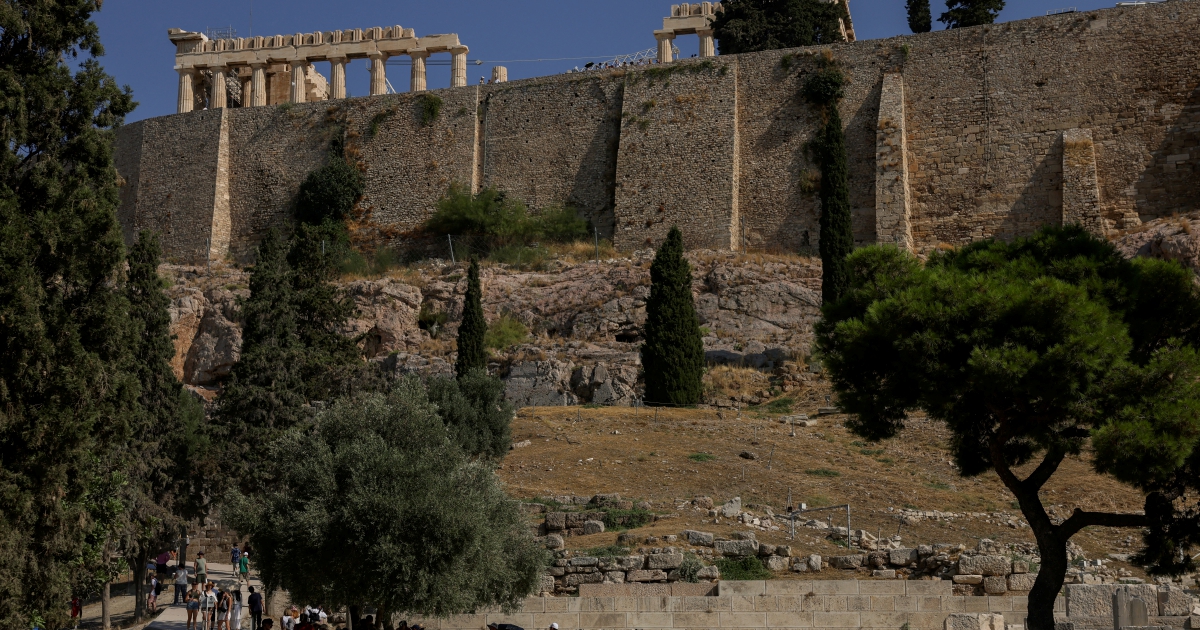
A violent incident unfolded near one of Europe's most celebrated archaeological landmarks on Tuesday when a 60-year-old man launched a knife attack against two Greek-American tourists in the Acropolis area of Athens. The assault, which concluded with the attacker's arrest by police, has rekindled questions about visitor safety at one of Greece's most frequented tourist destinations and the effectiveness of security measures protecting the ancient monuments that draw millions of foreign and domestic travellers annually.
The Acropolis and its surrounding precinct represent not merely a historical treasure but a cornerstone of Greece's tourism economy, generating substantial revenue and cultural prestige globally. The sprawling archaeological zone encompasses the Parthenon, the Erechtheion, and numerous other structures dating back to ancient Athens's golden age, making it essential infrastructure for Greece's international standing. Each year, the site welcomes approximately four million visitors, making it more frequented than even the Louvre in Paris when accounting for its geographical constraints and operating capacity.
Incidents of violence targeting tourists, whilst statistically uncommon in central Athens, carry disproportionate significance for destination marketing and traveller confidence. The attack occurred in daylight hours near one of the world's most photographed sites, underscoring that serious crime can emerge in locations visitors typically regard as secure. The vulnerability revealed by this incident strikes particularly resonantly for Southeast Asian tourists, many of whom view Greece as a benchmark for safety and cultural authenticity when planning European holidays.
Greece has invested considerable resources in tourism infrastructure and security enhancements over the past decade, particularly following the economic crisis that depressed visitor numbers and raised perceptions of urban instability in Athens. The country has cultivated an image of stability and hospitality to visitors, yet occasional violent incidents inevitably generate alarm among travel agencies, tour operators, and potential customers evaluating Mediterranean destinations against competing options in Italy, Spain, and Croatia.
The arrest of the 60-year-old assailant indicates that Greek law enforcement responded swiftly to the incident, a procedural strength that should mitigate longer-term reputational damage. However, the nature of the attack—seemingly unprovoked and targeting foreign nationals—raises complex questions about mental health services, homelessness, and urban management in central Athens. Many such incidents across European cities reflect inadequate social support systems rather than endemic criminality, a distinction that tourism authorities and media coverage must carefully articulate to prevent disproportionate damage to Greece's international image.
The two Greek-American victims occupy a particularly sensitive position within this narrative. As individuals possessing American citizenship but ethnic Greek heritage, their experience bridges cultural and diplomatic considerations that extend beyond ordinary tourist safety statistics. Family networks connecting diaspora communities in North America to ancestral homelands remain economically and culturally significant, and negative experiences during heritage tourism visits can ripple through social media and personal networks, affecting perceptions among millions of potential future visitors.
For Malaysian travellers specifically, Greece represents an aspirational European destination often integrated into multi-country itineraries spanning the Mediterranean and Balkans. Safety concerns at major attractions directly influence booking decisions, with many Malaysian tour operators emphasizing crime rates and security protocols when marketing Mediterranean packages. A single violent incident, whilst statistically negligible, generates disproportionate social media amplification and word-of-mouth impact among close-knit Asian diaspora communities that exchange travel information extensively through messaging platforms and online forums.
The Acropolis area's tourism infrastructure, including nearby museums, restaurants, and hospitality facilities, collectively represent billions of euros in investment and annual economic activity. Local businesses, from street vendors to luxury hotels, depend entirely on sustained visitor flows to maintain employment and profitability. Any perception of deteriorating safety threatens not only individual shop revenues but also employment across the entire tourism sector, creating pressure on authorities to demonstrate credible security improvements following such incidents.
Greek authorities must now balance transparent communication about the incident with proactive messaging emphasizing their capacity to protect visitors. This typically involves detailing the swift police response, the prosecution processes the accused will face, and any additional security measures deployed around high-profile sites. International travel agencies and tourism boards will monitor official statements carefully, potentially adjusting their marketing materials and traveller advisories based on how Greek institutions frame and address the incident.
The incident's significance transcends the immediate harm caused to the two victims, extending into realms of destination marketing, law enforcement effectiveness, and international tourism confidence. Greece's ability to maintain its reputation as a culturally rich, secure destination for millions of global visitors depends partly on isolated incidents remaining isolated rather than signalling systemic problems. Whether this Tuesday's attack will register merely as an aberration or catalyse policy changes determining how tourist experiences are governed remains contingent on coming weeks' institutional responses and media narratives emerging across international outlets.
Looking forward, tourism authorities in Greece and comparable destinations across Southeast Europe will likely intensify focus on visible security presence around archaeology sites, improved surveillance infrastructure, and coordination between police and private security firms operating within tourism zones. For Malaysian travel agencies and their clients, the incident serves as a reminder that careful destination selection, awareness of local conditions, and engagement with reputable tour operators remain prudent practices when planning international journeys, regardless of a destination's generally strong safety track record.

