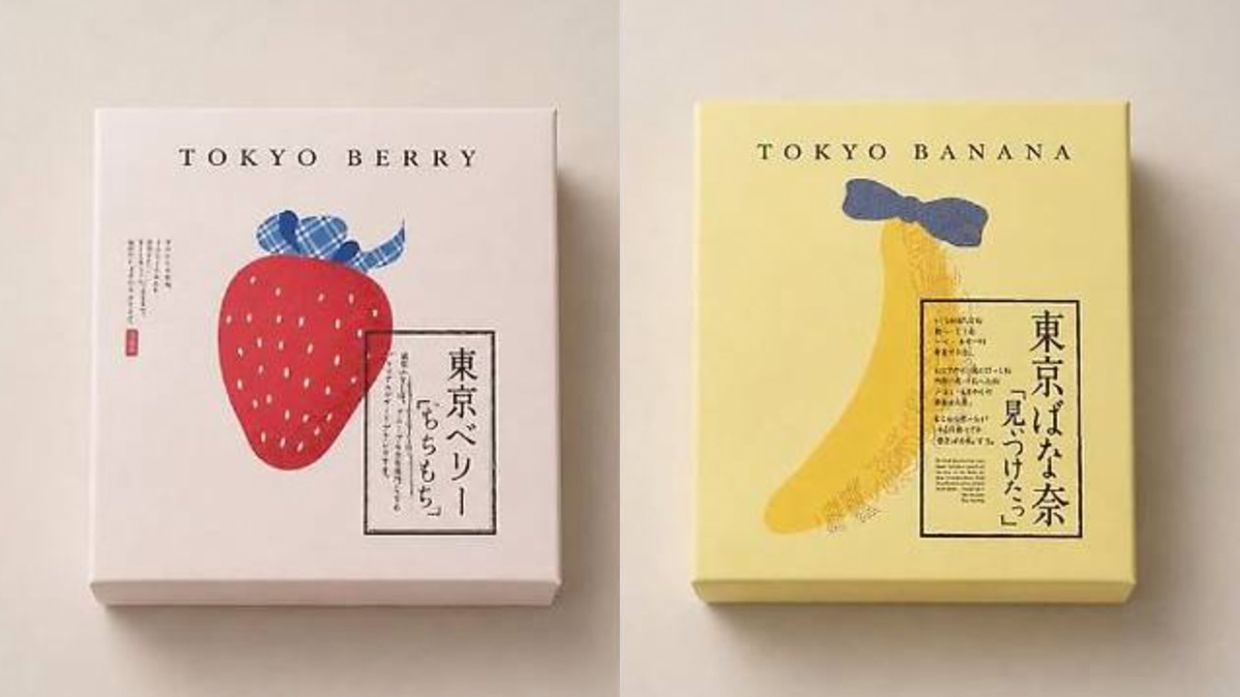
A South Korean food venture has triggered a regional controversy by launching a product whose branding and appearance bear striking similarities to Tokyo Banana, one of Japan's most beloved confectionery exports. Tokyo Berry, a recently established Korean dessert brand, has drawn widespread criticism after consumers began sharing comparative images on social media that expose the visual overlap between the two products' packaging and overall presentation. The incident underscores the competitive tensions in the region's premium food market, where brand identity and consumer perception carry significant commercial weight.
Tokyo Banana, manufactured by Japan's Grapestone confectionery company, remains an iconic treat across East Asia—a banana-shaped sponge cake known for its distinctive appearance and consistent quality. The Japanese brand has built considerable market equity over years of regional expansion and tourism-driven popularity. Its recognition means that any product appearing to mirror its design risks not only damaging consumer trust but also inviting accusations of intellectual property appropriation, a sensitive issue in Japan-Korea relations where such disputes periodically surface.
Tokyo Berry's promotional strategy arguably amplified the controversy. Marketing materials described the offering as "capturing the flavours of seasonal fruits and the essence of Tokyo", language that several observers noted could reasonably lead consumers to assume the brand originated from Japan rather than Seoul. By positioning itself around Tokyo aesthetics and imagery while remaining silent about its Korean ownership, the company created an ambiguity that critics interpret as calculated misdirection. This messaging approach proved particularly contentious in South Korea's online communities, where discussions of cultural authenticity and commercial ethics carry considerable resonance.
The brand's retail expansion had been gaining traction before the backlash intensified. Tokyo Berry operated pop-up stores across major department store chains including Lotte and Shinsegae, venues that attracted substantial customer queues eager to purchase what many believed was an imported Japanese product. This consumer enthusiasm, built partly on the perception of foreign prestige, dissipated once the brand's Korean origins became public knowledge. Department store officials confirmed that all subsequent Tokyo Berry pop-up installations have been cancelled, representing a significant commercial setback for the venture.
The controversy extends beyond mere packaging similarities to encompass the product's inner wrapping materials. Consumers have raised additional allegations that Tokyo Berry inappropriately drew inspiration from Hanjungsun, a premium Korean dessert producer that distinguishes itself through use of hanji—traditional handmade Korean paper—as protective packaging for its chapssaltteok rice cakes. These accusations of copying domestic competitors alongside international ones suggest a pattern of design borrowing rather than isolated inspiration, compounding reputational damage within Korean consumer circles.
Online sentiment has crystallized around themes of national embarrassment and commercial dishonesty. Korean internet users characterised the affair as damaging to the country's food industry reputation, particularly given the sector's growing global prominence and the investments made in establishing authentically Korean premium food brands. The incident raises questions about quality control and ethical oversight in the food and beverage sector, as well as whether marketing departments adequately vet product positioning for potential deception or cultural appropriation issues.
Social media amplified the dispute considerably. Tokyo Berry initially attempted damage control by restricting visibility of promotional posts on Instagram and disabling comments, measures that typically backfire by suggesting acknowledgment of wrongdoing without transparent explanation. This defensive posture contrasted with the brand's earlier aggressive marketing push and fuelled further speculation about deliberate intent to leverage Tokyo Banana's reputation for commercial gain.
Grapestone, the parent company of Tokyo Banana, has indicated it is formally investigating the matter. In a statement relayed through local media outlets, the Japanese firm acknowledged receiving complaints and confirmed that relevant internal departments had begun reviewing the case and examining potential intellectual property violations. While Grapestone has not yet pursued legal action, the company's decision to formally investigate signals that Tokyo Banana's operators view the matter as substantive rather than frivolous.
The episode carries implications extending beyond the immediate parties involved. For regional businesses, it illustrates the legal and reputational risks of operating in an increasingly interconnected market where consumer awareness and digital documentation of design similarities can trigger rapid mobilisation of public opinion. For Japanese companies, it demonstrates the enduring brand value and consumer goodwill that products like Tokyo Banana have accumulated across Asia. For Korean companies, it serves as a cautionary tale about the hazards of leveraging foreign cultural associations without clear disclosure of domestic ownership or when product design too closely mirrors established competitors.
This incident also reflects broader patterns in East Asian consumer markets, where premium imported goods command pricing power and prestige that domestically produced equivalents struggle to match, creating financial incentives for misleading positioning. The transparency and authenticity now demanded by increasingly sophisticated regional consumers suggest that short-term marketing advantages gained through ambiguous branding carry substantial long-term reputational costs. As South Korea's food and beverage sector continues its push into international markets, cases like Tokyo Berry serve as reminders that brand building requires genuine differentiation rather than superficial imitation of established players.

