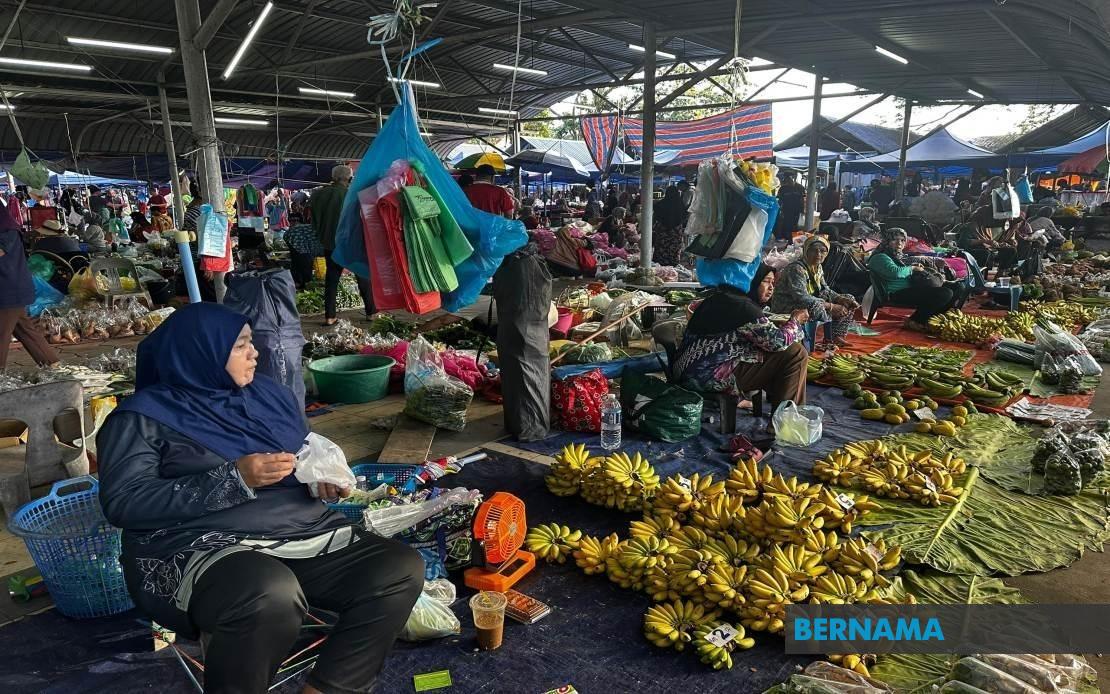
The path to securing UNESCO World Heritage Site status for Kota Belud Tamu—Sabah's renowned traditional market—will demand substantial groundwork and patience, state officials revealed during legislative proceedings this week. Dr Andi Md. Shamsureezal, the Assistant Minister of Tourism, Culture and Environment, told the Sabah State Legislative Assembly that transforming the historic marketplace into a globally recognised heritage institution involves far more than simply submitting an application to the United Nations cultural body.
The rigorous nomination process demands that authorities conduct exhaustive research into both the material and non-material dimensions of the Tamu's cultural significance. This encompasses detailed investigations into the market's role as a repository of indigenous knowledge, traditional practices, seasonal rituals, and the lived experiences of the communities who have sustained it across generations. Equally important is the compilation of thorough documentation that captures heritage assets—whether historical structures, archaeological findings, or other physical remnants that anchor the site's historical narrative.
Beyond mere documentation, the nomination framework requires that Kota Belud Tamu be fortified with compelling historical and scientific evidence demonstrating its 'Outstanding Universal Value' (OUV) in UNESCO's estimation. This is no formality; it is the cornerstone criterion that distinguishes sites of genuinely universal importance from those of merely local or regional significance. Without convincing proof that the Tamu represents something irreplaceable to human heritage as a whole, the application faces rejection regardless of its intrinsic worth to Sabahans.
Dr Andi's cautionary remarks come as Kota Belud district has already achieved a measure of international recognition through its inclusion in the Kinabalu UNESCO Global Geopark (KUGGp), a designation that came into effect in May 2023. This geopark status, while distinct from World Heritage Site recognition, positions the district within a framework designed to foster sustainable tourism and environmental stewardship. The geopark mechanism offers a separate avenue through which communities can gain international legitimacy and support for conservation efforts.
Leverage of the geopark platform has already begun yielding tangible results on the ground. Sabah Parks, functioning as the lead management agency for KUGGp, has launched the "Tamu Geopark" programme—an initiative specifically engineered to amplify the cultural and economic dimensions of the traditional market. This venture has transformed the Tamu into a living showcase where visitors encounter not merely commercial transactions but rather a vibrant tapestry of local gastronomy, ceremonial dress, artisanal handicrafts, performing arts, indigenous cultural expressions, community-produced goods, and value-added geotourism products born from local ingenuity.
The cultural revitalisation through the geopark programme simultaneously addresses economic imperatives, creating employment and income-generation pathways for residents who might otherwise migrate to urban centres. This approach recognises that heritage conservation divorced from livelihood generation often fails; communities must experience tangible benefits from preserving traditions, or those traditions inevitably erode. By positioning the Tamu as an economic engine—one powered by cultural authenticity rather than external corporate interests—the state government has aligned conservation objectives with community self-interest.
For Malaysian and Southeast Asian observers, the Kota Belud situation illustrates broader tensions within heritage management in the region. UNESCO designations carry enormous symbolic and economic weight, yet the nomination process itself can become so demanding that it inadvertently privileges nations with substantial technical capacity and financial resources. Sabah's measured approach—acknowledging that the path is long but pressing forward methodically—reflects realistic assessment rather than defeatism.
The response from Datuk Mohd Arsad Bistari, the assemblyman representing Tempasuk, initiated this discussion, suggesting constituency-level political interest in elevating the district's profile through international recognition. Such questions, when pursued through state legislative channels, signal to bureaucratic agencies that heritage matters command attention at the highest governance levels. This political scaffolding, while less visible than physical infrastructure, often proves essential in mobilising resources and sustaining institutional commitment across the multi-year timescales that heritage projects demand.
Moving forward, the groundwork must commence immediately, even as Dr Andi appropriately tempered expectations about timeline. Research teams will need to engage deeply with Kota Belud's Kadazan, Bajau, and other indigenous communities whose ancestral knowledge and ongoing practices animate the market. Academics, heritage consultants, and cultural specialists will require funding and institutional support. Archives must be excavated; oral histories recorded before they are lost; photographic documentation amassed. The intellectual and bureaucratic machinery of heritage designation, though sometimes frustrating, exists precisely because hasty or superficial applications squander precious nomination slots that UNESCO allocates regionally each year.
Sabah's deliberate strategy—leveraging the geopark status as an interim milestone while simultaneously building the dossier for World Heritage Site nomination—demonstrates strategic sophistication. The district gains international profile and economic boost through geopark recognition today, whilst positioning itself competitively for the higher-status World Heritage designation tomorrow. This sequenced approach acknowledges both the urgency of community economic development and the demanding nature of UNESCO's legitimate standards.

