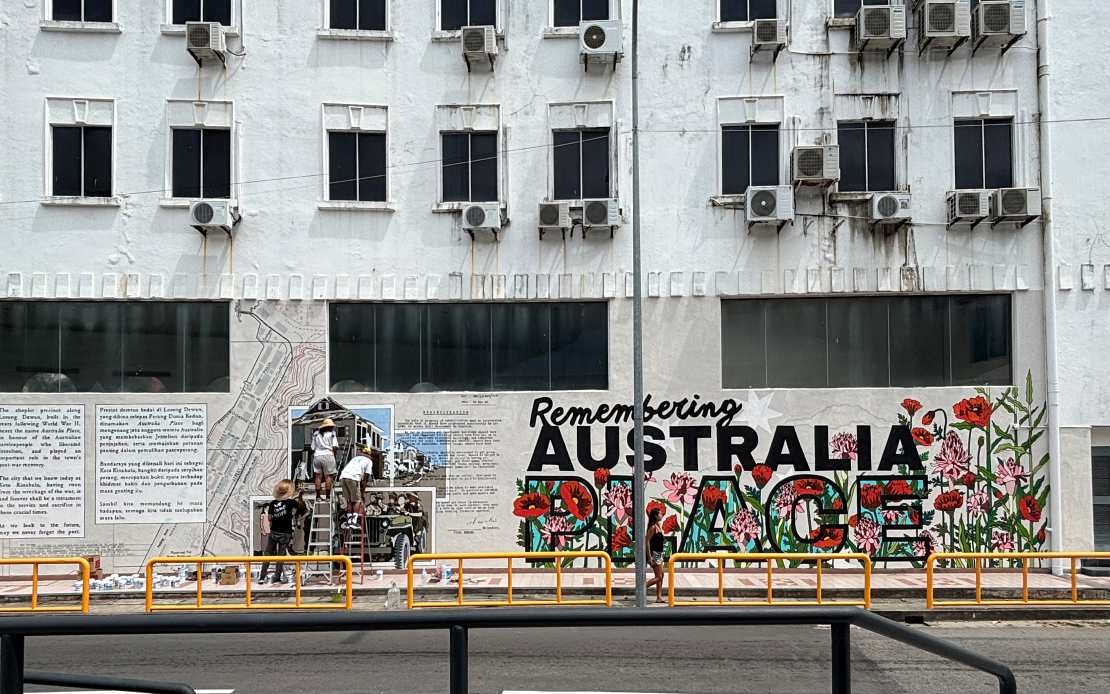
A landmark mural has transformed a cherished corner of Kota Kinabalu's urban landscape, serving as a permanent artistic tribute to the enduring relationship between Sabah and Australia. The unveiling of 'Remembering Australia Place' at the Wisma Intiutama building on Friday marks a significant moment in regional cultural diplomacy, particularly as it coincides with Sandakan Day, an occasion that holds profound historical weight for both communities. The site itself, long referred to informally as 'Australia Place' by local residents, has deep roots in the shared history of the two territories, and the new public artwork now provides a colourful and accessible means for present and future generations to understand and appreciate these connections.
Australian High Commissioner to Malaysia Danielle Heinecke emphasised the mural's broader significance during the ceremony, noting that the artwork encapsulates far more than artistic merit. She framed the piece as a visual narrative of sustained friendship, cultural exchange, institutional partnerships and governmental cooperation that has characterised relations between Australians and Sabahans across multiple decades. Heinecke's remarks underscored the notion that such bilateral ties are not merely official arrangements conducted at diplomatic levels, but rather deeply rooted in the fabric of community interaction and personal relationships that have developed over generations. The artwork, she stated, captures the essence of individuals whose life journeys have connected the two nations and stands as an enduring symbol of the robust partnerships that continue to define contemporary relations.
The project was executed by Pillars of Sabah, a community-focused arts organisation that brought creative expertise and local knowledge to the mural's realisation. The artistic approach employed by the organisation transcends simple commemoration; instead, it employs narrative storytelling techniques to illustrate shared philosophical values including friendship, resilience, mutual cooperation and the human connections that form the foundation of Australia-Malaysia relations. This artistic methodology reflects a growing international trend of using public murals not merely as decorative elements but as educational tools that engage communities in dialogue about their own histories and identities.
The mural carries particular resonance through its connection to Jared Abdul Rahman, Pillars of Sabah's co-founder, whose personal heritage embodies the very bridges the artwork celebrates. Born to a Sabahan father and a Tasmanian mother who encountered each other while his father pursued tertiary education in Australia under the prestigious Colombo Plan scholarship scheme, Jared represents a living embodiment of Sabah-Australia connection. His involvement in designing and executing the mural transforms the project from an official commemoration into a deeply personal expression of cultural identity, allowing him to honour both sides of his heritage whilst contributing meaningfully to his adopted home of Kota Kinabalu.
The Colombo Plan, which facilitated his father's educational opportunity decades earlier, deserves particular attention in understanding the depth of historical ties between Malaysia and Australia. This multilateral technical cooperation scheme, initiated in the post-Second World War era, saw thousands of students from Commonwealth and Asian nations undertake higher education in partner countries, establishing professional networks and personal relationships that often endured throughout their careers and lifetimes. Rahman's own existence is a testament to the programme's success in fostering genuine cross-cultural understanding and creating familial bonds that transcend national boundaries.
The mural's unveiling brought together a diverse assembly of stakeholders, including Kota Kinabalu Mayor Datuk Seri Sabin Samitah, various parliamentary representatives, community leaders, and alumni of Australian educational institutions. This cross-section of society reflects the penetration of Australia-Malaysia relations throughout multiple layers of Sabahan society, from government and education sectors to grassroots community organisations. The participation of parliamentarians signals official recognition of the partnership's importance, whilst the presence of university alumni underscores the educational dimension that has long characterised bilateral relations.
Particularly noteworthy was the involvement of Sekolah Menengah Kebangsaan Sanzac, whose students and teachers participated in the mural project's community engagement component. This intergenerational collaboration exemplifies how such public art initiatives can serve pedagogical purposes, allowing younger Sabahans to connect with historical narratives and understand their place within a broader regional story. Educational institutions play a crucial role in transmitting collective memory, and the mural provides a tangible focal point for such learning.
Sandakan Day itself carries profound historical significance that contextualises the mural's unveiling timing. The observance commemorates the Sandakan Death Marches of the Second World War, during which 2,434 prisoners of war perished under horrific conditions. Equally important to the memorial's purpose is recognition of the extraordinary bravery demonstrated by Sabahan civilians who, at considerable personal risk, provided assistance to these captive soldiers and facilitated escape attempts. This aspect of shared wartime experience creates a bond forged in humanity and sacrifice, transcending the usual diplomatic relationships between nations. The mural's unveiling on the eve of this commemorative day strengthens the connection between artistic expression and historical remembrance.
For Malaysia's broader regional positioning, such cultural initiatives carry strategic implications. Southeast Asia finds itself navigating complex geopolitical relationships, and sustained people-to-people connections with developed democracies like Australia serve important functions in maintaining regional stability and fostering democratic values. Sabah, as a Malaysian state with distinct cultural identity and historical trajectory, benefits from international recognition of its unique heritage and contemporary relevance. The mural thus functions on multiple levels: as cultural artefact, historical marker, educational tool, and subtle assertion of Sabah's international profile.
The practical reality of Australian-Malaysian relations extends beyond symbolic gestures into substantive domains including education, trade, security cooperation and development partnerships. However, such official mechanisms require underlying social foundations to achieve maximum effectiveness. Public art initiatives like this mural contribute to that essential foundation by maintaining visibility of bilateral relations within everyday community consciousness. When residents and visitors encounter the mural whilst navigating their city, they receive a subliminal reminder of their place within international networks of friendship and cooperation.
The selection of Kota Kinabalu as the mural's location amplifies its significance, as the state capital represents the administrative and cultural heart of Sabah. Placing the artwork at a prominent building within the historically significant 'Australia Place' area ensures that it will be encountered by diverse urban populations and international visitors alike. The artwork thus becomes part of the city's identity narrative, contributing to how Kota Kinabalu presents itself to the world and how residents understand their own community's international dimensions.
Looking forward, the 'Remembering Australia Place' mural establishes a precedent that may inspire similar artistic initiatives celebrating other bilateral and regional relationships. As Malaysian cities increasingly recognise the value of public art in urban renewal and community building, projects that simultaneously commemorate international friendships whilst engaging local populations offer particularly rich possibilities. The mural demonstrates that cultural diplomacy need not be confined to formal ceremonies and official channels, but can flourish through grassroots artistic collaboration that authentically reflects community identity and shared values.

