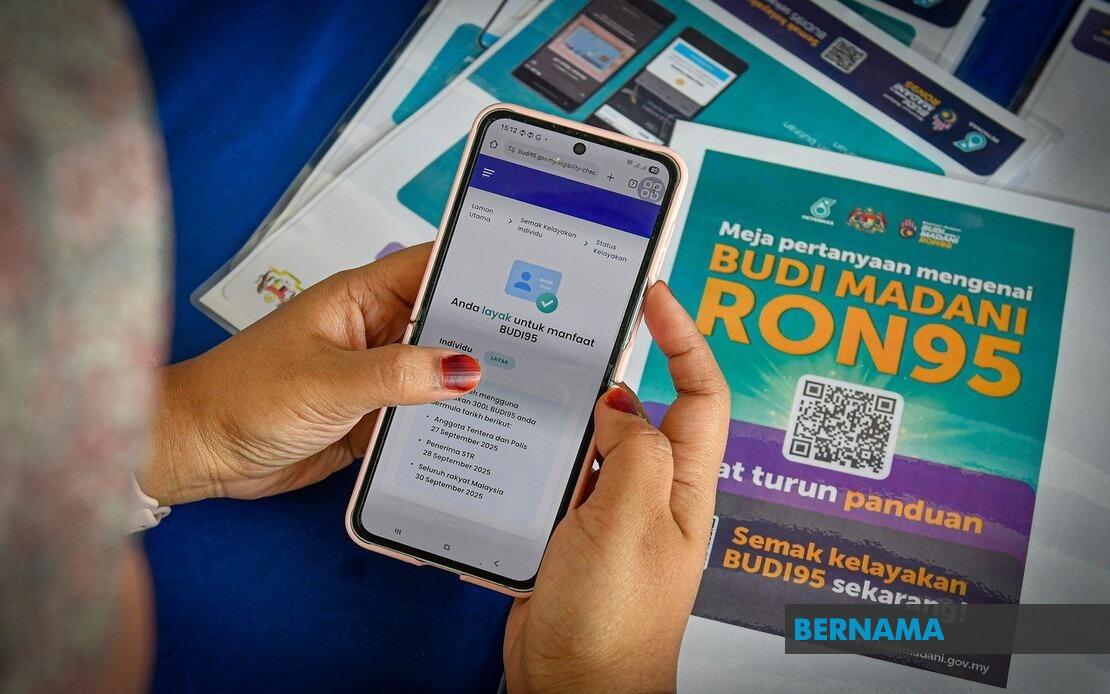
The Ministry of Domestic Trade and Cost of Living has committed to evaluating practical approaches to extend targeted assistance to island dwellers across Peninsular Malaysia who rely upon private watercraft for essential connectivity to the mainland, particularly in relation to benefits available under the BUDI MADANI initiative. Deputy Minister Datuk Dr Fuziah Salleh made the announcement during parliamentary proceedings in the Dewan Rakyat's Special Chamber session on July 1, acknowledging the distinct challenges confronting residents of island communities who face higher transportation costs and logistical barriers compared to their counterparts on the peninsula itself.
The intervention comes after Muhammad Islahuddin Abas, the Member of Parliament for Mersing representing Perikatan Nasional, raised concerns about the adequacy of existing support frameworks for island populations. He specifically highlighted the situation of residents in Mersing, Johor, arguing that communities reliant on boats experience elevated fuel expenditure and should receive enhanced allocations under the BUDI95 quota scheme. The appeal underscores growing recognition within parliamentary circles that subsidy mechanisms designed primarily for mainland users may inadvertently disadvantage geographically isolated populations whose transportation requirements differ fundamentally from urban and suburban centres.
Fuziah's acknowledgment signals willingness from the ministry to tailor policy frameworks to accommodate the distinctive circumstances of maritime-dependent communities. The phrase "appropriate mechanisms" suggests the ministry recognises that blanket subsidy schemes require contextual adjustment when applied to communities operating outside conventional transport networks. Island residents face genuine structural disadvantages in accessing fuel supplies and must absorb costs associated with boat maintenance and operation, making participation in fuel subsidy programmes crucial for household economics and livelihood sustainability.
Beyond island communities, the ministry is simultaneously undertaking a comprehensive review of standard operating procedures governing access to subsidised diesel through fleet cards designated for elderly care facilities. Fuziah elaborated that institutions providing care for senior citizens registered under non-governmental organisations have been systematically excluded from the Subsidised Diesel Control Scheme despite operating vehicles essential for health services, medical appointments, and welfare activities. The exclusion stems from administrative classification—these facilities are registered with the Registrar of Societies rather than the Companies Commission, creating a bureaucratic barrier that does not reflect operational reality or social necessity.
This gap in coverage represents a substantial oversight in subsidy design, as elderly care facilities require reliable transportation for purchasing provisions, transporting residents to medical appointments, and conducting community outreach programmes. The distinction between corporate registration and society registration appears purely technical rather than substantive, yet currently determines eligibility for fuel support. Fuziah's commitment to refining procedures acknowledges that regulatory frameworks sometimes create unintended consequences that can be corrected through procedural adjustment rather than legislative change.
The deputy minister's response to supplementary questioning from Datuk Seri Dr Wee Ka Siong of Ayer Hitam indicates that the government recognises the multiplicity of sectors operating with insufficient support infrastructure. Wee Ka Siong raised the broader issue of subsidy accessibility for marginalised economic sectors including tourism and construction industries, drawing attention to the possibility that current scheme design inadvertently privileges certain sectors while leaving vulnerable operators under-resourced. The response from Fuziah clarified government thinking on sectoral prioritisation under the SKDS 2.0 framework.
The ministry's stated rationale for maintaining tourism sector ineligibility under SKDS 2.0 reflects a deliberate policy choice to concentrate subsidised diesel allocation toward sectors classified as essential, particularly food production and distribution. This prioritisation reflects assumptions about social criticality and household welfare impact, positioning food security as a foundational government responsibility while treating tourism as a discretionary sector. However, the tourism industry's significance to Malaysian economic output and employment generation suggests this characterisation warrants periodic reconsideration, particularly given tourism's role in regional development and foreign exchange earnings.
For Malaysian readers and regional observers, these parliamentary exchanges reveal the government's incremental approach to subsidy reform and targeted assistance. Rather than implementing sweeping changes, the ministry appears committed to methodical review of existing frameworks to identify populations and institutions falling through administrative cracks. This approach acknowledges that well-intentioned subsidy schemes sometimes require continuous refinement to remain effective and equitable across diverse demographic and geographic contexts.
The situation of island communities deserves particular attention given Malaysia's substantial maritime population. Peninsular Malaysia contains numerous island communities, from the Andaman Sea islands off Kedah and Perlis to the islands off the east coast and those surrounding Johor. These communities often experience relative isolation from mainland economic opportunities and social services, making transportation subsidies disproportionately important to household welfare and economic participation. Extended support mechanisms could meaningfully improve quality of life and reduce cost-of-living pressures in these locations.
The ministry's concurrent focus on elderly care facility access signals governmental attention to social welfare infrastructure gaps. Malaysia's ageing population requires expanding elderly care capacity, and non-profit organisations provide substantial services often operating on constrained budgets. Fuel subsidies for such facilities represent relatively modest expenditure with significant welfare implications, suggesting that removal of administrative barriers carries both social and fiscal logic. The commitment to procedural review indicates administrative willingness to address these issues through relatively straightforward regulatory adjustment.
These developments reflect evolving subsidy policy thinking that moves beyond uniform assistance toward targeted approaches recognising distinct community needs and circumstances. The parliamentary discussion demonstrates how specific constituencies can successfully highlight implementation gaps, prompting ministerial commitment to review existing arrangements. For island communities and non-profit elderly care providers, the ministry's stated willingness to examine support mechanisms offers realistic prospect for improved access to essential assistance programmes, contingent upon completion of promised review processes and subsequent procedural reforms.

