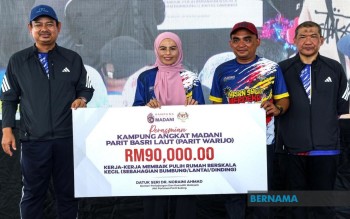
Malaysia's Ministry of Plantation and Commodities is positioning itself to shield smallholders from the mounting pressures of the El Niño weather phenomenon, with dedicated agencies standing ready to provide technical guidance and sustained engagement throughout the extended hot season. Speaking in Batu Pahat on Wednesday, KPK Minister Datuk Seri Dr Noraini Ahmad outlined the government's commitment to mitigating production losses across Malaysia's vital agricultural sector, signalling that direct advisory support would be channelled through established institutions like the Malaysian Palm Oil Board.
The El Niño pattern, which forecasters expect to persist for several months, carries serious implications for Malaysia's plantation economy. Extended periods of elevated temperatures and reduced rainfall create conditions that suppress yields across multiple commodities, particularly palm oil, which remains a cornerstone of rural livelihoods and national export revenues. Smallholders operating on limited margins face disproportionate vulnerability to such climatic shocks, lacking the financial buffers and technological sophistication of larger enterprises. The ministry's forward-facing posture suggests recognition that proactive intervention during this window could prevent cascading economic difficulties across farming communities.
Dr Noraini emphasised that the ministry would maintain continuous dialogue with growers, positioning agencies not merely as passive information sources but as active partners invested in protecting agricultural productivity. She encouraged smallholders to maintain heightened awareness of developing conditions and to reach out promptly to relevant authorities when encountering difficulties. This emphasis on early reporting reflects a strategic approach: identifying problems quickly allows interventions to take effect before crop damage becomes irreversible. The advisory network envisioned by the minister essentially aims to transform smallholders from isolated operators into members of a coordinated support ecosystem.
The prolonged heat environment anticipated over coming months presents cascading challenges beyond immediate water stress. Sustained high temperatures can accelerate pest proliferation, alter nutrient cycling in soils, and trigger physiological stress responses in plants that reduce flowering and fruit set. For palm oil specifically, these conditions threaten the delicate window during which pollination and early fruit development occur. Smallholders lacking irrigation infrastructure or advanced soil management practices face particularly acute risks. The ministry's readiness to provide guidance suggests tailored recommendations may address irrigation scheduling, organic matter supplementation, pest monitoring protocols, and drought-resistant cultivation practices suited to Malaysian conditions.
Dr Noraini's confidence that most rural smallholders already possess baseline awareness of El Niño demonstrates that climate literacy has advanced considerably in Malaysian agricultural communities. However, awareness of a phenomenon differs substantially from possessing practical knowledge of mitigation strategies specific to individual holdings and crop types. The ministry's commitment to sustained engagement implies recognition that converting general awareness into actionable responses requires ongoing dialogue, site-specific recommendations, and responsive problem-solving. This nuanced approach acknowledges that smallholders operate heterogeneous enterprises with distinct vulnerabilities and adaptive capacities.
The Malaysian Palm Oil Board, deployed as a primary implementing agency, brings institutional capacity and technical expertise developed over decades of commodity stewardship. MPOB operates research facilities, maintains networks of extension agents, and possesses deep knowledge of palm oil agronomics across Malaysia's diverse growing regions. Channelling support through such established infrastructure allows rapid scaling of assistance without requiring bureaucratic restructuring. The board's existing relationships with smallholders through licensing, research dissemination, and quality monitoring mechanisms provide natural conduits for delivering climate-responsive guidance.
Beyond immediate El Niño response, Dr Noraini unveiled the Kampung Angkat MADANI programme's development trajectory in Parit Sulong, allocating RM590,000 for community infrastructure and livelihood enhancement projects. The initiative encompasses surau upgrades at Kampung Parit Basri Laut, community facility improvements, and residential repairs executed in partnership with GIATMARA Parit Sulong. Such integrated rural development recognises that climate resilience depends upon broader community capacity, not merely agricultural techniques. Improved infrastructure, enhanced skills, and diversified income sources collectively strengthen communities' adaptive potential when facing environmental stress.
The Kampung Angkat MADANI programme extends beyond conventional agricultural support by incorporating artificial intelligence training and advanced cultivation technologies, specifically mentioning fertigation-based chilli production. These initiatives signal a strategic pivot toward higher-value, more technologically intensive agriculture that could reduce income volatility compared to commodity-dependent models. AI literacy and precision agriculture techniques position younger residents for emerging opportunities within Malaysia's evolving agri-tech landscape. The programme thus addresses both immediate climate challenges and longer-term structural transformation of rural economies.
The used cooking oil licensing framework, with 220 registered trader holders as of July, reflects complementary ministry activity aimed at circular economy principles and resource optimisation. This regulatory environment supports biodiesel feedstock development while creating secondary income opportunities for collectors and small entrepreneurs. Such diversified policy activity demonstrates that the ministry operates across multiple interconnected fronts, from climate adaptation to waste valorisation to skills development.
For Southeast Asian observers, Malaysia's coordinated approach to smallholder climate support offers instructive parallels. Regional economies dependent upon plantation agriculture confront similar El Niño vulnerabilities, yet institutional capacities for rapid response vary considerably. Malaysia's combination of dedicated ministry structures, technical expertise concentrated in agencies like MPOB, and community development programmes suggests a model that could inform regional knowledge-sharing. As climate variability intensifies across Southeast Asia, the mechanisms through which national governments mobilise support for vulnerable agricultural populations warrant close study.
The articulated commitment to sustained engagement distinguishes this approach from episodic crisis response. By establishing continuous communication channels and normalising smallholder consultation, the ministry aims to build adaptive capacity that extends beyond the current El Niño episode. Such relational infrastructure—relationships of trust between government agencies and farming communities—often proves more valuable than any single technical intervention in enabling communities to navigate successive climatic challenges. The coming months will reveal whether this framework translates ministerial commitments into tangible improved outcomes for Malaysia's plantation smallholders.

