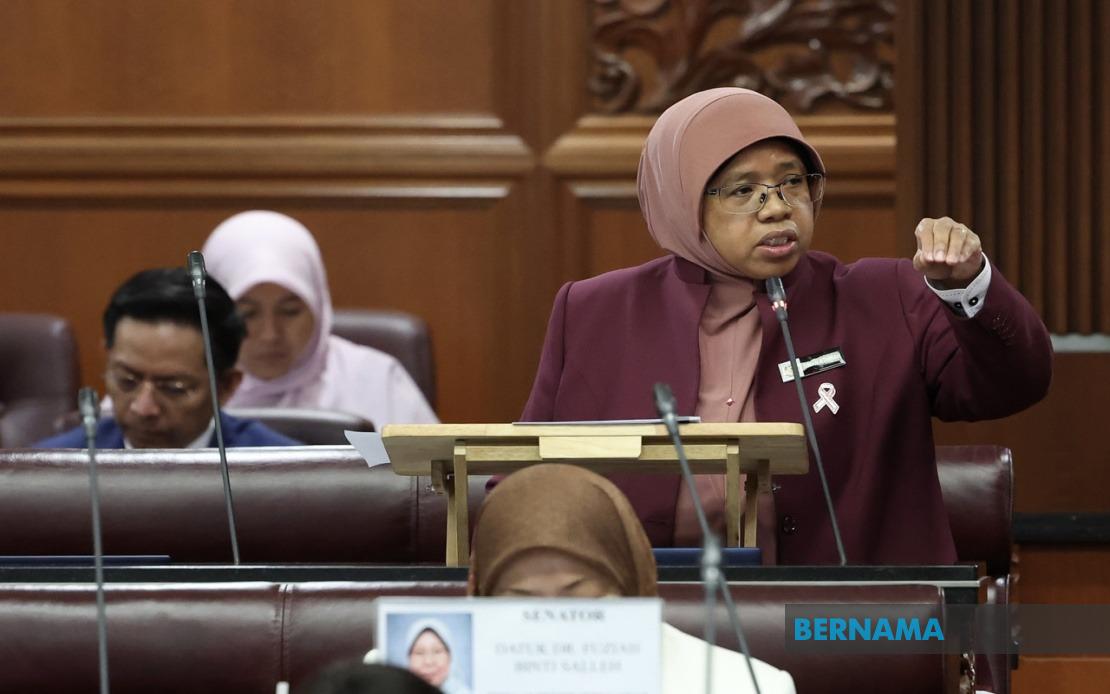
The Ministry of Housing and Local Government is adopting a sharply focused approach to maintaining Malaysia's aging stock of People's Housing Programme residential blocks, channelling limited resources toward structures that have surpassed the ten-year mark and require urgent intervention. Deputy Housing and Local Government Minister Datuk Aiman Athirah Sabu outlined this strategic allocation during parliamentary proceedings in the Dewan Negara on July 21, explaining that the ministry has adopted a rigorous prioritisation framework to maximise the impact of constrained maintenance budgets on resident safety and habitability.
Under this targeted methodology, KPKT concentrates on defects deemed critical to daily living conditions and structural integrity. The priority categories encompass lift systems, roof structures, water storage tanks and distribution networks, sanitary piping infrastructure, electrical wiring systems, and repairs affecting shared common areas. This deliberate narrowing of focus reflects an acknowledgment within the ministry that attempting to address every maintenance issue simultaneously across hundreds of aging residential towers would stretch already insufficient funding impossibly thin. By concentrating on systems whose failure poses the greatest risk to resident wellbeing, KPKT aims to deliver more meaningful improvements across its portfolio.
The financial constraints facing the ministry are starkly evident in recent funding cycles. During 2026, KPKT received 226 separate maintenance applications from project managers nationwide, encompassing ten priority categories with aggregate costs totalling RM79.9 million. However, the budget allocation approved by the government reached only RM44.6 million, representing merely 56 per cent of the total requested amount. This substantial funding gap underscores a persistent challenge in Malaysia's housing sector: the maintenance backlog for public residential housing consistently outpaces available government resources, forcing difficult choices about which repairs proceed and which are deferred.
The broader context reveals that through the 12th Malaysia Plan, KPKT has invested RM159.1 million across five rolling maintenance programmes dedicated to high-rise strata PPR projects throughout the country. While this demonstrates sustained commitment to the upkeep of these crucial housing developments, the figure must be weighed against the accumulated maintenance liabilities accumulated across decades of aging tower blocks serving lower-income Malaysian households. Many PPR complexes now reach or exceed 20 and 30 years in service, with infrastructure systems designed for shorter lifespans now operating well beyond original specifications.
The maintenance application process itself involves multiple bureaucratic stages that extend timelines considerably. Applications submitted by Joint Management Bodies or Management Corporations must first secure approval from the Commissioner of Buildings or the relevant local authority before transmission to KPKT's central evaluation system. This preliminary review phase ensures that applications meet technical standards and comply with building regulations before consuming ministerial resources. The subsequent timeline follows a strictly scheduled calendar: the ministry accepts applications during the August-to-October window annually, followed by a Project Selection Working Committee review in November and a Project Selection Steering Committee assessment in December.
Final approval consideration by the Controlling Officer occurs in January, with local authorities notified during the same month. Letters of Acceptance confirming project approval typically issue by April at the earliest, with construction commencing only after this formal authorisation. This sequential process means that a maintenance application submitted in August may not translate into actual repair work commencing until June or July of the following year, creating nearly a twelve-month lag between identification of critical defects and remediation. For residents enduring malfunctioning lifts or deteriorating water systems, this extended timeline compounds frustration with aging infrastructure.
For Malaysian residents inhabiting these PPR complexes, the implications of the ministry's prioritisation strategy are decidedly mixed. On the positive side, concentrating resources on safety-critical systems means that the most dangerous failures affecting the greatest numbers of residents are addressed within the funding constraints. A malfunctioning lift in a 20-storey PPR block directly impacts hundreds of residents daily and poses particular hardship for elderly and disabled residents unable to navigate stairwells. Electrical system failures create fire hazards affecting entire buildings. However, residents experiencing other maintenance issues—cosmetic deterioration, minor plumbing leaks, or common area cleanliness—may wait indefinitely for resolution as these concerns fall outside the prioritised categories.
The structural reality facing KPKT reflects a broader Southeast Asian challenge: rapid urbanisation and public housing expansion in previous decades, combined with maintenance costs that were underestimated or under-budgeted at construction phase. PPR blocks constructed in the 1990s and early 2000s are now approaching or exceeding their designed maintenance cycle, yet replacement of entire complexes remains economically and socially prohibitive. Malaysia's approach of targeted maintenance focused on safety-critical systems represents a pragmatic accommodation to fiscal realities, though it necessarily leaves many residents with partially addressed housing conditions.
The 226 maintenance applications received in 2026 provide important insight into the scale of maintenance demand across the PPR portfolio. With only 56 per cent of requested funding approved, this suggests that approximately 98 projects could not proceed or proceeded only partially. Over multiple years, this funding shortfall accumulates, creating a growing maintenance backlog that may eventually necessitate more costly emergency interventions than preventive maintenance would have required. Additionally, the backlog may drive accelerated deterioration as minor defects evolve into major structural issues when deferred repeatedly.
Looking forward, the ministry faces mounting pressure as its PPR portfolio ages. Population growth and persistent demand for affordable housing mean that KPKT cannot simply redirect resources away from maintenance toward new construction without abandoning existing residents to deteriorating conditions. Some analysts and housing advocates argue that Malaysia should consider alternative funding mechanisms—public-private partnerships, resident contribution schemes, or dedicated housing maintenance levies—to supplement government allocations. Others contend that comprehensive evaluation of PPR lifespan economics might identify candidates for systematic replacement rather than endless patching.
For state and local governments responsible for implementing maintenance work, KPKT's prioritisation guidelines provide necessary clarity about resource allocation but also require difficult conversations with residents about deferred repairs. Joint Management Bodies must explain why cosmetic improvements or minor repairs cannot proceed while emphasising that safety-critical systems receive attention within available budgets. Effective communication becomes essential for maintaining resident confidence that the housing authority recognises their concerns even when unable to address every issue immediately.
The implications extend beyond individual residents to regional housing policy considerations. Malaysia's PPR model has influenced public housing approaches across Southeast Asia, and the maintenance challenges now evident in Malaysia's stock provide cautionary lessons for other developing nations planning similar programmes. Adequate lifecycle funding for maintenance must be integrated into initial project costing rather than treated as an afterthought competing with other budget priorities. Additionally, designing systems for more accessible maintenance and using durable materials appropriate to climate conditions can reduce long-term costs. KPKT's current experience demonstrates the false economy of underfunding maintenance: deferred repairs multiply costs and render residents' living conditions progressively worse.

