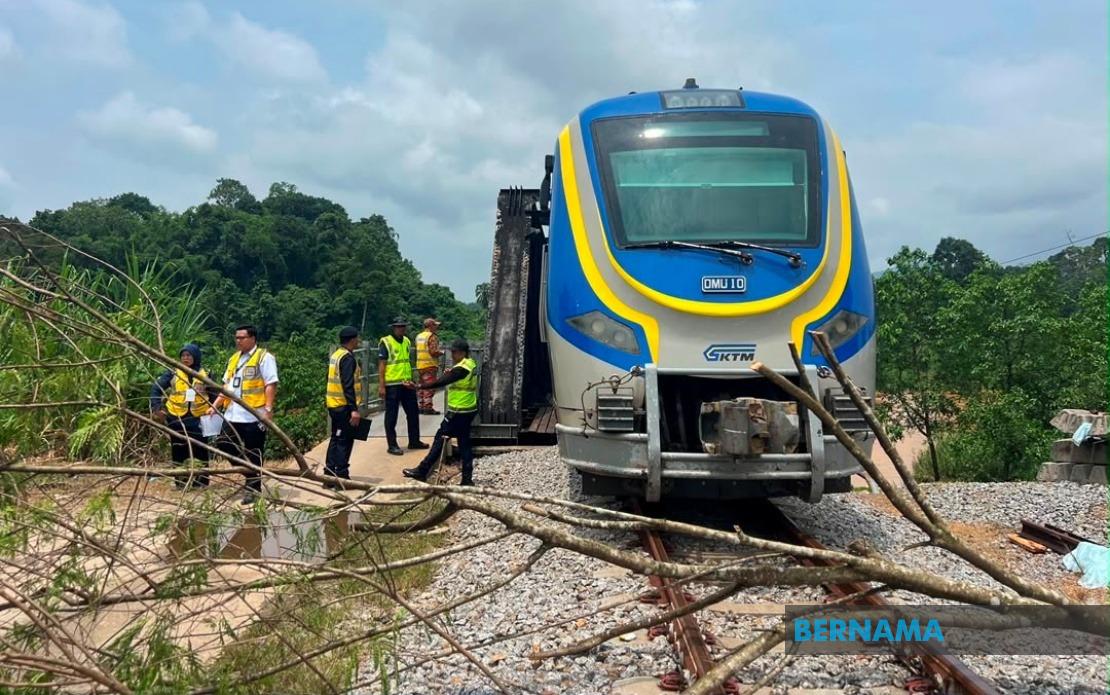
Malaysia's national railway operator has launched a comprehensive emergency response exercise on the EX-Kemubu route, bringing together hundreds of personnel from multiple government agencies to test the effectiveness of coordination and rescue protocols in one of the country's most geographically challenging railway corridors. The drill, conducted in Kuala Krai, represents Keretapi Tanah Melayu Berhad's systematic approach to ensuring preparedness for potential incidents along routes that traverse difficult terrain and remote locations far from urban centres and main arterial roads.
The training programme evaluated three critical dimensions of emergency response capacity: the speed at which rescue teams can physically reach an incident site, the timeliness of agency response once information is relayed from KTMB control centres, and the clarity and efficiency of information dissemination across all participating organisations. Khairul Naim Johdi, KTMB's Occupational Safety, Health and Environment general manager, emphasised that these assessment criteria reflect the distinctive challenges posed by the railway's geography, particularly in areas where distance from developed infrastructure can significantly delay rescue operations. The remoteness of the Kemubu corridor means that even minor delays in communication or access can have serious consequences for passenger safety and emergency response outcomes.
Access to railway incident sites in rural areas represents perhaps the most persistent obstacle facing Malaysian rescue services. Unlike urban railway networks where emergency personnel can reach most locations within minutes, rural routes like EX-Kemubu require rescue teams to navigate limited road infrastructure, sometimes through undeveloped terrain, to reach stranded passengers or accident scenes. This structural challenge necessitates different planning, resource deployment, and coordination strategies than those developed for urban operations. The training programme specifically selected the Kemubu route because its characteristics epitomise these difficulties—the corridor runs through remote regions, parallels river systems that can themselves become barriers during high water, and remains geographically isolated from major population centres and emergency service hubs.
The exercise involved approximately 350 personnel representing 11 distinct agencies, creating a genuinely comprehensive inter-organisational training environment. Participating organisations included the Royal Malaysia Police, the Malaysian Fire and Rescue Department, the Ministry of Health, the Malaysian Civil Defense Force, and the Department of Social Welfare, among others. This broad participation reflects the reality that effective emergency response requires seamless coordination across multiple hierarchies, jurisdictions, and operational protocols. Each agency brings distinct expertise, equipment, and legal responsibilities, and their integration into a unified response system depends fundamentally on shared understanding of procedures, clear communication channels, and pre-established coordination mechanisms.
KTMB conducts these large-scale drills annually, rotating them through the operator's four main operational regions to ensure that all railway corridors and their surrounding areas maintain preparedness levels appropriate to their specific risk profiles. Complementing these major exercises are smaller, more frequent training sessions throughout the year that focus on building and maintaining the operational proficiency of individual KTMB personnel. This two-tier training approach recognises that emergency response capability depends both on systemic coordination among multiple organisations and on the competence of individual staff members who may be the first personnel to respond to an incident.
The post-exercise evaluation process examines feedback from all participating agencies, with particular attention to identifying response delays, assessing the appropriateness and timing of actions by first responders, determining whether access protocols functioned effectively, and evaluating whether information dissemination occurred with sufficient clarity and speed. This analytical approach transforms each training exercise into a mechanism for continuous improvement, documenting procedural gaps, identifying communication breakdowns, and recognising instances where inter-agency protocols failed to function as intended. Such detailed post-mortems are essential for refining systems and preventing the repetition of identified deficiencies should a genuine emergency occur.
Khairul Naim highlighted that internal coordination and notification procedures within KTMB require ongoing attention and refinement. The railway operator's ability to swiftly convey accurate information about an incident to its operation controller—essentially KTMB's central command centre—represents the critical first step in triggering the broader emergency response system. Only when the operation controller receives and processes this information can it be relayed to external agencies such as police, fire and rescue services, and medical responders. Any delay or inaccuracy at this initial stage inevitably cascades through the entire response chain, potentially compromising the effectiveness of rescue efforts and threatening passenger safety.
Emergency preparedness within KTMB extends beyond reactive response capabilities to encompass comprehensive preparation across multiple dimensions. The operator must develop and maintain detailed emergency procedures applicable to the wide variety of incidents that could plausibly occur on its networks, from mechanical failures and derailments to natural disasters and security threats. Personnel must be trained not only on these procedures but must develop genuine proficiency in executing them under stress and in real-world conditions that may deviate from training scenarios. Passenger evacuation represents perhaps the most critical capability, as the safe and orderly removal of potentially hundreds of people from a disabled train in a remote location requires meticulous planning, adequate equipment, and well-trained personnel who understand their specific roles and responsibilities.
The Dabong and Kemubu route, specifically addressed in the training programme, represents a particularly significant focus for KTMB's emergency preparedness efforts. This corridor serves communities across Terengganu and Kelantan, providing essential transportation connectivity to regions where alternative transport options may be limited. The route's geographical isolation underscores why emergency preparedness in this area is not merely an operational matter but a public safety imperative affecting entire communities that depend on rail transport for connectivity to employment centres, medical facilities, and commercial networks.
For Malaysian passengers and communities relying on these rural railway services, the exercises and preparedness improvements being implemented by KTMB carry direct implications for their safety and security when travelling. Rural railway passengers often have limited alternatives to rail transport and may be more vulnerable to extended delays or difficulty in reaching medical care should an incident occur. The systematic approach evident in KTMB's training programme—rotating exercises through different regions, conducting frequent smaller training sessions, and implementing detailed post-exercise evaluations—suggests a genuine commitment to ensuring that geographical remoteness does not translate into inadequate emergency response capability. The involvement of 11 different government agencies demonstrates recognition that railway safety in Malaysia is a shared responsibility requiring coordination across multiple levels of government and organisational structures.

