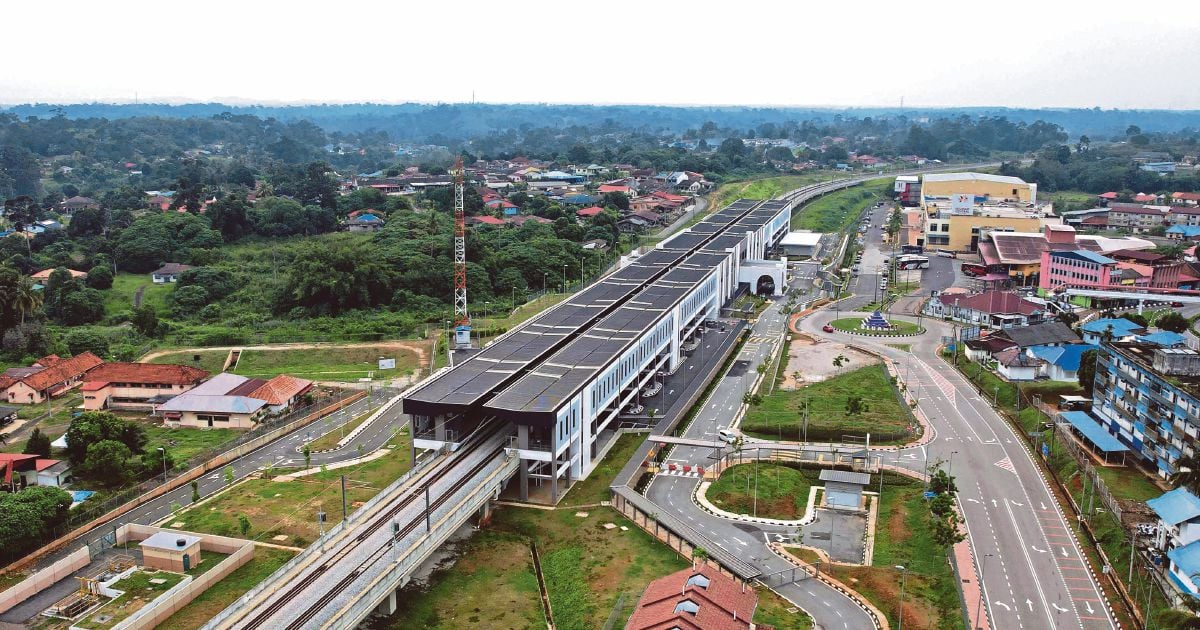
Malaysia's national railway operator Keretapi Tanah Melayu Berhad (KTMB) is mobilising significant additional transport capacity for the upcoming Johor state election this weekend, adding 7,464 seats across its southern Electric Train Service (ETS) corridor and introducing a fifth fare discount to ease voter access to polling stations.
The expanded service represents a strategic effort to facilitate electoral participation across the economically vital Johor state, which encompasses constituencies stretched across considerable distances. The ETS network, which connects major population centres along the west coast including Kuala Lumpur, Selangor, and Johor, forms a critical backbone for inter-city mobility in this region. By augmenting capacity during the election period, KTMB is attempting to remove logistical barriers that might otherwise discourage voters from travelling to their designated polling locations, particularly those working or studying away from their registered constituencies.
The 20 percent fare reduction applies specifically to passengers travelling within Johor on ETS services during the election period, effectively reducing ticket costs across one of Southeast Asia's busiest domestic rail corridors. This pricing intervention recognises that electoral participation often requires discretionary travel decisions, particularly among working-class and middle-income voters who may weigh transport costs against the inconvenience of voting. For a typical ETS journey within Johor, which might ordinarily cost between RM 25 and RM 50 depending on distance, the discount represents savings of RM 5 to RM 10 per ticket—a meaningful reduction that could influence travel decisions, particularly for families or individuals undertaking multiple trips.
The timing of this initiative reflects broader public policy considerations around election administration in Malaysia. State and federal authorities have increasingly recognised that infrastructure constraints and transport costs can create unequal access to voting rights, with rural and geographically dispersed voters facing particular disadvantages. By deploying additional capacity and reducing fares, KTMB is acknowledging that democratic participation requires not only legal rights but also practical facilitation through accessible transport networks. This approach has precedent in various democracies worldwide, where election commissions and transport operators collaborate to ensure that logistical factors do not suppress voter turnout.
For KTMB, the initiative also represents a significant operational undertaking. Deploying an additional 7,464 seats requires scheduling extra train services, deploying additional rolling stock from maintenance facilities, and coordinating with station staff and security personnel across the southern corridor. The decision suggests that KTMB management determined the operational costs justified by either government direction or recognition of their public service mandate during critical electoral periods. Such mobilisation necessarily draws resources from regular commercial operations and maintenance schedules, imposing real costs on the operator.
The southern ETS corridor is particularly strategically important for this exercise. Johor state, anchored by the port city of Johor Bahru and extending northward toward Negeri Sembilan, is Malaysia's second-largest economy by nominal gross domestic product and home to approximately 4.2 million residents. The state encompasses diverse constituencies ranging from coastal urban centres to interior agricultural and manufacturing regions. For voters in outlying areas or those who have relocated for employment, train travel represents one of few convenient inter-city options, making ETS service enhancement particularly valuable during elections.
The discount policy also carries equity implications worth examining. Those without private vehicle access—typically lower-income voters, students, and elderly citizens—are most dependent on public rail services for inter-constituency travel. By reducing ETS fares specifically during elections, KTMB is effectively targeting support toward these voter segments, potentially influencing turnout patterns across different demographic and socioeconomic groups. This raises broader questions about whether such targeted support during elections serves egalitarian goals or inadvertently privileges certain electoral outcomes.
From a regional Southeast Asian perspective, Malaysia's experience with using public infrastructure to facilitate electoral participation offers instructive lessons. Singapore, Thailand, and Indonesia face similar challenges in ensuring that geographic distance and transport costs do not create voting access disparities. KTMB's approach—combining capacity expansion with temporary price reductions—represents a pragmatic model that other regional transport operators might consider, particularly for serving dispersed rural electorates.
The initiative also reflects evolving expectations regarding state-owned enterprise responsibilities in democratic systems. Beyond commercial imperatives, KTMB is being positioned as an institution with obligations toward facilitating civic participation. This framing resonates with broader global trends toward corporate social responsibility, though in this case applied to a government-owned operator performing quasi-public functions. The question of whether regular fares adequately reflect KTMB's true cost of service delivery—a perennial debate in Malaysian transport policy—becomes particularly acute when the operator absorbs electoral support costs.
For passengers and voters, the practical benefits are straightforward: reduced fares and enhanced service reliability should increase travel options during the election period. However, the temporary nature of these measures raises questions about sustainability. Once the election concludes, fares revert to standard levels and additional capacity presumably returns to regular scheduling. This temporary intervention model, while politically expedient, does not address underlying questions about whether permanent ETS capacity and pricing are optimally calibrated for current and projected demand patterns across the southern corridor.
The Johor election therefore serves as a test case for integrating transport policy with electoral administration. Whether the additional capacity and discount fares demonstrably increase voter participation will likely be scrutinised in post-election analysis. Such data could inform future electoral support mechanisms and potentially shape broader conversations about KTMB's service levels and pricing philosophy beyond election periods.

