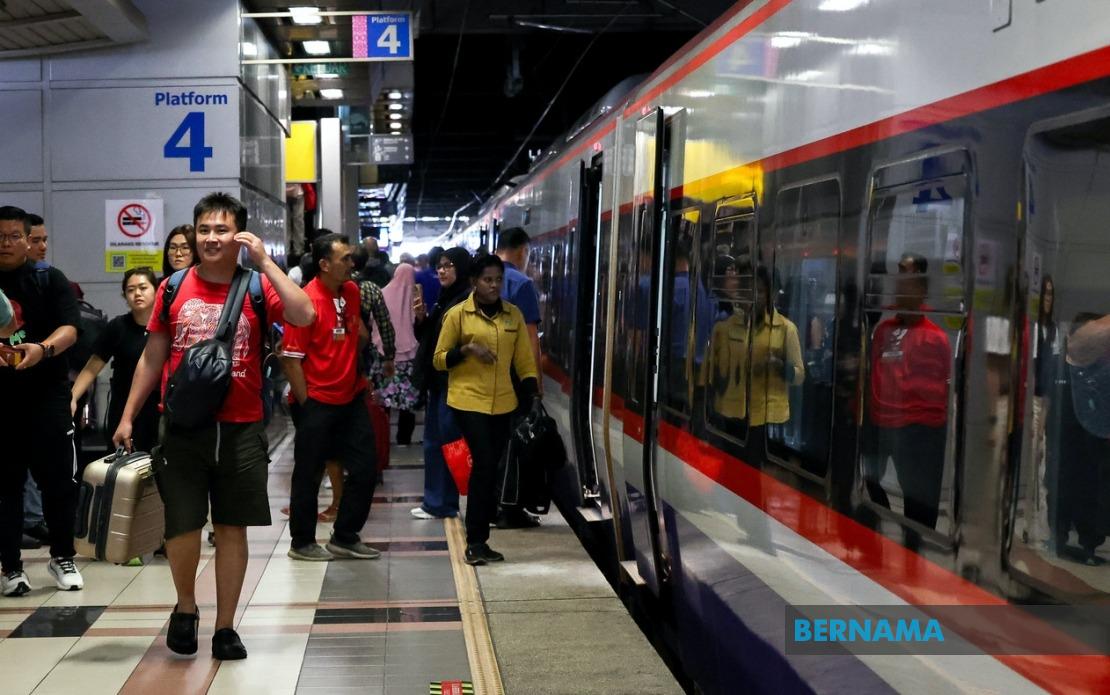
Keretapi Tanah Melayu Berhad has announced a significant boost to rail connectivity ahead of the Johor state election this weekend, rolling out 7,464 supplementary seats across its Electric Train Service network. The move reflects the operator's effort to manage the anticipated surge in passenger demand as Malaysians travel south to cast their votes, a seasonal challenge that transport authorities have come to expect during major electoral events across the peninsula.
The expansion targets two critical corridors serving the southern region: the KL Sentral to JB Sentral route and the connecting JB Sentral to Gemas line. KTMB will deploy eight additional train services in total—four on each route—to handle the influx of election-related travellers. By scheduling these services across July 10 through 12, the operator has aligned the enhanced capacity precisely with the polling window, ensuring voters have adequate transport options without creating unused capacity during off-peak periods.
This represents the second escalation of services within three weeks. An earlier batch of additional tickets launched on June 19 sold out rapidly, signalling robust demand among the travelling public. The swift depletion of those initial seats prompted KTMB to announce this follow-up phase, demonstrating how election cycles generate predictable yet substantial spikes in intercity rail usage. The fact that June's allocation evaporated completely indicates many Malaysians regard ETS as a preferable alternative to road transport for this journey, likely owing to comfort, cost-efficiency, and the predictability of rail schedules compared to highway congestion.
Each of the three operational days will accommodate 2,488 passengers per train series, yielding the cumulative total of 7,464 seats. This granular capacity planning suggests KTMB has analysed historical travel patterns during previous elections to calibrate the supply appropriately. The distribution across multiple days also prevents the bottleneck effect that could occur if all services were concentrated into a single 24-hour period, spreading demand and reducing station congestion during peak hours.
To sweeten the offer and drive uptake toward rail alternatives, KTMB is implementing a 20 per cent fare reduction across all enhanced ETS services during the three-day window. This pricing strategy serves dual purposes: it removes cost barriers for price-sensitive voters who might otherwise choose buses or personal vehicles, while simultaneously promoting sustainable transport infrastructure usage. For a typical intercity passenger, such a discount translates to meaningful savings on a round-trip journey, particularly important for working-class voters travelling from employment centres in Kuala Lumpur back to constituencies in Johor.
Ticket distribution follows a staggered opening pattern designed to manage the online booking rush. The JB Sentral to Gemas route commenced sales at 3.00 pm on the announcement date, while the KL Sentral to JB Sentral route opened reservations the following morning at 9.00 am. This staged rollout likely aims to prevent simultaneous server overload that could crash booking platforms and frustrate consumers—a technical lesson learned from previous major transport push announcements.
KTMB is emphasising cashless transactions through multiple digital channels: the KITS Style mobile application, the operator's official website, and self-service kiosk machines stationed throughout the railway network. This push toward electronic ticketing reduces administrative strain, minimises physical crowding at ticket counters, and creates a paper trail for demand analysis. For passengers, digital booking provides flexibility and confirmation security, particularly valuable during high-demand periods when manual queuing becomes impractical.
The operator has issued specific guidance to optimise the passenger experience during this elevated-traffic period. Travellers are instructed to arrive 30 minutes before departure, well above the typical preparation window, accounting for increased station volume and the earlier platform access closure, which occurs five minutes prior to train departure. These protocols reflect lessons from previous high-demand scenarios where insufficient arrival buffers led to missed departures and passenger frustration. By explicitly communicating these requirements, KTMB seeks to prevent bottlenecks and ensure orderly boarding.
This initiative underscores how electoral processes create legitimate planning challenges for transport operators. Malaysia's election system distributes polling across multiple jurisdictions on different dates, generating predictable but temporary surges in long-distance travel. KTMB's response—scalable capacity additions with promotional pricing and digital infrastructure—represents pragmatic demand management. However, it also highlights infrastructure constraints: the fact that previous additional capacity sold out completely within weeks suggests underlying supply limitations on these crucial routes that might warrant longer-term expansion planning.
For Malaysian voters, particularly those working in peninsular centres but maintaining electoral residence in Johor, these arrangements substantially reduce friction in exercising their democratic rights. Combined with employers' obligations to grant voting leave, enhanced rail services remove logistical barriers that could otherwise suppress turnout among mobile populations. The 20 per cent discount effectively subsidises democratic participation, aligning transport policy with electoral accessibility objectives.
The broader context extends beyond this single election. As Malaysia experiences continued urbanisation and internal migration, more citizens maintain split residency between employment locations and hometowns. Transport infrastructure that accommodates periodic high-volume movements during elections, religious holidays, and festival periods becomes increasingly important for social cohesion. KTMB's flexible approach—supplementing regular capacity during predictable peak periods rather than oversizing permanent infrastructure—represents cost-effective scalability.
Passengers requiring additional assistance can contact KTMB's call centre at 03-9779 1200 or access information through the operator's official social media channels. This multi-channel support availability recognises that not all passengers utilise digital booking platforms, and real-time assistance often proves necessary when navigating altered schedules. For elderly voters or those unfamiliar with online systems, telephone support maintains accessibility to these expanded services.

