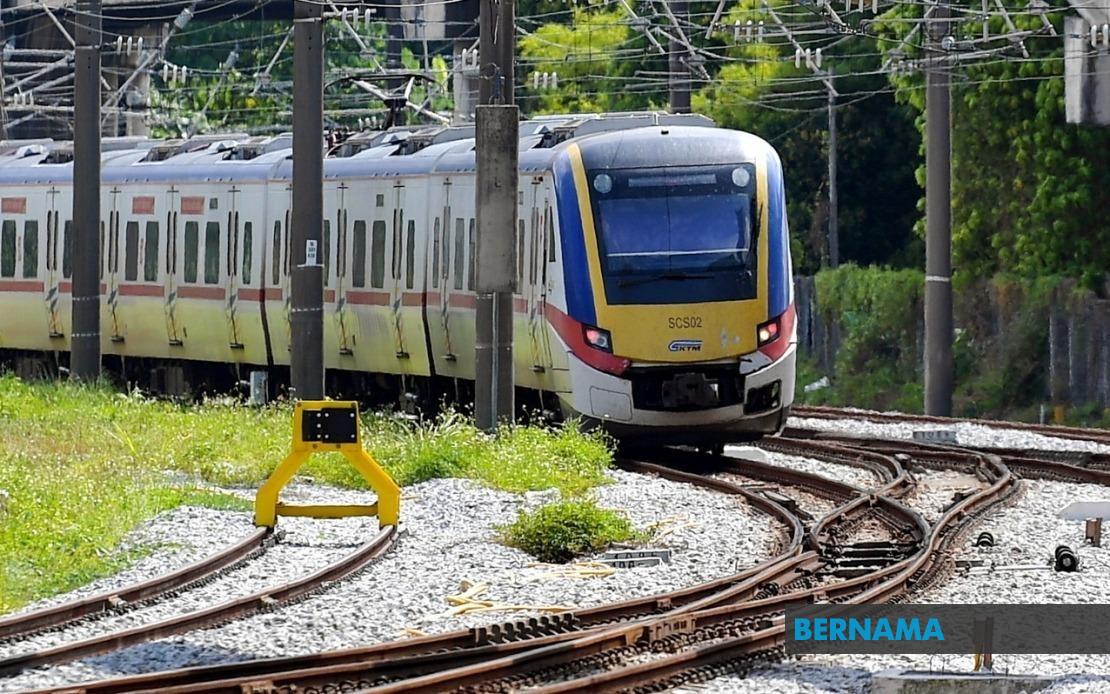
Keretapi Tanah Melayu Berhad (KTMB) is significantly expanding its rail capacity in the coming weeks, introducing 124 additional services that will put nearly 40,000 extra seats into circulation as Malaysians prepare to celebrate National Day and enjoy school holidays spanning late August and early September. The expansion represents a strategic response to what the national rail operator describes as a substantial uptick in travel demand during peak festive periods, when both leisure travellers and families undertaking holiday journeys converge on the rail network.
The bulk of this capacity injection centres on the Electric Train Service (ETS), Malaysia's premier high-speed rail offering, which will see 100 supplementary services introduced over three separate windows: August 21 to 23, August 28 to 31, and September 4 to 6. These hundred additional ETS runs will collectively provide 31,600 seats, addressing what has become a perennial bottleneck during holiday seasons when the service regularly reaches near-capacity operations. The timing of these deployments directly corresponds with school holiday schedules and National Day celebrations, suggesting that KTMB has calibrated its expansion using historical passenger flow data to anticipate where congestion is most likely to materialise.
Complementing the ETS expansion, KTMB's Electric Multiple Unit (EMU) Plus service—a regional passenger offering distinct from the higher-specification ETS—will operate an additional 24 services across selected dates within the August 21 to September 6 window. These EMU Plus additions will furnish a combined 7,344 seats and notably include an extension of the network reach into Bandar Tasik Selatan, potentially opening the service to commuters and holiday travellers in southern Kuala Lumpur who previously lacked convenient rail access. This geographical expansion suggests KTMB is not merely focused on increasing frequency on existing corridors but is strategically broadening the geographic footprint of its premium services.
On the commuter rail front, KTMB is also augmenting capacity within the northern sector of its KTM Komuter network. Eight supplementary services are being deployed on the Padang Besar-Butterworth-Padang Besar route between August 27 and 31, bringing the daily service count on that critical northern corridor to 46 trains. This northern expansion carries particular significance for cross-border travellers and residents of the Kedah and Perlis regions who depend on rail connectivity to reach Kuala Lumpur and other major economic centres. The infrastructure investments represented by these additional services underscore KTMB's commitment to maintaining competitive advantage against increasingly robust road and air transport alternatives.
Ticketing for all supplementary services opened to the public yesterday through KTMB's established sales channels, indicating that the operator has positioned itself to begin accepting bookings with minimal advance notice. This rapid deployment capability reflects logistical maturity and operational flexibility within KTMB's management structure. For Malaysian travellers accustomed to last-minute holiday planning decisions, the immediate availability of tickets removes a significant barrier to rail adoption during peak periods, potentially redirecting would-be vehicle users toward the rail network and achieving tangential benefits including reduced highway congestion and environmental outcomes.
The expansion initiative arrives precisely as KTMB commemorates the sixteenth anniversary of its ETS service, which commenced operations on August 12, 2010, with an initial route linking Kuala Lumpur to Ipoh. The celebration has encompassed customer appreciation activities spanning August 10 to 14, featuring promotional incentives including meal vouchers from KFC, complimentary travel tickets, and flat discounts of RM16. These retention-focused initiatives suggest that KTMB recognises the intensifying competitive landscape for medium-distance intercity transport and is deploying both capacity and promotional tools to defend market share against rivals offering comparable journey times and pricing structures.
The growth trajectory of the ETS over its 16-year operational history underscores the underlying strength of demand for premium rail services in Malaysia. Passenger numbers have reached a cumulative 44.3 million since inception, with recent monthly performance data revealing accelerating adoption rates. The January to July 2024 period witnessed 3.67 million ETS passengers, representing a 56 percent year-on-year increase from the 2.36 million passengers recorded in the identical window of 2023. This trajectory suggests that Malaysian travellers are progressively shifting preferences toward rail, driven potentially by enhanced service reliability, competitive pricing relative to domestic aviation, and mounting frustrations with highway congestion. For policymakers and transport planners, such passenger growth validates the strategic decision to invest in rail infrastructure and signals that supply constraints—rather than demand constraints—are the binding limitation on service expansion.
KTMB's group chief executive officer Datuk Azlan Shah Al Bakri contextualised the current expansion within a longer-term narrative of network development and service maturation. The ETS network has undergone systematic geographic expansion since its launch, with the Butterworth route added in 2015 and southward extensions anticipated at year's end, 2025. This methodical geographic rollout strategy reflects a deliberate approach to incrementally expanding the service footprint while building operational capacity and revenue base to finance subsequent expansion phases. The planned southward extension represents particularly significant strategic territory, as it would connect the ETS to population centres in Johor and potentially facilitate cross-border traffic with Singapore, positioning Malaysia as an increasingly integrated participant in regional transportation networks.
The substantial passenger growth documented in recent statistics merits deeper examination within the context of Malaysia's evolving transport dynamics. The 56 percent increase in ETS ridership within a single year reflects both absolute growth in total intercity traffic and a relative shift in modal choice, with passengers increasingly selecting rail over alternative transport methods. Several factors likely contribute to this shift: persistent highway congestion around the Klang Valley and northern corridors, competitive ticket pricing particularly on mid-week services, enhanced on-board amenities and punctuality reputation, and the broader regional trend toward sustainable transport adoption. For Malaysian businesses reliant on intercity logistics and commuting, ETS's expanded capacity translates into improved supply chain reliability and reduced employee transit times, generating positive spillover effects throughout the economy.
The implications of KTMB's expansion strategy extend beyond immediate capacity constraints and touch upon medium-term infrastructure adequacy. The introduction of nearly 40,000 additional seats during peak periods, while substantial, may still prove insufficient if current passenger growth trends persist. If the ETS continues absorbing passengers at a 56 percent annual rate, the railway will face renewed bottlenecks within approximately 12 to 18 months, necessitating further expansion commitments. This raises questions about the sustainability of purely supply-side responses to burgeoning demand and suggests that KTMB may eventually need to implement dynamic pricing mechanisms that discourage discretionary travel during absolute peak periods while incentivising off-peak usage patterns, maximising network utilisation across temporal dimensions rather than merely adding absolute capacity.
For regional observers and transport analysts, Malaysia's ETS expansion provides a valuable case study in how upper-middle-income nations can leverage rail infrastructure to manage rapid urbanisation and intercity mobility demands. The service has evolved from a nascent technology demonstration in 2010 to a critical component of Malaysia's transport network, carrying tens of millions of passengers annually. The current expansion cycle, timed strategically around peak travel periods and accompanied by targeted marketing initiatives, reflects maturing operational management and customer-focused service design. As Southeast Asia grapples with escalating urban congestion and environmental pressures, the demonstrated success of Malaysia's ETS model offers a replicable template for neighbouring nations considering comparable investments in high-speed and premium regional rail services.

