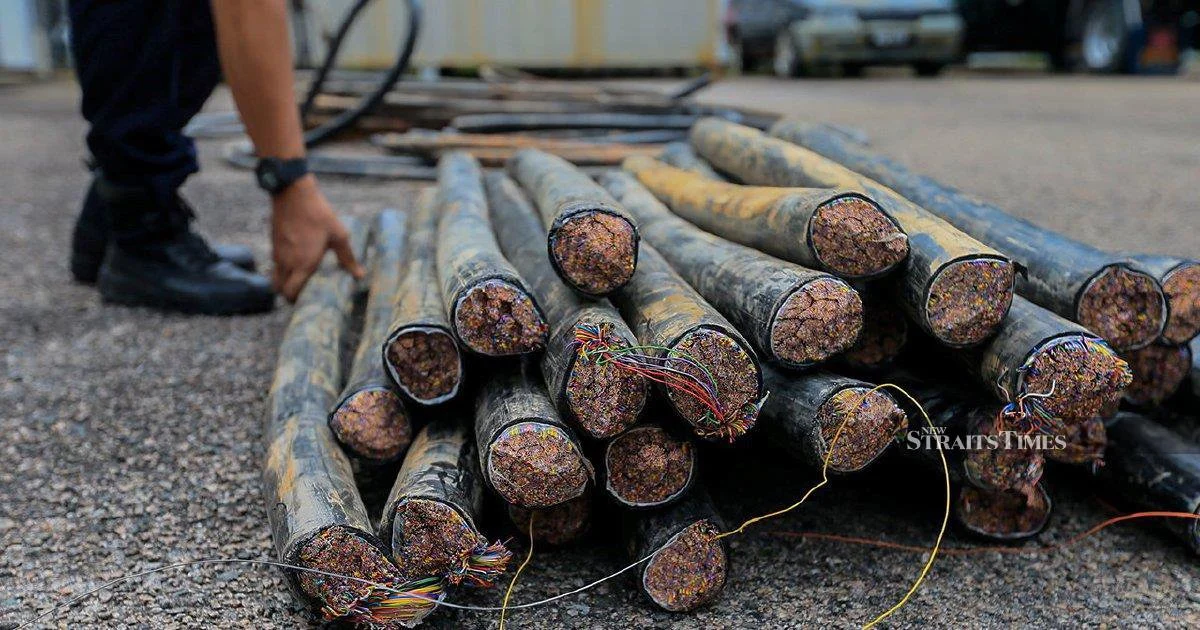
Police authorities in Kuala Lumpur are reporting a significant downturn in cable theft incidents, marking what appears to be a turning point in combating a crime category that has long plagued the capital's infrastructure and telecommunications networks. The enforcement statistics reveal a substantial 65 per cent reduction in reported cases, dropping from 205 incidents across the entire 2025 calendar year to just 71 complaints logged between January and May of the current period. This improvement reflects intensified police operations targeting organised cable theft rings that have historically targeted telecommunications infrastructure, electrical lines, and other valuable copper and aluminium components.
The reduction in cable theft represents more than simply a statistical improvement; it demonstrates the tangible impact of coordinated law enforcement strategies specifically designed to dismantle the supply chains and networks facilitating these crimes. Police have simultaneously intensified arrest operations, with 85 suspects taken into custody throughout the year so far, a figure that suggests officers are not only responding to reported incidents but actively pursuing individuals involved in the illicit trade. The focus on arresting perpetrators signals a shift toward breaking the vicious cycle that makes cable theft attractive to criminals in the first place.
Cable theft has traditionally presented particularly acute challenges for Malaysian authorities. The crime involves highly organised networks of thieves, dealers, and scrap metal merchants who exploit infrastructure vulnerabilities to strip valuable conducting materials from electrical systems, telecommunications networks, and railway lines. These thefts create immediate public safety risks, disrupting essential services ranging from telecommunications to power distribution, potentially affecting hospitals, businesses, and residential areas across the capital. The cascading economic costs extend far beyond the direct value of stolen materials, encompassing repair expenses, service disruptions, and productivity losses across multiple sectors.
Kuala Lumpur's vulnerability to cable theft stems from its sprawling urban infrastructure and the high concentration of valuable telecommunications and electrical networks concentrated throughout the metropolitan area. Thieves exploit gaps in security monitoring, particularly targeting remote or poorly supervised sections of underground and overhead lines during night-time hours. The relatively quick conversion of stolen cables into cash through informal scrap metal dealers has made the crime particularly attractive to criminal syndicates operating across Malaysia and the broader Southeast Asian region.
The arrest of 85 suspects represents police efforts to attack the problem from multiple angles, targeting not only the individuals who physically remove cables but also those operating within the distribution networks that move stolen materials toward scrap dealers and refiners. Law enforcement agencies appear to be focusing on breaking the economic incentives that drive cable theft by disrupting the market for stolen materials. This multi-layered approach represents a departure from earlier enforcement efforts that often focused narrowly on responding to individual incidents rather than dismantling organised networks.
The improved statistics emerge amid broader police initiatives across Malaysia to combat infrastructure-related crimes. Telecommunications companies and utility providers have simultaneously invested in enhanced security measures, including improved fencing, surveillance systems, and monitoring protocols around vulnerable infrastructure assets. These private-sector investments, combined with police operations, appear to be creating a deterrent effect that is beginning to bear measurable results in Kuala Lumpur.
For Malaysian telecommunications providers and utility companies, the declining theft figures offer some relief from operational pressures that have mounted over recent years. Network operators have faced substantial losses from cable thefts that required emergency repairs, service restoration, and infrastructure replacement. The reduction in incidents translates directly into improved service reliability for customers across the capital, particularly for businesses that depend on uninterrupted telecommunications connectivity. Hospitals, financial institutions, and essential services benefit most significantly from more stable infrastructure environments.
The decline also carries implications for regional law enforcement efforts. Cable theft remains a persistent challenge across Southeast Asia, with syndicates operating across multiple countries, including Thailand, Indonesia, and the Philippines. Kuala Lumpur's success in reducing incidents could provide valuable lessons for police forces elsewhere in the region seeking to develop effective counter-strategies. The Malaysian approach combining arrest operations, infrastructure security enhancements, and supply chain disruption offers a template that other nations might adapt to their local circumstances.
However, sustainable progress will require maintaining enforcement pressure and preventing the emergence of new criminal networks seeking to exploit any relaxation of police vigilance. The 71 cases recorded during the five-month period, while substantially lower than historical rates, still represent meaningful losses and service disruptions. Police authorities and infrastructure operators will likely continue refining their strategies to drive numbers down further and establish cable theft as a declining crime category in Malaysia's capital city.