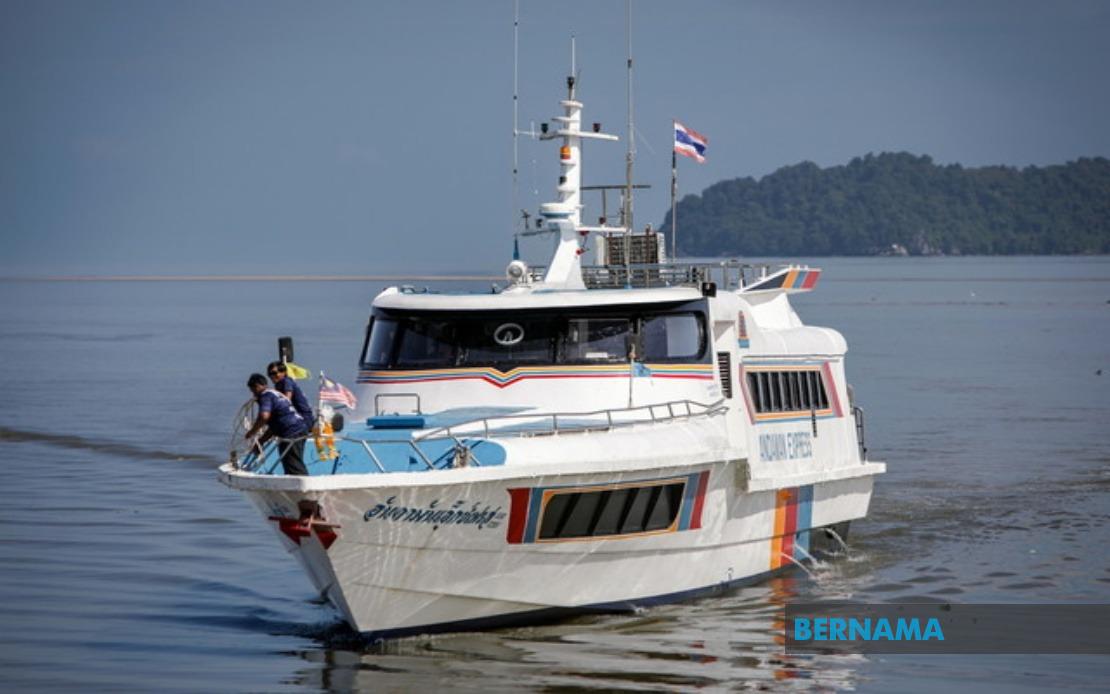
After lying dormant for more than three years due to the COVID-19 pandemic, the maritime link connecting Kuala Perlis in Perlis with Satun in Thailand is set to spring back to life this Thursday, July 9. The resumption of this strategically important ferry route promises to unlock significant opportunities for bilateral tourism cooperation and regional economic development across the Malaysia-Thailand border.
Perlis Menteri Besar Abu Bakar Hamzah has emphasised the broader strategic vision underpinning the ferry service's return, positioning it as a catalyst for integrated tourism development across three major UNESCO-designated geopark regions. The collaboration framework will unite the Perlis Geopark with its Thai counterpart, the Satun UNESCO Global Geopark, alongside the established Langkawi UNESCO Global Geopark, creating a unified tourism corridor that leverages the natural and geological attractions spanning the northern border region. This tripartite approach reflects recognition that regional tourism has evolved beyond single-destination marketing toward comprehensive destination networks that encourage visitors to explore multiple areas within a single itinerary.
To operationalise this vision, officials plan to establish a dedicated governance committee comprising representatives from Perlis, Satun, and Langkawi. This institutional mechanism will facilitate ongoing coordination on tourism promotion, infrastructure development, and visitor facilitation between the three jurisdictions. By formalising these relationships through structured cooperation, the three regions aim to develop more sophisticated and attractive tourism products that capitalise on their combined cultural, geological, and natural heritage. The committee structure also allows for regular dialogue on shared challenges including environmental management, visitor capacity, and sustainable tourism principles.
The reopening comes following a detailed simulation exercise conducted at Tammalang Jetty in Satun, where operational procedures were tested to ensure readiness. Abu Bakar confirmed that all critical components of the service functioned smoothly during this trial, encompassing ferry operations protocols, maritime safety procedures, and standard operating requirements. This methodical approach reflects the complexity of managing an international maritime crossing, requiring seamless coordination between Malaysian and Thai regulatory authorities.
Regarding regulatory compliance, the Perlis state government has worked extensively with multiple Malaysian agencies to ensure comprehensive adherence to all cross-border procedures. The Royal Malaysian Customs Department, Malaysian Immigration Department, Marine Department, and various security agencies have all confirmed their readiness to process passengers and vehicles. This multi-agency coordination represents the foundation upon which the service can function reliably, with each department playing a crucial role in verifying documentation, conducting security screening, and maintaining border integrity.
Operationally, the ferry service will commence with a conservative schedule of one daily sailing, a prudent approach that allows operators and authorities to identify any logistical complications before scaling up. Additional sailings will be introduced progressively as demand justifies expansion, ensuring that capacity aligns with actual usage patterns rather than creating expensive oversupply. This phased approach provides flexibility to adjust frequencies in response to seasonal tourism fluctuations and market conditions.
Fare competitiveness has emerged as a priority consideration in discussions between state officials and ferry operators. Abu Bakar has confirmed that ongoing negotiations are focused on maintaining rates that appeal to price-sensitive regional travellers whilst ensuring operators maintain viable financial returns. There is also consideration being given to introducing promotional pricing during the initial phase of operations, a common market strategy designed to generate awareness and trial among potential users who may be unfamiliar with the route or initially hesitant about cross-border ferry travel.
The Perlis state government is simultaneously investing in terminal infrastructure improvements at the Kuala Perlis Roll-on-Roll-off (Ro-Ro) Terminal. These upgrading works include constructing dedicated ferry access routes designed to streamline vehicle and passenger movement, reducing congestion and improving the overall user experience. Enhanced terminal facilities signal confidence in long-term demand and reflect an understanding that journey quality begins at the departure point, with efficient ground-side operations essential to customer satisfaction and service reputation.
For Malaysia and Thailand's broader economic relationship, the ferry route carries significance beyond tourism statistics. The crossing provides a tangible symbol of bilateral cooperation in an era when both nations are emphasising increased regional integration and people-to-people connectivity. The route facilitates not only leisure travel but also potentially business movement, educational exchanges, and cultural interactions across the maritime border. For Perlis particularly, which has historically been Malaysia's least-developed state, the tourism stimulus presents meaningful opportunity for revenue generation and employment creation in hospitality, transport, and services sectors.
The psychological dimension of reopening this route should not be underestimated. For three years, COVID-19 forced Southeast Asian borders into isolation mode, with ferry services across the region suspended and international travel severely restricted. The resumption of this Kuala Perlis-Satun crossing represents a tangible marker that cross-border mobility is normalising, confidence in regional stability is returning, and economic interdependence between neighbouring nations remains valuable. For residents and businesses on both sides of the border, particularly those dependent on tourism and cross-border commerce, this development signals that the pandemic disruption phase has conclusively ended.
Success of the ferry service will ultimately depend on effective execution across multiple operational and marketing dimensions. State and national authorities must deliver reliable, safe, and efficient services that meet international maritime standards. Simultaneously, tourism bodies need to actively promote the route to international visitors and position the Perlis-Satun-Langkawi tourism corridor as a distinctive regional offering. If these elements align successfully, the ferry route could evolve from a simple transport connection into an integral component of Southeast Asian tourism geography, facilitating movement across an international boundary in ways that strengthen both economies and cultural understanding.

