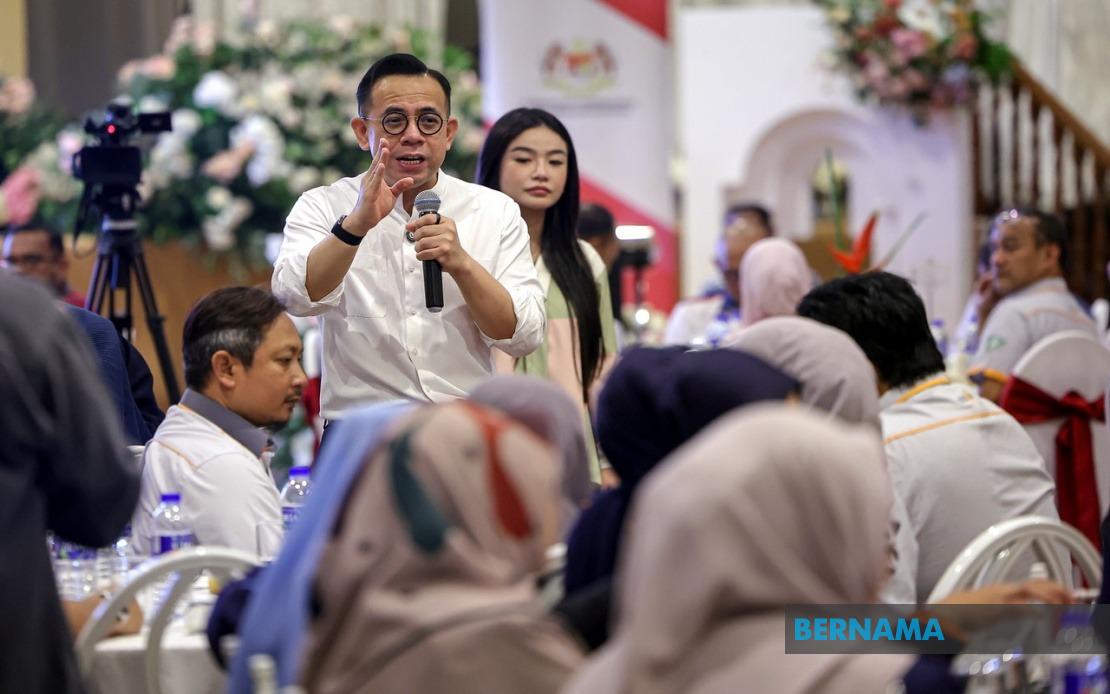
Malaysia's Ministry of Entrepreneur Development and Cooperatives (KUSKOP) has injected nearly RM7 billion into the domestic entrepreneurial ecosystem during the opening half of 2026, channelling support to over 213,000 micro, small and medium enterprises through its signature Power Up 10K initiative. Minister Steven Sim announced the milestone at the Negeri Sembilan KUSKOP staff assembly, underscoring the government's intensified push to fortify the MSME sector against mounting international economic headwinds. The disbursement represents substantial progress towards the ministry's RM15 billion allocation for the full calendar year, positioning KUSKOP on track to meet its ambitious annual funding targets.
The Power Up 10K programme operates as KUSKOP's principal vehicle for direct financial support, delivering capital and concessional financing through an interconnected network of government agencies and development institutions. By concentrating resources across multiple financing schemes and assistance pathways, the initiative aims to democratize access to capital that has historically eluded Malaysia's vast grassroots entrepreneurial base. The geographic spread of beneficiaries—spanning rural and urban centres alike—suggests that the ministry's distribution mechanisms are beginning to penetrate beyond traditional business hubs, addressing a longstanding gap in inclusive economic development.
Negeri Sembilan's experience exemplifies this nationwide rollout. The state has received RM345 million earmarked for entrepreneurial support, benefiting approximately 6,600 local business operators. This represents a meaningful injection into a state economy where MSMEs constitute the employment backbone, particularly in agriculture, tourism, and small-scale manufacturing. Sim emphasized that channelling such resources to grassroots entrepreneurs demonstrates the government's capacity to translate policy into tangible economic benefit, a critical indicator for public confidence in state-level implementation of national programmes.
The minister's comments reveal an underlying strategic shift in how KUSKOP approaches its mandate. Rather than maintaining a passive posture where entrepreneurs must navigate bureaucratic channels to discover available support, the ministry is pivoting toward proactive outreach and competitive delivery among its constituent agencies. This reorientation acknowledges a persistent criticism of Malaysian government programmes: that beneficiaries often remain unaware of schemes designed to assist them, resulting in incomplete uptake and resources left untapped. By instructing state-level organizations to accelerate fund disbursement and intensify promotional campaigns, Sim is attempting to remedy this implementation gap.
The emphasis on reducing compliance burdens reflects a pragmatic recognition of MSME constraints. Entrepreneurs operating in Malaysia's competitive landscape face multiple regulatory obligations spanning labour law, tax administration, local council licensing, and sector-specific regulations. While macroeconomic factors like international commodity price volatility lie beyond government control, the cumulative weight of domestic compliance costs represents a controllable variable. KUSKOP's repositioning toward cost reduction acknowledges that even modest decreases in administrative friction can meaningfully improve cash flow and profitability for small operators already operating on razor-thin margins.
The Power Up 10K initiative's halfway achievement also reflects broader strategic priorities within Malaysia's economic framework. As the nation seeks to attract and retain manufacturing capacity amid global supply chain reconfiguration, fostering a robust ecosystem of domestic suppliers and service providers becomes increasingly vital. MSMEs frequently function as critical nodes in these value chains, yet they have traditionally lacked consistent access to growth capital and technical support. By deploying RM7 billion in the first six months, KUSKOP is signalling sustained commitment to this constituency, potentially enhancing Malaysia's competitiveness as a manufacturing hub.
However, the sheer scale of the MSME population means that even RM15 billion annually serves only a fraction of Malaysia's entrepreneurial base. Industry estimates suggest the country hosts over 900,000 registered MSMEs, implying that KUSKOP's current fiscal allocation reaches perhaps two percent of potential beneficiaries in any given year. This structural limitation underscores the importance of the ministry's shift toward efficiency and outreach—maximizing the multiplicative impact of available funds through targeted support for high-potential ventures and clusters with significant job creation capacity.
The programme's financing mechanisms merit scrutiny for their long-term sustainability. Government-provided or subsidized capital tends to raise expectations of perpetual support, potentially distorting entrepreneurial behaviour and market dynamics. Effective MSME development requires moving beyond direct capital injection toward building institutional capacity, technical expertise, and market linkages that enable entrepreneurs to access private financing and operate sustainably. KUSKOP's successful recipients should ideally graduate toward conventional banking relationships, freeing government resources for new entrants and more challenging client segments.
Regional context further illuminates the significance of Malaysia's MSME support apparatus. Neighbouring economies including Thailand, Indonesia, and Vietnam have implemented comparable programmes with mixed results, often hampered by administrative overhead, inadequate targeting mechanisms, and insufficient monitoring of deployment outcomes. Malaysia's relatively developed financial infrastructure and institutional capacity position KUSKOP to deliver superior programme execution if sustained focus on implementation quality is maintained. The ministry's explicit instruction for agencies to accelerate disbursement and expand promotional activity suggests leadership awareness of these comparative advantages and vulnerabilities.
Looking forward, the ministry faces the challenge of converting initial capital provision into sustained business growth and employment generation. Impact measurement will prove crucial—understanding not merely how many entrepreneurs received funds but whether those resources generated durable enterprises, expanded payrolls, and increased tax contributions. Rigorous evaluation of Power Up 10K's outcomes will determine whether RM15 billion represents sound investment in economic resilience or funding consumed by enterprises lacking genuine growth potential.
Sim's call for agencies to embrace competitive delivery models also carries organizational implications. Civil servants accustomed to reactive, demand-driven service provision may require reorientation toward proactive outreach and performance metrics emphasizing speed and accessibility rather than procedural compliance. This cultural shift, though implicit rather than explicitly mandated, represents perhaps the most significant institutional challenge confronting KUSKOP's revised strategic direction.

