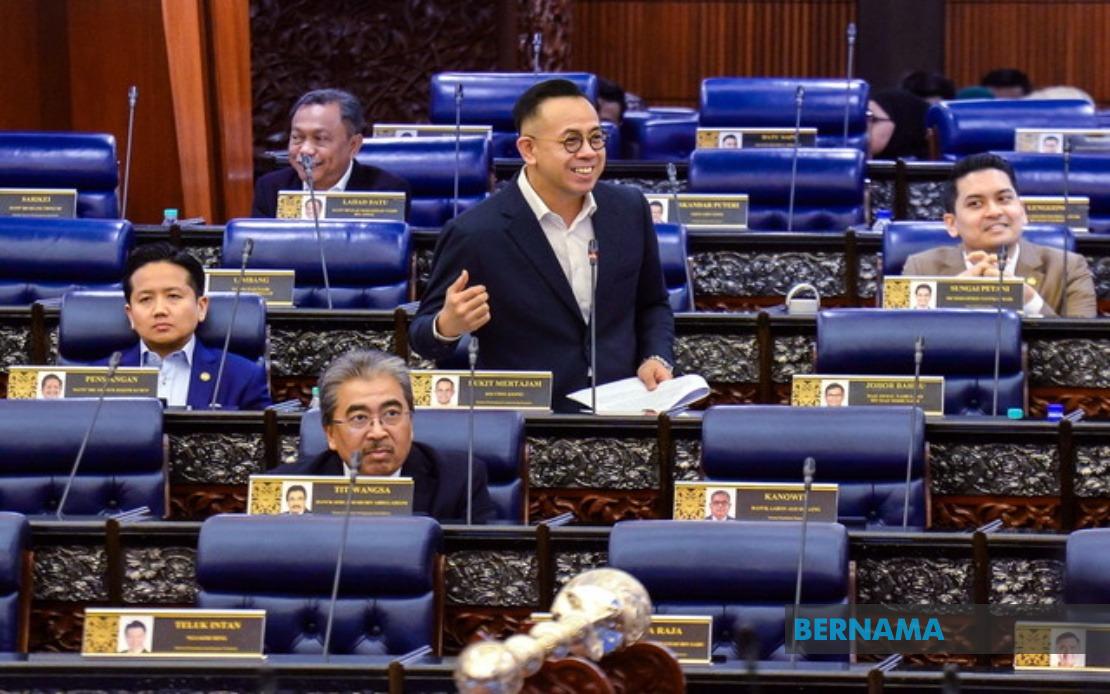
The Malaysian government's push to develop Bumiputera entrepreneurial capability has reached a significant financial milestone, with the Ministry of Entrepreneur and Cooperative Development disclosing that it has deployed nearly RM3 billion across various support initiatives between 2023 and 2025. Minister Steven Sim Chee Keong outlined the scale of this investment while responding to parliamentary questions, underscoring the government's commitment to creating a more robust ecosystem for indigenous business owners and highlighting the tangible outcomes that have emerged from these programmes.
While raw expenditure figures dominate budget discussions, Minister Sim emphasised that the true measure of success lies in verifiable performance metrics rather than spending alone. The ministry tracks several key outcome indicators to assess programme effectiveness, including achievement of at least 20 per cent sales increases among participating entrepreneurs and the successful expansion of 150 companies to larger operational scales. This focus on measurable results reflects growing pressure within government to demonstrate concrete returns from public investment rather than simply accounting for funds dispersed.
The scope of KUSKOP's financing activities extends well beyond the Bumiputera-focused programmes, with the ministry approving RM5 billion in financing during the first five months of 2025 alone. This broader allocation has benefited nearly 180,000 entrepreneurs across different racial groups and business sectors nationwide, indicating that while Bumiputera empowerment remains a priority, the ministry operates an inclusive framework supporting entrepreneurial development more generally across Malaysian society.
Within the specifically targeted Bumiputera initiatives, the figures underscore the scale of direct support flowing to indigenous entrepreneurs. During the period from 2025 through May 2026, KUSKOP agencies have channelled RM1.407 billion in approved financing to more than 53,000 Bumiputera entrepreneurs, with a notable sub-allocation of RM251 million directed toward more than 11,400 young Bumiputera entrepreneurs. This generational focus suggests the ministry recognises youth as critical to sustaining long-term entrepreneurial momentum within the Bumiputera community.
Beyond conventional financing, KUSKOP has integrated sectoral development strategies into its empowerment agenda. The ministry is actively promoting halal industry participation through multiple programmes designed to help entrepreneurs navigate certification requirements and access broader regional halal markets. This approach acknowledges that Malaysian Bumiputera businesses possess inherent advantages in Islamic commerce, particularly given Malaysia's position as a hub for halal standards and certification in Southeast Asia and beyond.
Governmental support infrastructure has evolved significantly in response to longstanding criticism that aspiring entrepreneurs face fragmentation across multiple agencies and support schemes. When prompted about establishing a unified coordination mechanism, Minister Sim revealed that KUSKOP has designated SME Corp Malaysia as the central coordinating agency responsible for consolidating entrepreneurial assistance. This entity now functions as a single access point for information on financing options, grants, funds, and other support mechanisms available to micro, small, and medium-sized enterprises.
The coordination challenge remains substantial given the scale of the ecosystem. More than 60 government agencies currently administer some form of entrepreneurial support, creating a bewildering landscape for business owners seeking resources. To address this fragmentation, KUSKOP has developed an integrated portal and online one-stop-centre that catalogues the various programmes and mechanisms available across the government apparatus. SME Corp's expanded mandate includes facilitating information provision, directing applicants through appropriate channels, and connecting entrepreneurs requiring specific resources with the relevant implementing agencies.
For Malaysian entrepreneurs seeking to expand or establish businesses, this evolving infrastructure holds significant practical implications. The consolidation of information through centralised platforms reduces search costs and improves access to support that previously required navigation of separate agency websites and application processes. Bumiputera entrepreneurs in particular benefit from dedicated financing streams and age-specific programmes that recognise demographic realities within the indigenous business community.
The scale of investment and the articulated focus on measurable outcomes suggest that KUSKOP's approach reflects evolving thinking about entrepreneurial development policy. Rather than viewing support as charity or wealth redistribution, the ministry increasingly emphasises business viability and growth metrics. This reframing matters for programme sustainability and political credibility, particularly in an environment where government spending faces scrutiny and demands for demonstrated effectiveness.
The implications for Southeast Asian business observers extend beyond Malaysia's borders. As regional governments grapple with entrepreneurship policy and indigenous economic empowerment, Malaysia's experience with large-scale, outcome-focused support programmes offers instructive lessons. The emphasis on measurable sales growth, business expansion, and coordinated delivery across multiple agencies reflects international best practices in entrepreneurial development, adapted to Malaysia's specific constitutional commitment to Bumiputera advancement.
Looking forward, the success of these initiatives hinges partly on programme quality rather than funding volume alone. Entrepreneurs accessing RM1.407 billion in Bumiputera financing must receive genuine business support—including mentorship, market access, and operational guidance—rather than merely accessing capital. Similarly, the effectiveness of the consolidated portal and SME Corp's coordination role depends on whether these mechanisms genuinely simplify access or merely create additional bureaucratic layers.
The government's emphasis on specific numerical targets, including the RM3 billion expenditure and the 150 company expansion achievements, provides a baseline for evaluating future performance. As KUSKOP continues implementing programmes through 2026 and beyond, stakeholders will scrutinise whether subsequent investment rounds yield proportional improvements in Bumiputera entrepreneur outcomes and whether the consolidated support infrastructure genuinely reduces barriers to business development across Malaysia's diverse entrepreneurial landscape.

