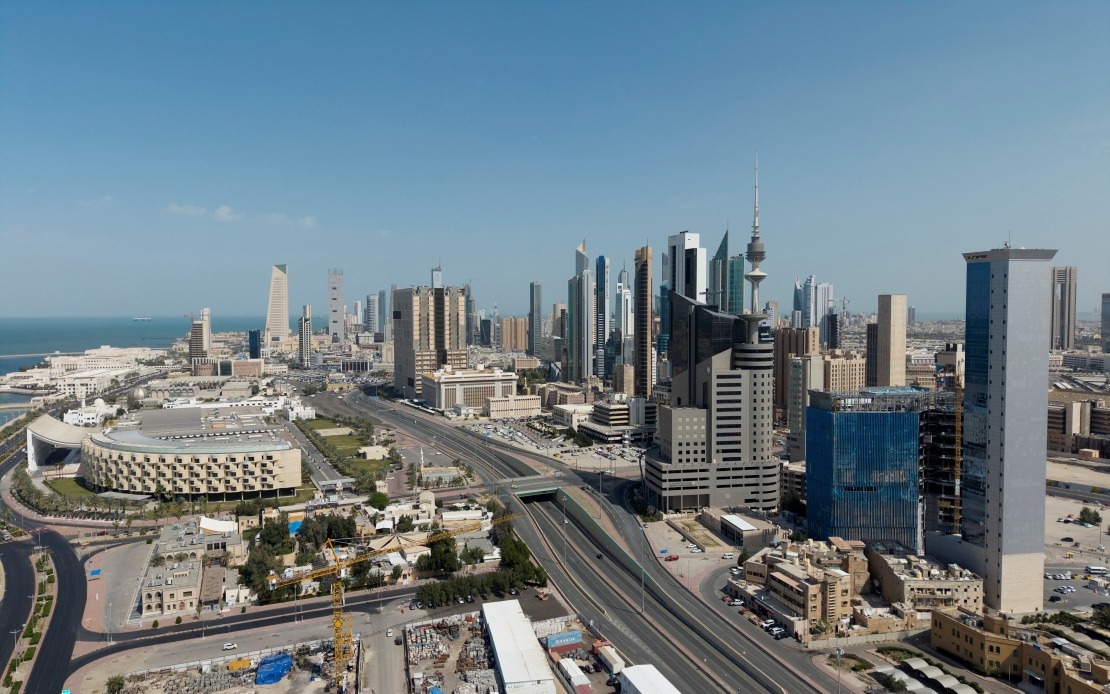
Kuwait has unveiled a substantial emergency financing mechanism worth $100 million to accelerate the repair and reconstruction of infrastructure damaged during the recent escalation with Iran, underscoring the Gulf state's determination to restore its physical assets and demonstrate economic resilience. The Kuwait Emergency Response Fund, administered through the Kuwait Fund for Arab Economic Development (KFAED), represents a strategic policy response to address the aftermath of military tensions that have reverberated across the Middle East and created fresh economic pressures on the region.
Foreign Minister Sheikh Jarrah Jaber Al-Ahmad Al-Sabah formally announced the initiative, framing it within Kuwait's broader approach to managing national crises and strengthening institutional capacity for rapid response. The minister characterised the recent military activities as "Iranian aggression," reflecting Kuwait's position in the complex geopolitical standoff between Tehran and Western powers. By establishing this dedicated fund, Kuwait is signalling to its citizens, investors, and international partners that the government possesses both the financial means and organisational will to restore normalcy and maintain continuity of essential services.
The financial architecture of the emergency fund reveals Kuwait's pragmatic approach to crisis management. Acting Director General of the KFAED Waleed Al-Bahar explained that the initiative implements a cabinet decision and will function as a systematic mechanism for evaluating reconstruction proposals and allocating resources according to priority. Rather than dispersing funds haphazardly, the framework establishes transparent criteria for assessing financing requests and sequencing projects, ensuring maximum impact and preventing wasteful expenditure during a period of heightened fiscal pressure.
Kuwait's appeal to both government ministries and the private sector to contribute additional capital reflects recognition that the initial $100 million allocation may prove insufficient for comprehensive reconstruction. By soliciting voluntary contributions from corporate entities and state institutions, the government is building a broader coalition for recovery whilst distributing the financial burden beyond the state budget. This approach has become increasingly common in Gulf economies facing infrastructure damage, as it mobilises domestic capital and reinforces social cohesion around shared recovery objectives.
The timing of this announcement carries significant implications for Gulf stability and economic planning. Earlier in 2024, on February 28, the United States and Israel conducted coordinated military operations targeting Iranian positions, escalating tensions that had simmered since the October 2023 conflict in Gaza. Iran subsequently responded with barrages of missiles and drones directed at Israeli targets and American military installations stationed throughout the region, including in neighbouring countries that host coalition forces. Kuwait, positioned along crucial shipping lanes and hosting significant American military presence, faced collateral risks from this exchange of fire.
For Malaysia and other Southeast Asian nations maintaining balanced relationships across the Middle East, Kuwait's response demonstrates how Gulf states are managing conflict-related economic disruptions. The establishment of structured emergency funds suggests that regional powers expect periodic military confrontations to remain part of their security calculus, necessitating institutional mechanisms for rapid recovery. This has implications for trade, investment, and logistics throughout the region, as disruptions to Gulf infrastructure can ripple across global supply chains in which Malaysian businesses participate extensively.
The fund also reflects Kuwait's desire to maintain investor confidence during uncertain geopolitical conditions. By pre-positioning financial resources for infrastructure repair, the government signals that damage from military incidents will not derail long-term economic development or compromise the nation's ability to provide essential services. This reassurance matters particularly for foreign investors evaluating Gulf states as destinations for capital deployment, as political and security stability directly influence investment decisions and insurance costs.
From a regional perspective, Kuwait's initiative sets a precedent that may influence how other Gulf Cooperation Council members respond to similar crises. Saudi Arabia, the United Arab Emirates, and other GCC states face comparable security challenges and infrastructure vulnerabilities, and successful implementation of Kuwait's emergency fund model could encourage adoption of similar mechanisms elsewhere. This standardisation of crisis response protocols across the Gulf could enhance regional resilience and foster greater coordination on reconstruction priorities.
The broader context reveals how Middle Eastern economies are adapting institutional frameworks to accommodate military conflict as an ongoing risk rather than an exceptional occurrence. Rather than treating infrastructure damage as a temporary shock requiring ad hoc responses, governments are establishing permanent financial vehicles for rapid mobilisation. This represents a subtle but significant shift in how states conceptualise national security and economic preparedness, treating reconstruction capacity as a strategic asset comparable to military capability.
For Malaysian stakeholders engaged in Gulf trade, logistics, and investment, the establishment of this emergency fund signals continuity and institutional confidence. Kuwait's willingness to allocate substantial capital to rapid reconstruction suggests that disruptions, while serious, will not produce prolonged economic paralysis. This matters for Malaysian companies operating in the region or relying on Gulf supply chains, as it provides some assurance that critical infrastructure will be restored efficiently and commercial activities can resume within relatively predictable timeframes.

