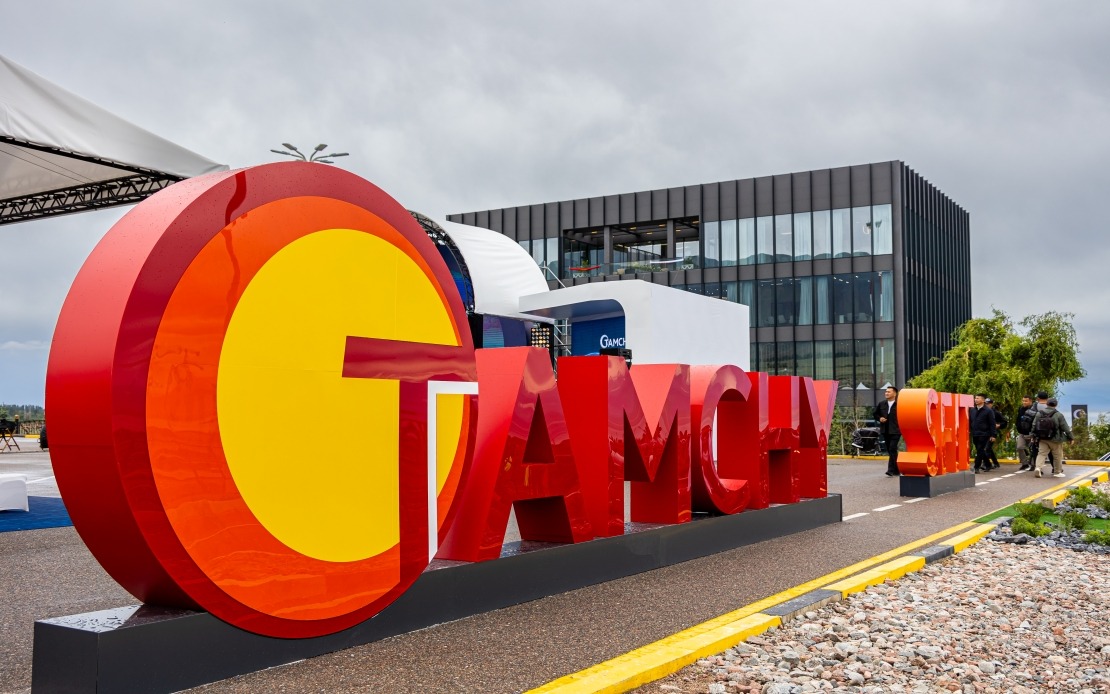
Kyrgyzstan has officially established the Tamchy Special Financial Investment Territory, a purpose-built financial hub designed to attract Malaysian corporations and other international investors pursuing growth opportunities across Eurasia. The jurisdiction, launched this week, represents an ambitious attempt by Kyrgyzstan to position itself as a crucial bridging point between the economies of Southeast Asia and the rapidly evolving markets of Central Asia, the Middle East and Europe. For Malaysian businesses seeking to diversify their geographic footprint beyond traditional regional markets, the initiative offers a structured entry point into markets that have historically remained less accessible despite their substantial growth potential.
The Tamchy SFIT's competitive advantage lies fundamentally in its geographic positioning. Situated on the shores of Lake Issyk-Kul in the heart of the Eurasian continent, the territory serves as a natural crossroads for trade and investment flows connecting disparate regional blocs. The jurisdiction's management council has emphasised that this location enables Malaysian enterprises to establish regional operations that can efficiently service markets spanning from Southeast Asia through Central Asia and extending westward to Europe and the Middle East. This geographic arbitrage is particularly relevant for Malaysian companies in financial services, technology, logistics and trade facilitation sectors, which increasingly require multiple regional hubs to optimise their supply chains and market access strategies.
The physical infrastructure underpinning Tamchy SFIT reflects ambitions to create a world-class business environment. The territory spans 6,000 hectares and incorporates residential, commercial and industrial facilities designed to accommodate both corporate headquarters and supporting services. An international airport and modern logistics centre are positioned within immediate proximity, addressing critical infrastructure requirements that typically constrain business expansion in Central Asian locations. This development approach suggests that Kyrgyzstan's authorities have carefully studied comparable financial zones globally, particularly those in Dubai, Singapore and Hong Kong, adapting successful models to Kyrgyzstan's specific geographic and economic context.
The regulatory framework governing Tamchy SFIT presents compelling attractions for Malaysian investors accustomed to common law jurisdictions. The territory operates under English common law principles, a legal system with which Malaysian corporate lawyers and business managers are inherently familiar given Malaysia's legal heritage and the extensive use of English law in regional commercial contracts. This familiarity reduces transaction costs and legal complexity for Malaysian firms establishing operations. Beyond legal tradition, the jurisdiction provides independent judicial institutions, an International Dispute Resolution Centre and a dedicated financial regulator, structural safeguards designed to assure international investors that property rights and contractual obligations will be protected consistently and transparently. Such institutional arrangements address fundamental concerns that deter foreign investment in emerging markets, particularly concerns regarding regulatory arbitrariness and judicial unpredictability.
Financial and tax incentives form perhaps the most immediately attractive elements of the Tamchy framework. The jurisdiction offers a comprehensive zero-tax regime extended across a 49-year period, fundamentally altering the cost structure for international operations. For Malaysian firms establishing regional treasury centres, intellectual property holding companies or financial services operations, this extended tax holiday translates directly into substantially improved return on invested capital. The zero-tax commitment represents an extraordinarily generous incentive structure compared to Malaysia's corporate tax regime and most other regional jurisdictions. Additionally, the territory permits full foreign ownership of enterprises, eliminating local partnership requirements that characterise many emerging market jurisdictions and reducing governance complexity for foreign investors.
Kyrgyzstan's cryptocurrency and virtual asset regulatory stance provides particular relevance for Malaysian technology and fintech sectors. Tamchy SFIT legislation explicitly guarantees the legal status and free circulation of virtual assets, positioning the territory as an attractive jurisdiction for blockchain companies, cryptocurrency trading platforms and digital finance ventures. This policy orientation stands in sharp contrast to Malaysia's more cautious and restrictive approach to virtual assets, creating potential comparative advantage for regional fintech innovation and development. Malaysian technology companies seeking to establish international operations in digital finance could leverage Kyrgyzstan's progressive regulatory environment while maintaining their primary market base in Malaysia. The combination of legal clarity regarding virtual asset status with the broader tax and infrastructure benefits creates a compelling proposition for this sector.
Operational flexibility represents another distinctive feature. Tamchy SFIT permits fully remote business operations through a one-stop-shop administrative system, eliminating requirements for physical presence in Kyrgyzstan. This arrangement particularly suits Malaysian companies managing multinational operations where senior management and operations teams remain geographically dispersed. Administrative functions can be consolidated through Tamchy's centralised service centre while actual business operations continue in Malaysia, other Asian locations or international markets. This operational model reflects recognition that modern multinational enterprises increasingly separate corporate registration locations from operational bases.
Kyrgyzstan's underlying macroeconomic trajectory strengthens the attractiveness of Tamchy SFIT as an investment destination. The country's gross domestic product has expanded from US$8 billion in 2020 to exceed US$22 billion in 2025, representing extraordinary growth substantially exceeding global and regional averages. Growth rates surpassing 11 per cent in 2025 indicate that Kyrgyzstan's economy is expanding at velocities comparable to Southeast Asia's fastest-growing economies. This macroeconomic dynamism creates expanding demand for financial services, professional services and logistics capabilities that Malaysian firms could productively supply. An economy growing at double-digit rates generates business opportunities across sectors and provides a naturally expanding customer base for corporate tenants.
The initial cohort of Tamchy SFIT residents includes established corporations from South Korea, the United Arab Emirates, Hong Kong, Switzerland and Kazakhstan, suggesting that the jurisdiction has already achieved meaningful market traction among sophisticated international investors. The presence of entities from these jurisdictions, each with highly developed financial sectors and rigorous investment selection criteria, implicitly validates Tamchy SFIT's governance frameworks and business proposition. South Korean companies, in particular, have established track records of investing in Central Asian operations and would apply demanding assessment standards before committing to jurisdiction. Their participation signals that Tamchy SFIT has successfully addressed fundamental investor concerns regarding regulatory reliability and operational functionality.
President Sadyr Japarov's emphasis on evolving global economic dynamics and demand for alternative business centres captures the fundamental strategic rationale underlying Tamchy SFIT. Global supply chains are undergoing structural reorganisation driven by geopolitical tensions, particularly US-China competition, and shifting investor preferences regarding manufacturing and operational diversification. Countries and jurisdictions positioned to accommodate these shifts can capture significant inbound investment. Kyrgyzstan's positioning as a neutral, independent jurisdiction without alignment to major power blocs makes it potentially attractive for companies seeking to reduce geographic concentration risk. Malaysian corporations similarly concerned with supply chain resilience and geographic diversification might logically evaluate Kyrgyzstan as a location for regional operations consolidation.
The implications for Malaysia and Malaysian business extend beyond simple portfolio diversification. Kyrgyzstan's initiative reflects broader Central Asian economic awakening and recognition of the region's strategic importance within emerging global supply chains. Malaysian policymakers monitoring regional economic development should recognise that Central Asian jurisdictions are increasingly competing for investment and regional hub functions. Malaysian companies establishing early presence in Kyrgyzstan position themselves advantageously for subsequent expansion across Central Asia, West Asia and emerging European markets as regional integration deepens. The Tamchy SFIT essentially functions as Malaysia's commercial gateway into markets that have historically remained geographically and conceptually distant, despite their inherent importance and emerging growth potential.

