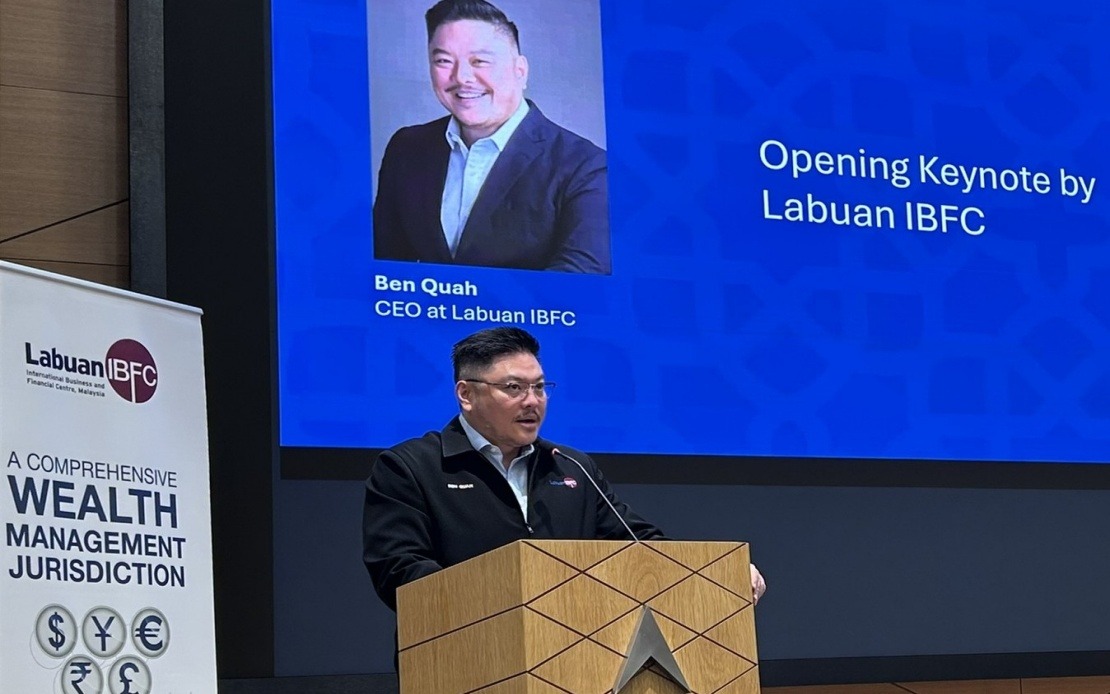
Three leading organisations in Islamic finance and wealth management have joined forces to advance professional standards in Islamic estate planning and wealth governance. Labuan IBFC Incorporated Sdn Bhd, the official marketing arm of Labuan International Business and Financial Centre, partnered with the Association of Shariah Advisors in Islamic Finance Malaysia (ASAS) and the Society of Trust and Estate Practitioners (STEP) Malaysia to host the Islamic Wealth & Legacy Forum 2026, held recently in Kuala Lumpur. The event brought together a diverse cohort of estate planning specialists, Shariah advisers, trust practitioners, wealth managers and legal experts to examine contemporary approaches to preserving, managing and transferring assets in compliance with Islamic principles.
The forum's thematic focus—"Beyond Faraid: Islamic Wealth Governance, Labuan Structures and Legacy Continuity"—reflects a growing recognition that traditional Islamic succession law, while foundational, represents only one component of comprehensive wealth planning for modern families. This conceptual shift acknowledges the increasing complexity of intergenerational wealth transfer in a globalised economy where assets are often dispersed across multiple jurisdictions and denominated in different currencies. The emphasis on structures beyond faraid does not signal a departure from Shariah compliance; rather, it signals an evolution in how practitioners can help Muslim families navigate succession planning while remaining rooted in Islamic legal and ethical principles.
Labuan IBFC Inc chief executive officer Ben Quah articulated the centre's strategic positioning as a platform capable of addressing the intersection of Islamic private wealth management and cross-border capital flows. Quah noted that as wealth accumulation increasingly transcends national boundaries, families require adaptive solutions that provide asset protection alongside assurance of long-term continuity. He emphasised Labuan IBFC's competitive advantage in delivering such solutions while reinforcing Malaysia's broader leadership in Islamic private wealth through coordinated engagement with allied institutions and practitioners. This framing underscores how Labuan, as an international financial centre, can leverage its regulatory framework and professional infrastructure to serve high-net-worth Muslim families seeking Shariah-compliant cross-border wealth structures.
Farah Deba, chair of STEP Malaysia Branch, highlighted the complementary roles each organisation brings to the professional ecosystem. STEP members function as multi-generational advisers to families navigating complex succession scenarios. Labuan IBFC contributes expertise in international family wealth structuring and cross-border solutions, while ASAS grounds all arrangements in authentic Shariah interpretation and governance. Deba's observation that "beyond faraid means faraid is only one part of estate planning" encapsulates a nuanced professional philosophy: advancing wealth planning methodology need not compromise Islamic principles. This triangular collaboration reflects recognition that effective Islamic wealth governance requires simultaneous expertise in secular estate law, international financial structures and Islamic jurisprudence.
The forum's substantive sessions addressed practical challenges that Muslim estate administrators encounter when seeking to honour testamentary wishes within Shariah parameters. The opening programme segment, titled "Beyond Faraid - The Real Challenges in Muslim Estate Administration," examined friction points where intentions expressed by a deceased individual may conflict with mandatory Shariah allocation rules or where cross-border asset location complicates administration. Panellists explored how careful documentation and planning undertaken during a person's lifetime can substantially mitigate disputes and delays that arise when heirs attempt to interpret ambiguous intentions or navigate competing legal regimes governing different asset classes or jurisdictions.
A subsequent dialogue session examined governance mechanisms and documentation standards that enable wealth plans to be executed consistently with Shariah requirements. This discussion proved particularly valuable for wealth managers and estate administrators working across multiple legal systems. When assets are held in common law jurisdictions alongside Islamic financial instruments, or when beneficiaries reside in different countries subject to varying inheritance and tax regimes, the technical challenge of ensuring Shariah compliance escalates significantly. The session underscored how robust governance frameworks, clear governance documentation and periodic compliance reviews can provide confidence that arrangements remain Shariah-aligned throughout execution and that fiduciaries remain accountable to Islamic principles rather than solely to secular legal obligations.
The afternoon programme shifted focus toward operationalisation, examining how wealth planning frameworks translate into concrete structures that families can deploy. Panellists explored the role of liquidity management, takaful products, trusts and alternative wealth vehicles in supporting asset preservation, risk mitigation and intergenerational capital transfer. Particular attention was directed toward how different structures interact—for instance, how a takaful policy might complement trust arrangements to ensure that proceeds are distributed according to faraid principles while simultaneously protecting assets from creditor claims. These discussions proved especially pertinent for Malaysian practitioners advising clients with substantial asset bases who may benefit from layered protection mechanisms unavailable through traditional wills and estate administration alone.
Toward the forum's conclusion, panellists convened to examine how the Islamic wealth planning ecosystem can strengthen institutional capacity and professional standards. Participants representing wealth management, financial planning, estate administration and Shariah practice shared perspectives on regulatory harmonisation, professional development and client education. This dialogue carries particular significance for Southeast Asia, where Islamic wealth management is expanding rapidly but remains fragmented across multiple professional disciplines and regulatory jurisdictions. Enhanced coordination among estate planners, Shariah advisers and wealth managers can accelerate the professionalisation of the sector and build client confidence in cross-border Islamic wealth solutions.
Yusaini Yusof, an executive member of ASAS, concluded the forum by emphasising that Shariah governance ensures estates are structured appropriately, implemented reliably and ultimately serve Maqasid Shariah—the overarching objectives and spirit of Islamic law. Her closing remarks reflected ASAS's commitment to deepening engagement within the broader Shariah practitioner community and advancing professional standards across the discipline. This commitment signals that Islamic financial institutions and advisers view technical competence and ethical stewardship as inseparable; wealth planning must not only comply with formal legal requirements but must genuinely advance the well-being and justice principles embedded in Shariah jurisprudence.
The collaboration between these three organisations is anchored in a memorandum of understanding between Labuan IBFC Inc and ASAS, formalising their strategic partnership. This institutional commitment extends beyond single events to establish ongoing dialogue and coordination on Islamic wealth governance standards. By institutionalising these relationships, the organisations signal to Malaysian and regional practitioners that Islamic wealth planning has matured into a sophisticated professional discipline requiring integrated expertise. For wealth managers, estate administrators and Shariah advisers across Southeast Asia, this forum and the broader partnership it represents offer a reference point for best practices and a catalyst for elevating service standards. As Muslim families throughout the region accumulate greater wealth and navigate increasingly complex cross-border scenarios, access to coordinated professional guidance grounded in both technical competence and Shariah compliance becomes ever more valuable.
The forum's emphasis on practical solutions, governance frameworks and ecosystem strengthening reflects mature professional thinking about Islamic wealth management. Rather than treating Shariah compliance as a constraint imposed upon secular wealth planning methodologies, the forum positioned Islamic principles as substantive guides to ethical and effective wealth governance. For Malaysian readers, this reframing carries importance: it demonstrates that Islamic finance is not merely a niche offering but an evolving discipline capable of addressing the wealth management challenges confronting sophisticated modern families. As Labuan IBFC, ASAS and STEP Malaysia continue their collaboration, they model how cross-disciplinary partnerships can advance professional standards and extend access to high-quality Islamic wealth solutions throughout the region.

