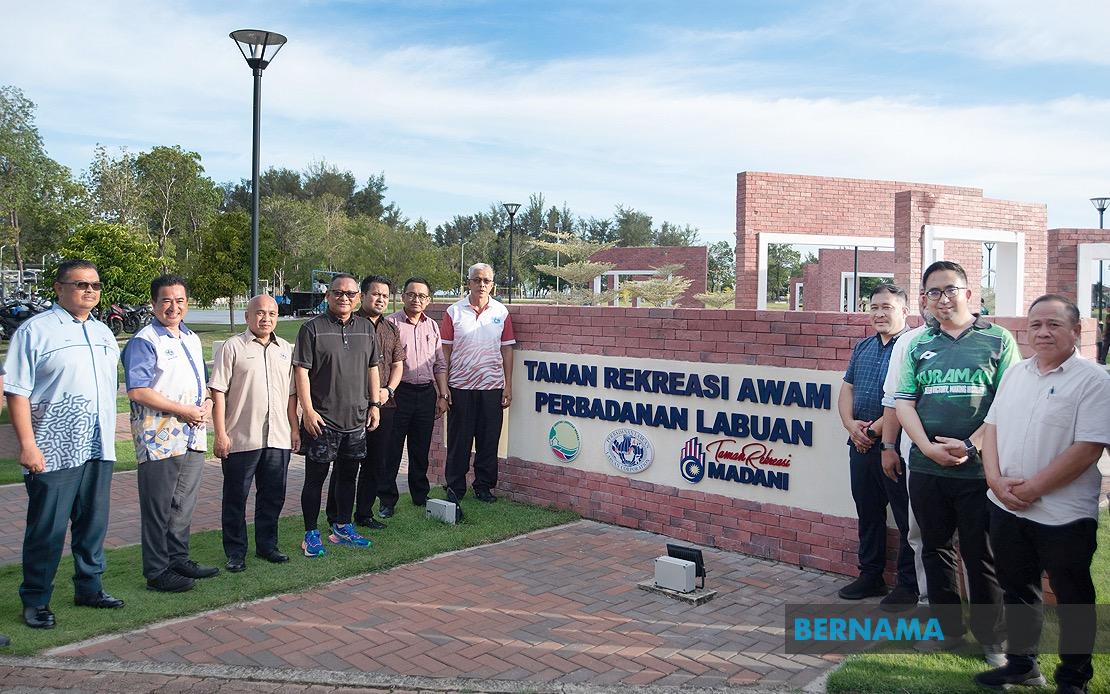
Labuan has taken a significant step toward fostering community wellness by unveiling a newly renovated public recreation park in the heart of Tanjung Purun. The project, which received a RM495,382 investment under the Madani Recreation Park initiative, transforms what was once an underutilised public space into a modern recreational hub designed for residents of all ages. The opening comes as Labuan Corporation intensifies efforts to strengthen the social fabric of the island through better urban planning and accessible public amenities.
Rithuan Ismail, chief executive officer of Labuan Corporation, emphasised that the park represents a deliberate strategy to enhance quality of life on the island. By creating welcoming public spaces that encourage physical activity and community interaction, the project aligns with broader national goals to promote healthier populations. The facility was deliberately positioned in downtown Tanjung Purun to maximise accessibility and foot traffic, recognising that location is critical to ensuring such amenities are actually used by residents rather than becoming neglected infrastructure.
The site itself had been poorly utilised despite its prime downtown location. Prior to renovation, the former LDA Field suffered from multiple deficiencies that deterred public use. Inadequate lighting made evening access unsafe, recreational facilities were minimal, and ageing casuarina trees created hazards that further discouraged visitors. These cumulative issues meant the space failed to serve its potential as a community asset, even though it occupied valuable real estate in the commercial heart of the town. The selection of this particular location was strategic—it avoided complicated land ownership disputes that often delay infrastructure projects, while offering sufficient space and good accessibility for diverse users.
Funding from the National Landscape Department, channelled through the Ministry of Housing and Local Government in 2024, enabled a comprehensive overhaul. The modern facility now includes several thoughtfully designed features aimed at different user groups. An 800-metre jogging track caters to fitness-focused residents, while concrete benches provide gathering spots for elderly visitors and those preferring low-impact recreation. Outdoor fitness gym equipment allows strength training without membership fees, democratising access to exercise facilities. The welcoming garden creates an attractive entrance and sets a tone of care and maintenance that encourages continued public use.
The evening hours have become particularly busy at the newly opened space, suggesting strong community demand for safe, well-lit recreational environments. This usage pattern is significant for Labuan, where night-time activities are crucial for residents seeking to balance work and leisure in a compact island setting. The project's success in drawing evening crowds indicates that residents will patronise quality public facilities when they meet basic safety and design standards—an encouraging sign for future municipal investments.
Expansion plans are already underway. Labuan Corporation intends to complete three open courts for pickleball and sepak takraw by year-end, further broadening the facility's appeal. The choice to include sepak takraw reflects sensitivity to local sporting traditions and cultural preferences, while pickleball addition indicates responsiveness to evolving recreational interests across different age groups. These additions will position Labuan's recreation park as a more versatile venue capable of hosting both casual use and organised sporting activities.
The implications for Malaysian urban planning extend beyond Labuan itself. The project demonstrates how strategic investment in basic recreational infrastructure can activate underutilised public spaces and strengthen community cohesion. Other local authorities in Malaysia facing similar challenges of ageing municipal facilities and declining public space usage may find this model instructive. The relatively modest investment figure suggests that significant quality-of-life improvements need not require enormous budgets when projects are well-designed and well-located.
However, the success of such facilities ultimately depends on community participation and stewardship. Rithuan's call for residents to preserve the facilities reflects an important reality: even well-designed infrastructure deteriorates without public care and respect. Creating ownership mentality among users is essential for long-term sustainability. This educational component—encouraging the community to view public spaces as shared assets worthy of protection—may prove as important as the physical infrastructure itself.
For Southeast Asian cities grappling with rapid urbanisation and declining public space usage, Labuan's approach offers practical insights. The focus on accessibility, safety through lighting, inclusion of diverse age groups, and strategic downtown location represent best practices adapted to Malaysian context. The project also underscores the value of addressing basic functionality—lighting, safety, maintenance—before investing in sophisticated amenities. These fundamentals often determine whether spaces are actually used or remain as expensive monuments to poor planning.
Labuan's investment reflects a broader recognition across Malaysia that public health cannot rely solely on private gyms and home-based fitness. Community recreation parks provide free, accessible alternatives that strengthen social ties while promoting wellness. As Malaysia's healthcare costs rise with lifestyle diseases, preventive infrastructure investments like this park become increasingly important from both social and economic perspectives.
The park's opening also signals Labuan Corporation's commitment to leveraging federal funding effectively. By successfully delivering a well-designed project that addresses genuine community needs, the entity strengthens its case for future allocations. This successful execution of the Madani Recreation Park initiative may encourage other federal development schemes to invest more confidently in Labuan's infrastructure, creating positive momentum for the island's long-term development.
Moving forward, the success of Labuan Public Recreation Park will likely be measured not just by its opening, but by sustained usage patterns, maintained facilities, and subsequent phases of expansion. If the evening crowds continue and community involvement in stewardship deepens, this project could become a model for recreation space development across Malaysia's smaller urban centres and islands seeking to balance economic development with quality-of-life considerations.