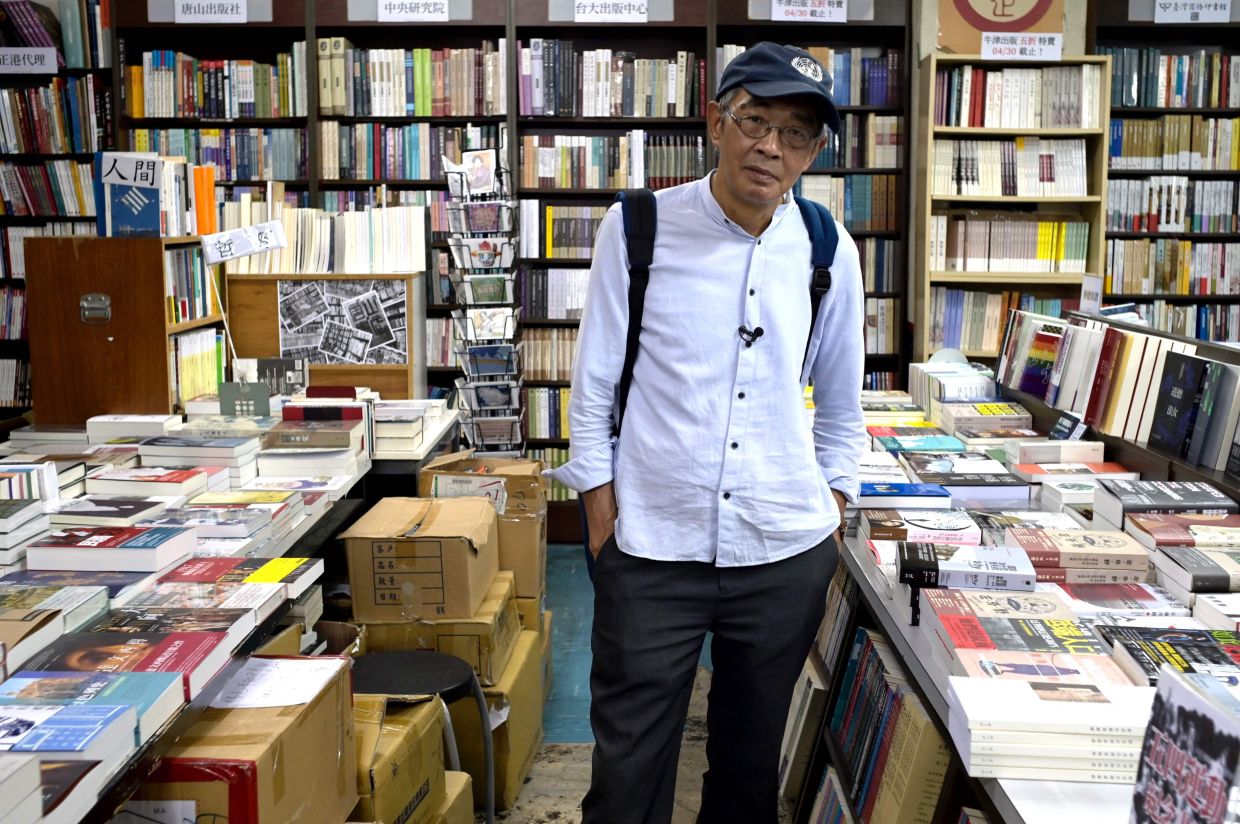
Lam Wing-kee, the former manager of Causeway Bay Books in Hong Kong whose detention by mainland Chinese authorities made him a global symbol of Beijing's assault on freedom of expression, has died in Taiwan at the age of 70. The Hong Kong-born bookseller passed away on Thursday evening at MacKay Memorial Hospital in Taipei, where he had been admitted earlier in the week following a cancer relapse that hospitalised him just days before his death. The death marks the end of a remarkable life dedicated to disseminating information that the Chinese government sought to suppress, and underscores the human cost of standing against authoritarian censorship in the contemporary Asia-Pacific region.
Lam's trajectory from ordinary bookstore manager to international witness against state repression began in late 2015, when he and four colleagues connected to Causeway Bay Books mysteriously disappeared. The bookstore, located in Hong Kong's Causeway Bay district, specialised in publications unavailable on the Chinese mainland, including politically sensitive titles that claimed to expose secrets about senior Communist Party leaders and various scandals involving the political elite. The simultaneous vanishing of five individuals linked to the establishment provoked alarm across Hong Kong and internationally, raising uncomfortable questions about the erosion of the city's once-distinct legal protections and the growing reach of mainland security apparatus into Hong Kong's affairs.
Unlike the other disappeared booksellers, Lam reappeared in Hong Kong and subsequently provided a detailed and harrowing account of his ordeal that contradicted the official narrative presented by Chinese authorities. He recounted having been apprehended in October 2015 after crossing into the mainland city of Shenzhen from Hong Kong, then transported blindfolded aboard a train for thirteen hours to Ningbo in eastern China. There, he explained, he endured five months of continuous detention under heavy surveillance, with two guards rotating to ensure round-the-clock monitoring. He was later coerced into appearing on Chinese state television, where he was forced to confess to unspecified crimes, adding another layer of psychological torment to his imprisonment. His willingness to recount these experiences at a packed Hong Kong news conference in 2016 made him a living testimony to the methods employed by Chinese security services against individuals deemed threats to the Communist Party's monopoly on information.
The plight of Lam and his colleagues became emblematic of broader concerns about Hong Kong's autonomy under the "one country, two systems" framework. When five booksellers associated with Causeway Bay Books vanished, it crystallised anxieties about whether mainland China was dismantling the legal and institutional safeguards that distinguished Hong Kong from the rest of the People's Republic. Among the disappeared was Gui Minhai, a publisher and part-owner of the bookstore who went missing from Thailand. Gui was later sentenced to a decade in prison inside China on charges of illegally transmitting intelligence abroad, demonstrating Beijing's determination to pursue and punish those involved in distributing materials the government classified as subversive.
Recognising that his continued presence in Hong Kong posed escalating legal risks, Lam relocated to Taipei in 2019, seeking refuge in democratic Taiwan. The move itself represented an indictment of the transformation Hong Kong had undergone, particularly following the enormous pro-democracy demonstrations of 2019. In Taiwan, Lam found the freedom to operate openly and reestablish his bookstore under the same Causeway Bay Books name in 2020, creating a symbolic assertion that the principles the shop represented—untrammelled access to information and freedom from state censorship—could survive and even thrive in democratic Taiwan. For three years, the Taipei location stood as a tangible monument to resistance against authoritarian suppression of ideas.
Lam's death reverberates beyond the loss of an individual; it represents the closure of a personal chronicle of defiance that resonated throughout East Asia and beyond. Taiwan's President Lai Ching-te acknowledged this significance in a Facebook post expressing condolences, writing that although Lam's passing was deeply saddening, the courage he embodied would endure. Lai characterised Lam as an ordinary Hong Kong bookstore worker whose steadfast commitment to freedom of information had conveyed a powerful message about the value of democratic liberty. The presidential statement recognised that democracy itself requires continuous generational effort and sacrifice to maintain against those seeking to restrict and control the flow of information and ideas.
The context of Lam's death underscores the ongoing deterioration of civil liberties in Hong Kong since his departure for Taiwan. Following the massive anti-government street protests that convulsed the city in 2019, both Chinese and Hong Kong authorities intensified their grip on the territory, systematically dismantling virtually all remaining space for political dissent. The implementation of a controversial national security law in 2024 further institutionalised state control, providing legal mechanisms for suppressing expression deemed threatening to Beijing's interests. In June 2024 alone, Hong Kong police arrested two individuals suspected of operating a bookstore, charging them with selling seditious publications and receiving financial support from foreign political organisations. This pattern demonstrates that the struggle exemplified by Lam and his colleagues remains unresolved and, indeed, has intensified.
Last month, while in deteriorating health, Lam had told the Central News Agency that he had temporarily shuttered the Taipei bookstore due to his illness and could not specify when it might resume operations. The shop's closure, though temporary and driven by medical necessity, symbolically mirrored the silencing that Lam had endured and resisted throughout his life. A visitor from Hong Kong left a solitary white rose outside the bookstore entrance on Monday, a gesture of remembrance that acknowledged both Lam's personal sacrifice and the broader struggle for free expression that continues to shape the political landscape of Greater China and Taiwan. His legacy will endure as a testament to the possibility of individual resistance against systems designed to monopolise information and suppress dissent.

