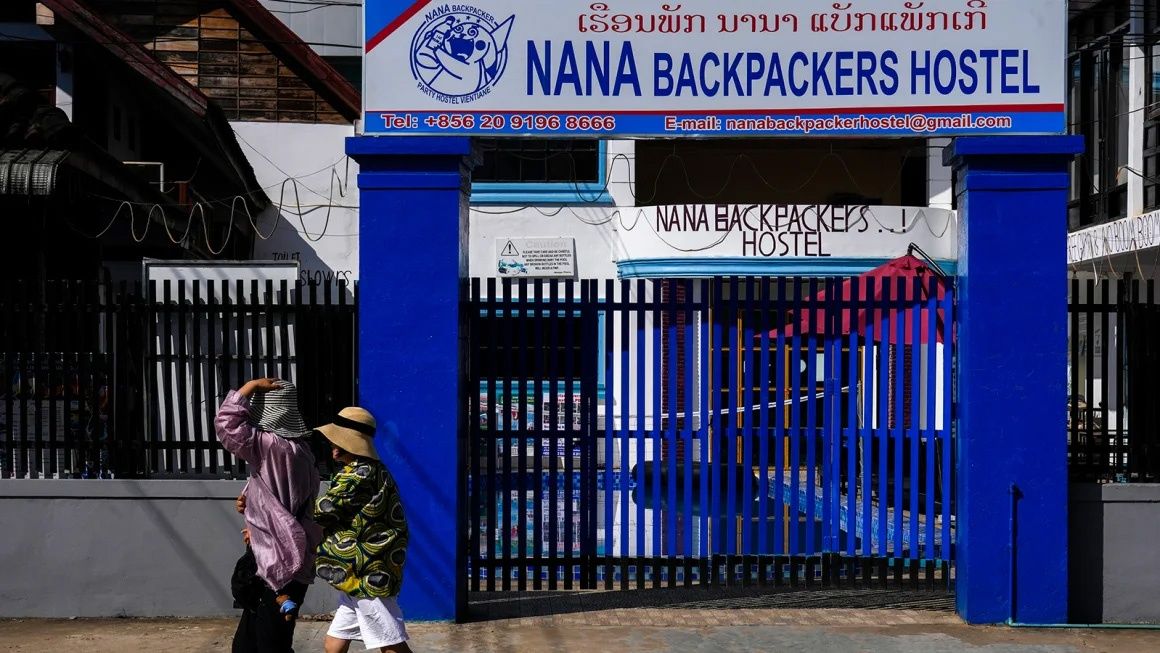
A Lao court has pressed charges against a distillery operator in relation to the deaths of six international tourists who consumed contaminated alcohol at a backpacker hostel in Vang Vieng during November 2024, according to Denmark's foreign ministry. The charges carry potential penalties ranging from three months to four years in prison along with monetary fines upon conviction. However, both Denmark and Australia have expressed deep frustration over what they regard as insufficiently serious legal action, given the scale and impact of the tragedy that claimed lives across multiple nationalities.
Among those killed were two Danish women—Anne-Sofie Orkild Coyman, aged 20, and Freja Vennervald Sorensen, aged 21—alongside Australian teenagers Bianca Jones and Holly Morton-Bowles, both 19. British solicitor Simone White, 28, and American James Louis Hutson, 57, also perished from methanol poisoning. The victims had been staying at the Nana Backpacker Hostel, where they reportedly consumed complimentary shots of Laotian vodka before venturing to other entertainment venues in the popular backpacking destination.
The charges formally filed relate to selling food harmful to health and operating an unlicensed business—characterisations that fall well short of the gravity many had anticipated. Denmark's foreign ministry statement, referencing Foreign Minister Lars Løkke Rasmussen, acknowledged that the indictment fails to adequately reflect the severity and human cost of an incident that devastated multiple families across different nations. The ministry noted that while meeting the specific evidentiary standards required for graver charges like negligent homicide can prove legally challenging, the lenient nature of the prosecution remains difficult to reconcile with the circumstances of the deaths.
Crucially, authorities indicated that the case will remain formally open for a period of 15 years, potentially allowing for the pursuit of more serious charges if sufficient evidence subsequently emerges. This provision offers a procedural pathway for upgrading the charges, though families and governments are frustrated that such grave offences were not pursued from the outset. The Lao authorities have not clarified whether the current charges apply uniformly to all six deaths or only specific victims.
At a press conference held before the formal announcement, families of the deceased Australian teenagers articulated their profound disappointment with the anticipated outcome. Michelle Jones, mother of Bianca, expressed anguish at what she perceived as a dismissal of her daughter's life and the tragedy of young people undertaking ordinary travel experiences. Shaun Bowles, father of Holly Morton-Bowles, characterised the legal development as extraordinary in its inadequacy, warning that such a response would deter international visitors from considering Laos as a travel destination and reflecting poorly on how the nation values tourist safety.
Australian Foreign Minister Penny Wong issued a statement expressing deep frustration and bitter disappointment that authorities were not pursuing the most serious available charges. Australia dispatched a diplomatic envoy to Vientiane on the day of the announcement to formally lodge objections and reinforce expectations for an investigation delivering justice. Additionally, Canberra summoned Laos' ambassador to present Australia's position directly. Prime Minister Anthony Albanese's government made clear its determination to support the victims' families in pursuing accountability through diplomatic channels.
The incident has cast a spotlight on broader public health dangers surrounding methanol contamination in developing regions and tourist destinations across Southeast Asia and beyond. Methanol, a toxic substance chemically similar to drinking ethanol but far more dangerous to human health, sometimes appears in illicit or poorly regulated alcohol production. Disreputable drinking establishments occasionally add methanol to mixed beverages as a cost-reduction measure, while methanol can also result as a byproduct of amateur distillation processes and inadvertently contaminate commercial drinks. Medical data compiled by Doctors Without Borders indicates Indonesia, India, and Russia consistently report the highest numbers of suspected poisoning cases globally, reflecting the pervasiveness of this hazard.
For the families of the victims, the investigation's trajectory has compounded their grief through apparent administrative failures and communication gaps. The parents of Freja Vennervald Sorensen reported being left substantially uninformed throughout proceedings, with no autopsy performed on their daughter and her death certificate incorrectly listing cardiac arrest as the cause rather than methanol poisoning. They have expressed a determination to raise international awareness about methanol dangers to prevent comparable tragedies among other young travellers.
The broader context underscores specific vulnerabilities within Laos as a tourist destination. Landlocked and among Southeast Asia's least developed economies, Laos attracts significant numbers of international backpackers, particularly Australians and Europeans seeking adventure tourism and nightlife, especially in Vang Vieng's renowned party scene. The nation operates as an authoritarian one-party communist state exercising tight information control, which has generated additional concerns regarding transparency and the comprehensiveness of investigations into incidents involving foreign nationals.
Denmark's foreign ministry indicated that it will collaborate with affected families and other implicated countries to determine subsequent steps. The coordinated diplomatic response from multiple nations reflects the gravity with which they regard both the legal outcome and the broader implications for their citizens' safety in the region. The decision to pursue relatively minor charges, despite access to compelling evidence of the deaths' circumstances, has raised questions about investigative capacity, institutional priorities, or potential political considerations within the Lao judicial system.
The Nana Backpacker Hostel incident serves as a stark reminder of concealed dangers within budget accommodation and hospitality sectors in developing destinations, particularly where regulatory oversight remains limited. The tourists involved had reportedly taken reasonable precautions throughout their travels, suggesting that some risks escape standard traveller risk awareness. The families' commitment to raising awareness about methanol poisoning—a threat affecting not only foreign visitors but predominantly impacting local populations in regions where genuine spirits remain financially inaccessible to many—reflects an effort to extract meaning from tragedy through prevention education.

