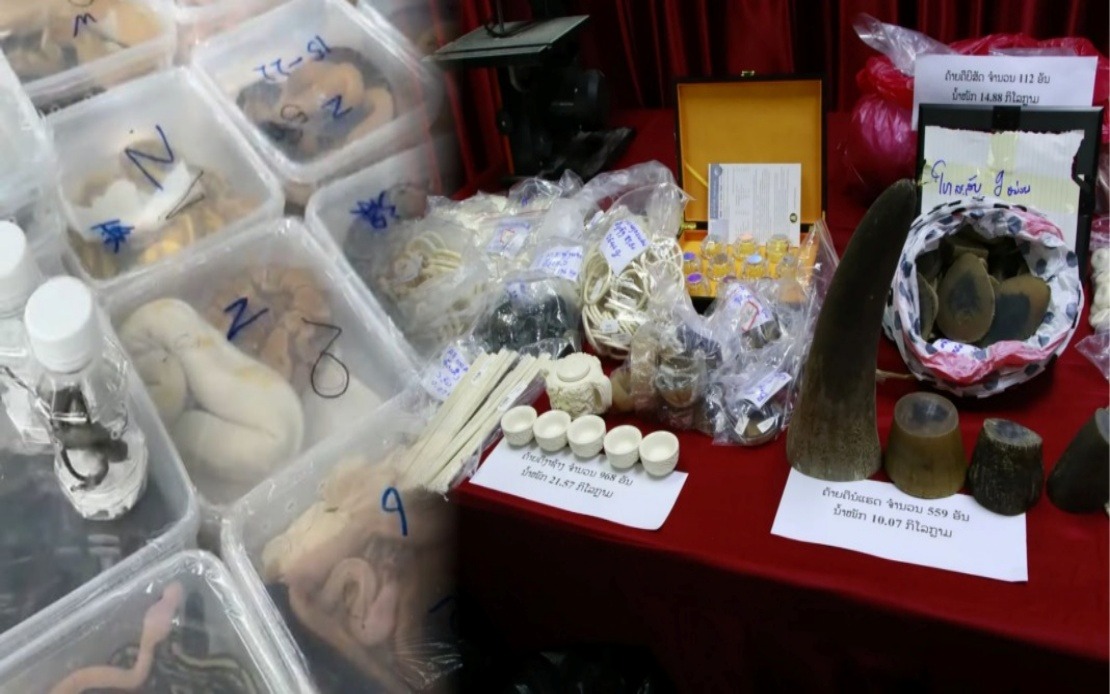
Wildlife authorities in Laos have exposed the inner workings of a major smuggling syndicate operating along the Mekong region, rescuing nearly 300 animals and seizing substantial quantities of endangered species products in coordinated enforcement operations that underscore the region's vulnerability to organized wildlife crime. The breakthrough came through a series of raids in Luang Prabang and Champasak provinces last week, with investigators uncovering evidence that traffickers are systematically moving protected species across international borders hidden in commercial transport vehicles.
During the initial operation in Luang Prabang, the Lao Wildlife Enforcement Network discovered approximately 60 kilogrammes of contraband wildlife materials at the location. The cache included items fashioned to resemble ivory, extracted animal gallbladders, processed pangolin scales, and horns purported to be from rhinoceroses. Additional findings revealed powder derived from elephant skin, bear gallbladders, severed hornbill heads, and bottled herbal remedies suspected of containing unidentified wildlife ingredients. The diversity and volume of the seizure suggest the operation was not a minor smuggling venture but rather a sophisticated distribution network with connections to multiple species and end markets across Southeast Asia.
Four days following the Luang Prabang discovery, wildlife officials stationed at the Vang Tao International Checkpoint in Champasak Province intercepted a transport vehicle carrying 294 live animals destined for markets beyond the border. The confiscated creatures included freshwater turtles, python species, green snakes, gold-ringed cat snakes, and various lizard specimens, many of which are listed under international protection protocols. The animals were being transported via an international passenger bus traveling between Pakse and Bangkok, indicating that traffickers exploit regular commercial routes to move contraband alongside ordinary cargo. The species inventory suggests these animals originated outside Laos and were being channeled through the country as a transit point toward lucrative markets in Thailand and potentially beyond.
The Laotian seizures are part of a broader pattern of enforcement activity that has intensified across the Mekong region in recent weeks. Thai authorities arrested a female shopkeeper operating a traditional medicine and souvenir business in Nakhon Phanom on May 27, recovering more than 100 protected animal remains that investigators believe were smuggled from Laos into northeastern Thailand. The operator's dual business model—mixing tourist merchandise with wildlife products—reveals how traffickers obscure illegal goods within legitimate commercial enterprises. Earlier in May, authorities also dismantled an attempt to smuggle 130 kilogrammes of processed elephant ivory and animal remains across the Thai-Lao frontier, indicating that enforcement actions are disrupting multiple trafficking routes simultaneously.
Laos occupies a uniquely precarious position within Southeast Asia's wildlife crime landscape due to its geographic location. The country shares terrestrial borders with Cambodia, China, Myanmar, Thailand, and Vietnam, making it a crucial transit corridor for traffickers moving animals and animal products between source regions and end markets. This geographic vulnerability is compounded by complex enforcement challenges, as the country's extensive border areas and limited resources make comprehensive monitoring difficult. Wildlife experts have identified Laos as a critical chokepoint where enforcement actions can have outsized impact on regional trafficking networks, as disrupting operations there can disrupt supply chains that extend across multiple countries and continents.
The scale and persistence of wildlife trafficking reflects a market fundamentally shaped by economic incentives and persistent demand. The United Nations Office on Drugs and Crime reported in its 2024 World Wildlife Crime Report that the illegal wildlife trade generates nearly US$10 billion (RM41 billion) in annual revenue globally, placing it alongside human trafficking, drug smuggling, and arms dealing in economic significance. This valuation demonstrates that wildlife crime is not a peripheral criminal activity but rather a major transnational enterprise that attracts sophisticated criminal organizations, significant financial investment, and complex supply chain infrastructure. The profitability ensures that individual enforcement actions, while symbolically important, represent only temporary disruptions to operations that quickly adapt and resume.
Wildlife trafficking persists despite two decades of coordinated international and domestic enforcement efforts, according to UNODC analysis. The organization identifies corruption as a primary enabler of smuggling networks, as traffickers leverage bribery and coercion of officials at borders, in customs agencies, and within enforcement hierarchies to move contraband across jurisdictions. This systemic vulnerability means that even well-intentioned enforcement agencies can be compromised by criminals with sufficient resources and organization. The continued expansion of trafficking despite heightened awareness suggests that addressing the problem requires more than improved enforcement alone—it demands intervention in the economic systems and consumer markets that generate demand for illegal wildlife products.
For Southeast Asian countries including Malaysia, the Laotian busts carry significant implications for regional security and biodiversity conservation. Wildlife trafficking networks frequently overlap with other illicit enterprises, including drug smuggling and human trafficking, meaning that effective wildlife enforcement contributes to broader law enforcement objectives. The raids demonstrate that coordinated action across borders can yield substantial results, suggesting opportunities for enhanced cooperation through ASEAN frameworks and bilateral agreements. Malaysian authorities and those in neighboring states can extract operational lessons from the Laotian successes, particularly regarding intelligence sharing, checkpoint operations, and commercial transport scrutiny.
The species seized in these operations—turtles, snakes, and lizards—reflect trafficking networks targeting reptiles for the international exotic pet trade and traditional medicine markets. These creatures are caught in the wild, with capture and transport mortality rates frequently exceeding 80 percent. The 294 animals rescued represent only those successfully intercepted; significantly larger numbers pass through the same routes undetected annually. The survival rates of confiscated animals remain low even after rescue, as many suffer physiological stress from confinement and improper handling during transit. Addressing trafficking therefore requires not only preventing smuggling but also establishing adequate rehabilitation and reintroduction facilities, a capacity that remains limited across the Mekong region.
Moving forward, the enforcement momentum evident in recent Laotian operations must be sustained and expanded through institutional commitment and adequate resourcing. Wildlife protection agencies across Southeast Asia face budget constraints that limit their capacity for surveillance, investigation, and prosecution of trafficking networks. International donors and regional governments must recognize that investment in wildlife enforcement generates returns through ecosystem preservation, biodiversity conservation, and indirect economic benefits through legitimate ecotourism. The Laotian successes demonstrate that effective enforcement is achievable when authorities dedicate sufficient attention and resources to the problem, suggesting that scaling up these efforts across the region could substantially diminish trafficking volumes and protect endangered species from further depletion.