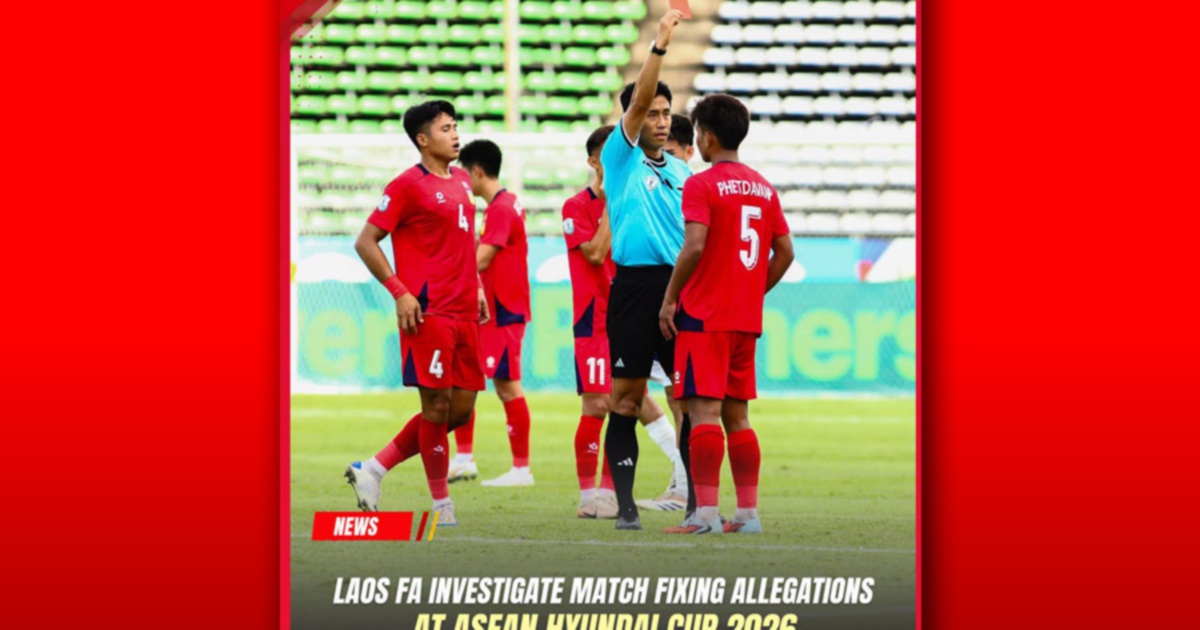
Southeast Asian football's competitive integrity has been shaken by revelations that the Lao Football Federation has formally requested a comprehensive investigation into suspected match-fixing, bribery schemes, and illegal wagering tied to its national team's involvement in ASEAN Cup matches. The scandal represents a significant challenge to the region's sporting governance structures and raises uncomfortable questions about the extent of corrupt practices infiltrating professional football across Southeast Asia.
The allegations touch upon multiple layers of misconduct—from players potentially colluding to manipulate match outcomes to officials facilitating illegal betting syndicates. Such incidents typically emerge from investigation into suspicious betting patterns or inconsistent team performances that defy logical explanation, suggesting coordination between parties seeking financial gain over competitive achievement. The scope of the investigation undertaken by the LFF will determine whether isolated incidents occurred or whether systematic corruption had embedded itself within the team's operations.
For Malaysian football observers and administrators, this development carries particular resonance. Malaysia has its own history of wrestling with match-fixing allegations within domestic leagues, and the Laos situation underscores how corruption transcends national borders and poses collective challenges to ASEAN football governance. The regional confederation's reputation depends partly on the integrity of individual member associations' oversight mechanisms and disciplinary frameworks.
The involvement of national team players in such allegations is particularly troubling because it strikes at the heart of sporting legitimacy. International competitions like the ASEAN Cup depend on public confidence that outcomes reflect genuine athletic competition rather than predetermined agreements forged for gambling profits. When national representatives become implicated, the entire institution of international football within the region faces credibility damage that extends far beyond individual matches or seasons.
Bribery component of these allegations introduces another dimension of serious concern. Typically, match-fixing schemes require incentivizing multiple parties—players must be persuaded to underperform or follow specific tactical instructions, officials may require payment to overlook irregularities, and organisers might need compensation for their complicity. The financial scale of such arrangements can be substantial, particularly when organised crime networks or international betting syndicates channel money into Southeast Asian football as part of broader money-laundering operations.
Illegal gambling networks targeting football matches in Southeast Asia often operate across borders, drawing capital from multiple regional sources and international betting platforms. These networks create economic incentives for corruption that can overwhelm the modest incomes many players earn from professional football. When individuals face financial desperation or face pressure from gambling debts, they become vulnerable targets for recruiters seeking to manipulate match outcomes. Understanding this economic vulnerability is critical to developing effective prevention strategies.
The LFF's decision to pursue a high-level investigation suggests institutional commitment to addressing the crisis transparently, though the actual execution of such inquiries often determines their credibility and effectiveness. Questions about investigative independence, access to financial records, international cooperation in tracking betting flows, and the willingness to pursue sanctions against implicated parties will indicate whether this represents genuine reform or performative accountability.
Regional football governance bodies including the ASEAN Football Federation face pressure to support investigations across member nations, establish consistent anti-corruption standards, and potentially implement enhanced monitoring of betting activities during major tournaments. Individual associations must strengthen their internal controls, implement regular integrity training, and establish clear whistleblower protections for players and officials who report suspicious activity.
The implications extend beyond immediate regulatory responses. Match-fixing scandals erode public engagement with football at grassroots levels, as fans lose confidence that outcomes reflect genuine competition. Youth development programmes can suffer when the professional game becomes associated with corruption rather than meritocratic achievement. Television viewership, sponsorship values, and betting tax revenues—important income sources for football development across Southeast Asia—all face potential disruption when integrity becomes questionable.
For players across the region not implicated in such schemes, these allegations create damaging perceptions that unfairly taint entire national teams and domestic leagues. However, institutional transparency and rigorous investigation ultimately serve these players' interests by demonstrating that corruption carries serious consequences and that legitimate competition remains central to regional football values.
The path forward requires coordinated responses involving the LFF, ASEAN Football Federation, national law enforcement agencies, and international bodies like FIFA. Investigations must be thorough and transparent, penalties must be proportionate and consistently applied, and prevention systems must be substantially upgraded to identify and deter future attempts at manipulation. The strength of Southeast Asian football's response to this crisis will largely determine whether such scandals become increasingly frequent or whether regional governance demonstrates capacity for genuine reform.

