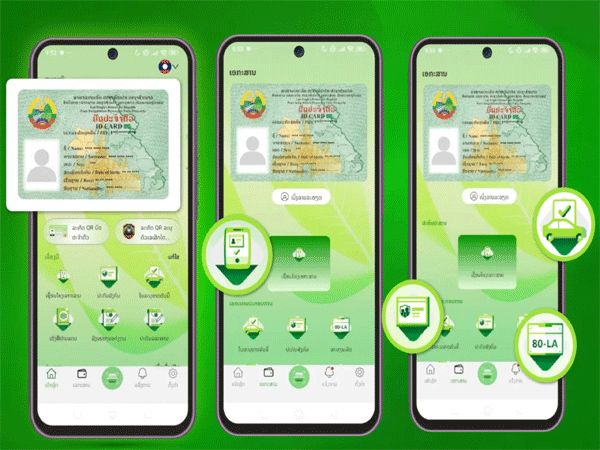
Laos has taken a significant step towards modernising its public administration by formally discontinuing its long-standing paper-based identity verification system in favour of a comprehensive digital platform. The Ministry of Public Security has officially launched the LAeID application, simultaneously retiring the white and green identity cards and paper household registration books that have been central to Laotian administrative processes for decades. This transition marks a watershed moment in the country's broader push to digitise government services and improve efficiency across the public sector.
The shift carries immediate practical implications for Laotian citizens and businesses. From July 18 onwards, the old white and green identity cards ceased to be valid for any official transactions, compelling the population to transition to digital verification methods. Citizens are now required to register for a digital identity card and activate an electronic identification account through the LAeID application to conduct any government-related business. The Ministry of Public Security has already notified all government ministries, agencies, and organisations of this nationwide rollout, ensuring coordination across the bureaucracy.
The LAeID system represents a consolidation strategy rather than a simple replacement. The application functions as a digital wallet designed to house multiple categories of official documentation that previously existed as separate paper records. During its initial phase, the system provides access to digital identity card functions, with household registration information now stored within the LAeID database for those who have completed digital registration. The long-term vision extends considerably further, with the application eventually incorporating birth certificates, marriage documents, health insurance information, social security records, vehicle registration papers, driving licences, and passport details into a single integrated platform.
The administrative burden reduction constitutes one of the most tangible benefits for ordinary users. Previously, citizens navigating government services needed to compile and carry multiple paper documents across different offices, a process consuming considerable time and effort. The LAeID system streamlines this experience by allowing identity verification through a single smartphone application, theoretically eliminating the need to visit multiple government offices or maintain extensive paper documentation. This efficiency gain extends beyond convenience; the system is expected to substantially reduce paperwork costs for both individual citizens and public agencies operating under budget constraints.
Registration protocols remain straightforward, though they require initial in-person engagement with government infrastructure. Citizens must visit their local district or provincial public security office to register for a digital identity card before activating an electronic identification account through the LAeID application. Each account uses the citizen's identity number as the username, with passwords distributed via SMS following account approval, or alternatively created during initial registration. The Ministry of Public Security maintains direct management of the system, ensuring centralised control over identity verification infrastructure.
The phased implementation approach reflects pragmatic recognition of the complexities involved in integrating disparate government databases. Rather than attempting to launch a fully integrated platform immediately, the system initially offers only digital identity card functionality. Additional government databases and services will be progressively connected to the application as technical infrastructure and coordination mechanisms mature. This measured rollout reduces the risk of system failures that could paralyse essential government services while allowing time for institutional adaptation and public familiarisation.
For Southeast Asia more broadly, Laos' initiative demonstrates how smaller nations can pursue ambitious digital governance reforms. The region contains diverse approaches to digital transformation, from Singapore's sophisticated Smart Nation programme to ongoing digitalisation efforts across Cambodia, Vietnam, and Myanmar. Laos' strategy of consolidating identity and registration documents into a mobile-first platform mirrors approaches adopted elsewhere in Asia, though the transition away from paper systems typically requires sustained effort given populations' familiarity with traditional methods and varying digital literacy levels.
The data management implications warrant careful consideration from governance and security perspectives. Centralising citizen information within a single digital system creates potential vulnerabilities if security protocols prove inadequate, though it simultaneously enables more sophisticated fraud detection and verification mechanisms than dispersed paper-based systems. The Ministry of Public Security's direct management role places responsibility for protecting sensitive personal information squarely within government hands, raising questions about data protection standards and citizen privacy safeguards that will likely emerge as the system matures.
The broader context of Laos' digital transformation extends beyond identity management. This initiative represents a component of the government's wider ambition to modernise public administration and expand citizen access to digital public services. As more government databases become integrated with the LAeID platform, the cumulative effect should substantially reduce bureaucratic friction and create conditions for more sophisticated digital interactions between citizens and state institutions. The eventual ability to conduct complex official transactions online rather than through physical office visits could transform how Laotian citizens engage with their government.
Implementation challenges will inevitably emerge during the transition period. Citizens lacking smartphones or reliable digital connectivity may face barriers to accessing government services, potentially exacerbating existing urban-rural divides in technological access. Training requirements for government staff responsible for managing the new system's technical dimensions must be addressed systematically. Public communication efforts explaining registration procedures and digital ID functionality remain critical to ensuring broad adoption rather than confusion or resistance during the changeover period.
The success of Laos' LAeID system will significantly influence how regional governments approach similar digital identity initiatives. Should the platform prove robust and genuinely improve public service delivery, neighbouring countries may accelerate comparable projects. Conversely, technical difficulties or security incidents could prompt cautious reassessment elsewhere in Southeast Asia regarding the pace and scope of government digitalisation efforts. The international dimension also matters, as Laos' digital identity infrastructure may eventually require interoperability with regional verification systems as cross-border commerce and mobility increase throughout Southeast Asia.

