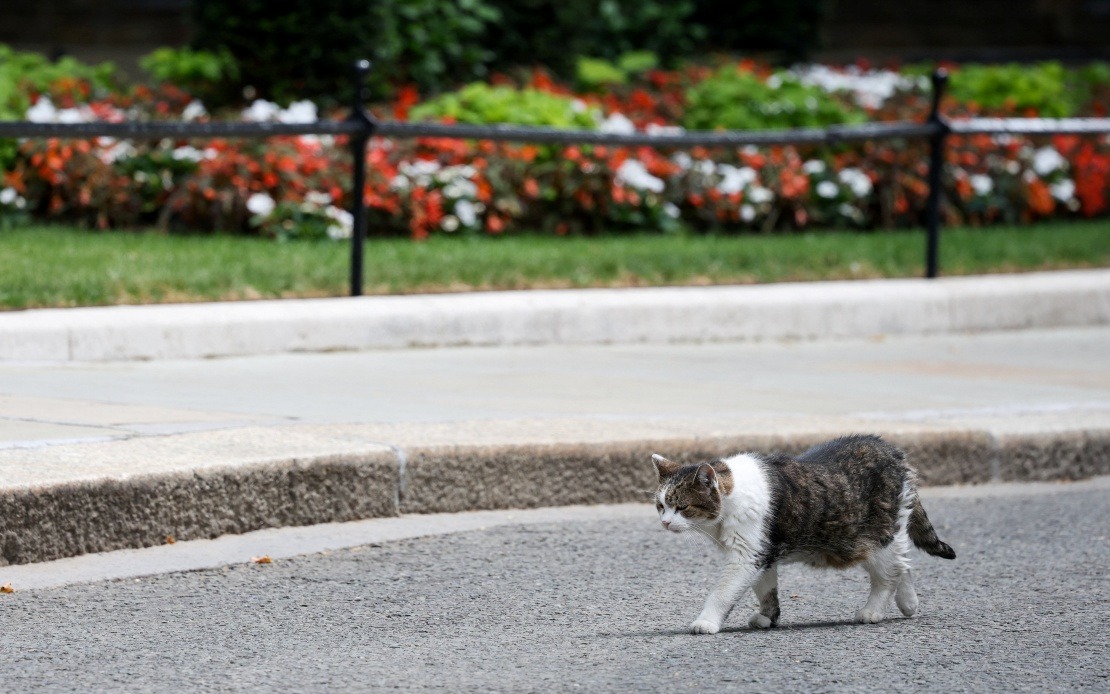
Larry, the celebrated feline inhabitant of 10 Downing Street, has achieved a peculiar distinction in British political history: surviving longer in his post than six successive prime ministers. The grey tabby was observed roaming the grounds outside the prime minister's official London residence on Tuesday, July 21, as the newly appointed Prime Minister Andy Burnham convened his inaugural Cabinet gathering following his assumption of office.
The sight of Larry wandering freely while Burnham and his ministerial team conducted their first formal meeting inside the building serves as a fitting visual metaphor for the cat's remarkable tenure. Unlike the politicians who occupy the famous address, Larry answers to no electorate and faces no votes of no confidence. His continued presence at the residence underscores the enduring nature of institutional fixtures compared to the transient nature of political leadership in Westminster.
Larry's longevity at 10 Downing Street reflects a broader pattern in British politics, where prime ministerial tenures have become increasingly volatile over recent years. The succession of six prime ministers within the timeframe of Larry's residence at the address demonstrates the accelerating pace of leadership changes at the highest echelons of British government. Each departure has been marked by its own political circumstances, yet Larry has remained a constant presence through every transition.
The cat's role as the official mouser of 10 Downing Street dates back several years, and he has become something of a national institution in his own right. British media and the public have taken considerable interest in Larry's activities, often treating his movements and behaviour as a quirky barometer of life at the heart of government. His ability to maintain a position of influence and comfort regardless of which party controls Downing Street demonstrates a form of institutional independence that even senior civil servants struggle to achieve.
For Malaysian and broader Commonwealth readers, Larry's story offers an interesting perspective on the nature of political stability and institutional continuity. While Malaysia has experienced its own share of rapid prime ministerial changes in recent years, with varying levels of political turbulence, the image of a cat seamlessly outlasting multiple administrations speaks to the way democratic institutions persist despite the personalities who lead them. The Westminster system, whatever its challenges, maintains certain continuities that transcend individual leaders.
Burnham's elevation to the position of Prime Minister represents another chapter in the ongoing narrative of British political leadership, and Larry's welcome from the grounds of the residence provides a whimsical note to what is undoubtedly a significant moment in Westminster politics. The Cabinet meeting that took place inside marked the formal commencement of Burnham's administration, with all the weight and expectation that accompanies such occasions. Yet outside, Larry's indifference to these momentous political events serves as a reminder of perspectives that exist beyond the immediate concerns of parliamentary leadership.
The presence of working cats at official residences is itself a tradition with deep roots in British governance. These animals serve practical purposes while also symbolising continuity and tradition. In an era where institutional trust has come under considerable strain in many democracies, including the United Kingdom, the presence of such creatures offers a form of comfort and connection to established ways of conducting public business. Larry, in his grey coat, represents something stable in a political landscape that has proven anything but stable.
From a broader Southeast Asian perspective, the attention paid to Larry's continued tenure raises interesting questions about how different political systems value institutional continuity and tradition. Commonwealth nations like Malaysia inherit similar parliamentary traditions and sometimes struggle with similar questions about the balance between change and stability in their governance structures. The longevity of a palace cat becomes symbolic of larger questions about what endures and what passes away in political life.
As Burnham settles into his new role, managing the considerable challenges that await any British Prime Minister, Larry can be expected to continue his daily routines, indifferent to the political ferment around him. History suggests that Larry will likely still be present at 10 Downing Street long after Burnham has departed the office, ready to greet yet another successor with the same detached feline composure. In the uncertain world of contemporary politics, Larry's permanence is almost consoling, a reminder that some institutions outlast the individuals who temporarily inhabit their most prestigious offices.

