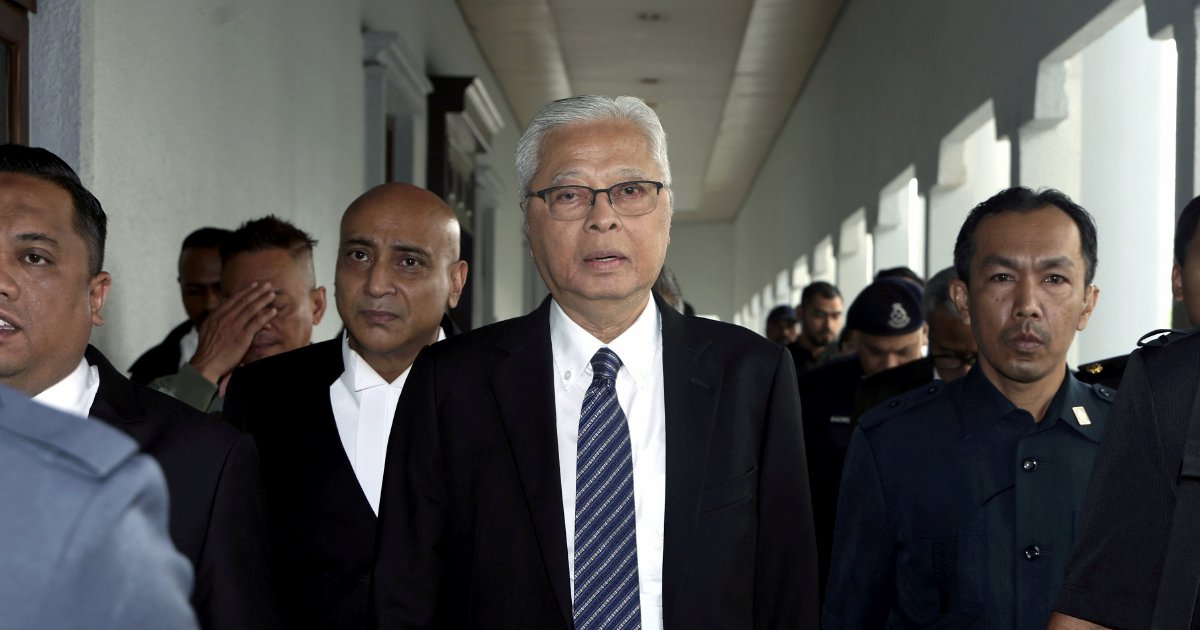
Datuk Seri Ismail Sabri Yaakob's legal counsel has publicly characterised the newest charge lodged against the former prime minister as procedurally anomalous, contending that prosecutors are essentially recycling the same allegations under a different statutory framework. The defence team's pushback centres on what lawyers describe as redundant invocation of separate provisions within Malaysia's anti-corruption legislative apparatus, raising questions about the appropriateness of such prosecutorial tactics.
The criticism touches on a recurring debate in Malaysian legal circles regarding prosecutorial discretion and the boundaries of permissible charging decisions. When law enforcement agencies possess overlapping statutory tools to address similar misconduct, questions naturally arise about whether deploying multiple provisions against identical factual scenarios constitutes legitimate prosecutorial strategy or represents an abuse of discretionary charging authority. The distinction carries profound implications for how anti-corruption enforcement operates across Southeast Asia's judicial systems.
Ismail Sabri's case has attracted sustained attention throughout Malaysia's political landscape, reflecting broader public interest in how accountability mechanisms function when applied to high-ranking former government officials. The former prime minister, who held the top executive position from August 2021 to August 2022, has faced mounting legal scrutiny following his departure from office. His tenure, though relatively brief, occurred during a volatile period marked by internal political fractures and shifting coalition dynamics that ultimately precipitated his resignation.
The Malaysian Anti-Corruption Commission Act contains multiple provisions addressing different species of corrupt conduct, ranging from soliciting or receiving gratification to failing to declare assets or interests. While this legislative architecture provides flexibility in pursuing wrongdoing, it simultaneously creates potential for strategic charging decisions that critics argue may stretch the boundaries of fair prosecutorial practice. The defence's characterization of the current charge as "peculiar" implicitly questions whether the prosecution has crossed that line from legitimate legal strategy into territory that unfairly prejudices the accused.
Under Malaysian criminal procedure, prosecutors retain considerable latitude in selecting which statutory provisions to invoke when addressing alleged misconduct. Yet this discretion exists within bounds established by case law and prosecutorial guidelines designed to prevent improper multiplication of charges that essentially target identical conduct. When multiple statutory provisions address the same underlying facts, courts across common law jurisdictions generally scrutinise whether such charging patterns serve legitimate purposes or instead represent harassment or vindictive prosecution.
The timing of charges against former senior officials frequently generates controversy, with observers questioning whether enforcement reflects principled anti-corruption commitment or instead serves political objectives. Ismail Sabri's own background as a career politician spanning multiple decades, combined with his relatively recent departure from the highest office, ensures that any legal proceedings attract intense scrutiny and competing interpretations. Some analysts interpret aggressive prosecutions as demonstrating institutional independence and integrity, whilst others view them with greater scepticism regarding underlying motivations.
Regionally, Malaysia's anti-corruption framework draws international attention as neighbouring countries develop their own accountability mechanisms. The sophistication with which prosecutors engage statutory provisions, and conversely, the rigour with which courts scrutinise charging decisions, establishes precedents influencing how Indonesia, Thailand, the Philippines, and other jurisdictions approach similar investigations. Observers tracking governance standards across Southeast Asia therefore monitor high-profile cases involving former national leaders as potential indicators of institutional health.
The legal principle that prosecutors should not artificially inflate charges by repeatedly invoking different statutory provisions addressing identical misconduct remains reasonably well-established in Commonwealth jurisdictions. Yet practical application remains contested, particularly when multiple provisions genuinely offer distinct elements warranting separate consideration. The defence's challenge therefore hinges partly on demonstrating that the provisions constitute genuine duplication rather than complementary statutory approaches addressing different aspects of alleged wrongdoing.
Ismail Sabri's legal team will presumably present detailed arguments explaining why they consider the charging approach improper, potentially citing previous court decisions establishing relevant precedent. Such arguments might emphasize procedural fairness considerations, the principle against oppressive prosecution, and established jurisprudence regarding permissible multiplication of charges. Whether Malaysia's judicial system ultimately vindicated these objections would establish important guidance for future anti-corruption prosecutions affecting public officials.
The broader implications extend beyond this individual case to encompass fundamental questions about prosecutorial accountability and judicial review authority. Even well-intentioned enforcement efforts require procedural guardrails preventing excesses that might undermine public confidence in the legal system. When defence teams successfully challenge prosecutorial overreach through legitimate legal argument, they contribute to institutional evolution promoting fairer administration of justice across Malaysian society.
This controversy also illuminates tensions inherent in anti-corruption enforcement within democracies where power frequently transfers between competing political factions. Incoming administrations assume control of investigative and prosecutorial machinery previously serving their predecessors, creating incentives and opportunities for weaponizing such institutions against political adversaries. Malaysia's ongoing experience navigating these challenges remains instructive for younger democracies and hybrid regimes throughout Southeast Asia grappling with similar dilemmas.

