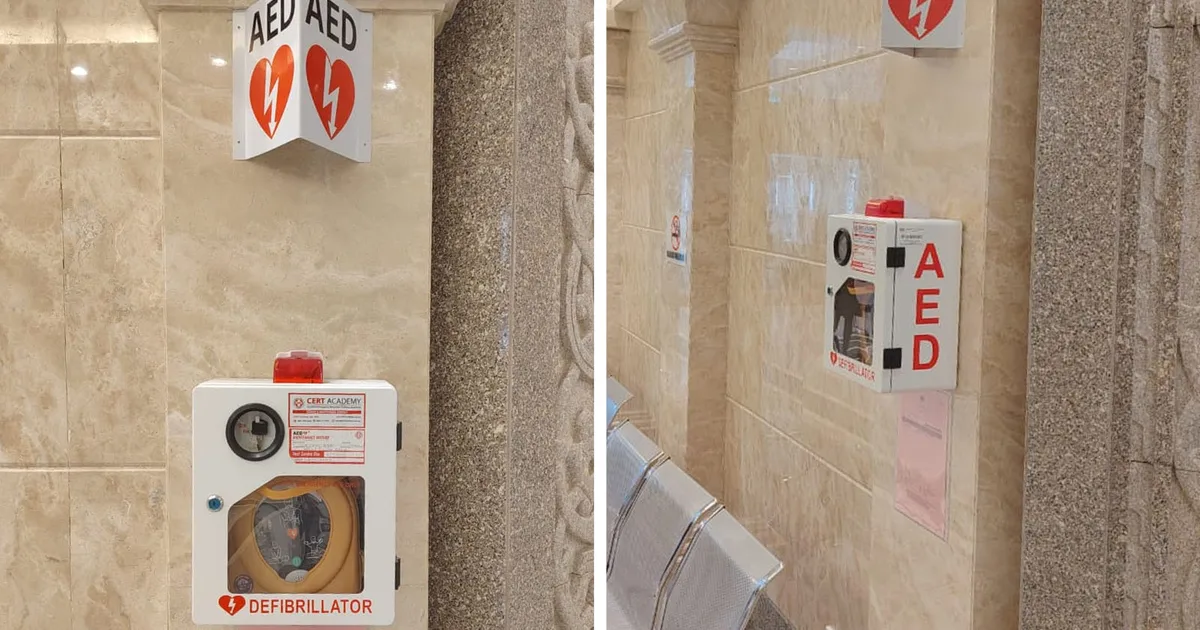
Spurred by the sudden death of a litigant at the Kuala Lumpur High Court, Malaysia's legal fraternity is mounting a concerted push for authorities to equip all major court complexes with automated external defibrillators (AEDs). The appeal represents a significant moment in workplace safety advocacy within the justice system, highlighting vulnerabilities in emergency medical preparedness at facilities that process thousands of cases annually.
The incident that catalysed this movement occurred when a court user suffered acute cardiac arrest while present in a KL High Court courtroom. The tragic episode exposed the absence of basic life-saving equipment at one of the nation's busiest and most significant legal venues, raising uncomfortable questions about institutional readiness for medical emergencies. For the legal community, the death underscored a systemic gap that extends beyond a single facility.
Lawyers contend that major court complexes, by virtue of their size, constant foot traffic, and demographic diversity, face genuine risk of medical emergencies. Court proceedings often extend over hours, drawing elderly litigants, ageing judges, and visitors with pre-existing health conditions. The stress of litigation itself can exacerbate cardiovascular vulnerability. These factors converge to create an environment where sudden cardiac events, whilst statistically uncommon, remain credible threats to public health within the judicial setting.
The deployment of AEDs addresses a critical gap in the response chain. These portable devices can dramatically improve survival outcomes from cardiac arrest when deployed within the first few minutes of collapse—a window when conventional ambulance response may be insufficient in urban settings. Early defibrillation combined with cardiopulmonary resuscitation can restore normal heart rhythm and prevent brain damage or death. The technology is robust, requires minimal specialist training for basic operation, and has proven effective across hospitals, airports, shopping centres, and corporate facilities worldwide.
Malaysia's judicial infrastructure, despite modernisation efforts, lags behind international standards in some safety dimensions. While courthouses maintain security apparatus and fire safety systems, the absence of emergency medical equipment suggests incomplete risk assessment. The jurisprudence of duty of care—a concept Malaysian courts routinely adjudicate—ironically finds imperfect expression within court buildings themselves. This philosophical inconsistency has not escaped the profession's notice.
Implementing AEDs across the court system would demand coordination between the Judicial and Legal Services Commission, the Ministry of Law, and state judicial administrators who oversee subordinate courts. Costs remain manageable: device procurement typically ranges from RM 3,000 to RM 8,000 per unit, with ongoing maintenance and staff training requiring modest additional investment. Most court complexes could be equipped with multiple devices for under RM 50,000 each, a sum representing a fraction of annual judicial budgets.
Beyond equipment, lawyers emphasise the necessity of staff training protocols. Security personnel, court officers, and administrative staff stationed at major complexes should undergo basic first aid and AED operation certification. Many facilities already employ trained security teams; extending their mandate to include emergency medical response formalises existing competencies and establishes clear accountability structures. Regular drills and refresher training would maintain preparedness.
The push for AEDs reflects broader anxieties about occupational health within Malaysia's legal sector. Courts remain congested, litigation timelines stretch unpredictably, and the emotional toll of proceedings affects all participants. While not a panacea for systemic judicial inefficiency, AED deployment represents a tangible, evidence-based intervention that acknowledges vulnerability and prioritises preservation of life during proceedings.
The regional context is instructive. Singapore's courts have operated with established emergency medical protocols for years. Australian and British courthouses routinely feature AEDs in public spaces. Even within Southeast Asia, progressive institutions recognise that judicial facilities serving the public must meet contemporary standards for emergency preparedness. Malaysia's slowness to adopt such measures reflects bureaucratic inertia rather than resource constraints or technical barriers.
Legal professional bodies have mobilised around this demand with characteristic persistence. Bar councils and legal associations view the matter as extending their traditional advocacy for rule of law into practical protection of those engaged in the judicial system. The symbolic weight matters: courts that fail to protect the basic health needs of participants send troubling signals about institutional values and competence.
Authorities have received these representations with apparent receptiveness, though formal implementation timelines remain unclear. The matter now rests with administrative bodies whose response will signal whether Malaysia's judicial system views emergency preparedness as consistent with its legitimacy and duty to participants.
The tragic death that initiated this campaign presents an opportunity for systemic reflection. AED installation represents the minimum prudent response—a straightforward, proven measure that acknowledges risk and demonstrates institutional responsibility. For Malaysia's courts to function as trustworthy forums of justice, they must first ensure that those who enter their premises can rely on basic protections for life itself.

