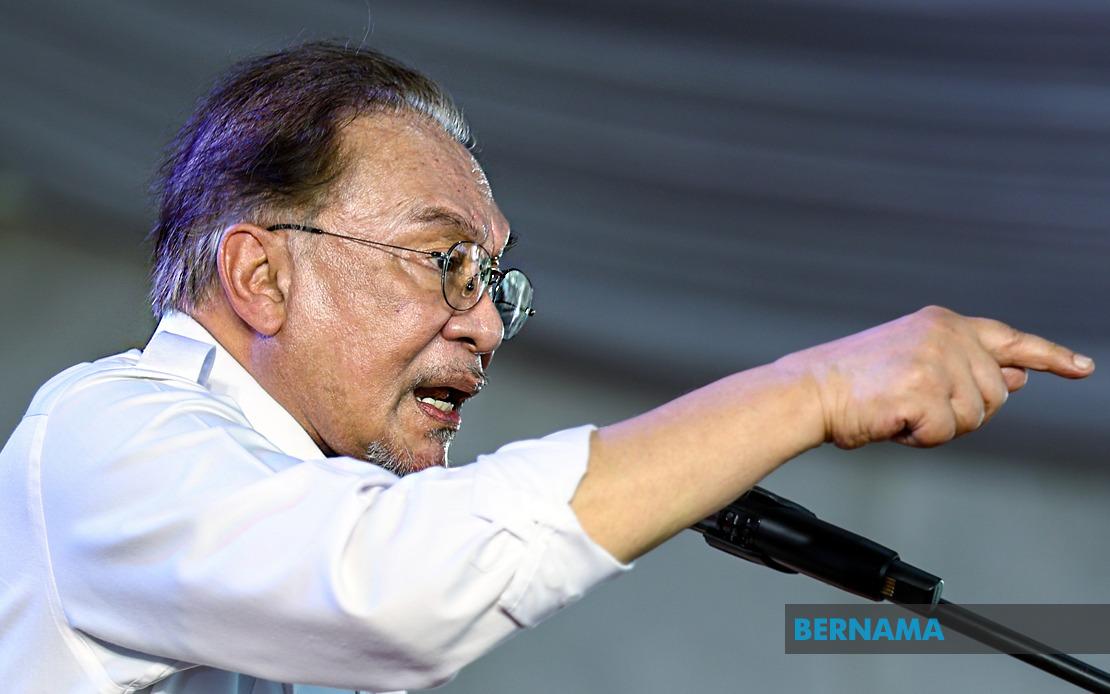
Prime Minister Datuk Seri Anwar Ibrahim has reinforced calls for leadership across Malaysia's federal, state and municipal tiers to maintain genuine and equitable engagement with all communities, framing such interaction as fundamental to the nation's continued unity and stability. Speaking during a gathering with Johor community leaders in Johor Bahru on July 4, Anwar emphasised that transparent and fair governance practices remain essential even as his administration pursues reform initiatives at the national level.
While acknowledging that the MADANI Government has implemented structural reforms at the centre, Anwar recognised that significant implementation gaps persist further down the governance chain. He cautioned that commitment to equitable engagement cannot stop at federal policy announcements; instead, state administrations and local municipal councils must actively translate these principles into tangible practice within their jurisdictions. This observation highlights a recurring challenge in Malaysian governance: the difference between policy intent articulated in the capital and actual execution in smaller towns and municipalities where citizens most directly experience the state's fairness or bias.
An important clarification from Anwar during the session addressed a common misunderstanding about equitable governance. He stressed that fairness does not mean automatically approving every request or appeal brought by community groups and individuals. Rather, the essence of fair administration lies in creating a structured, transparent process where all stakeholders feel genuinely heard and believe their cases have been considered on merit. This distinction matters because it allows governments to maintain necessary fiscal discipline and legal boundaries while still upholding the perception and reality of impartiality—a critical ingredient for public trust in institutions.
The Prime Minister expanded his vision of national progress beyond conventional economic metrics. While serving concurrently as Finance Minister, Anwar noted that Malaysia's economic expansion is now distributing benefits more widely across the country. Development is moving beyond traditional investment corridors like the Klang Valley and Penang, reaching into Negeri Sembilan, Melaka and Johor through the Johor-Singapore Special Economic Zone, while simultaneously strengthening prospects in Sabah and Sarawak. However, Anwar argued that such economic growth, while necessary, cannot be the sole measure of national success. Instead, the country's true progress must also encompass its capacity to nurture unity, demonstrate compassion and foster genuine mutual respect among its ethnically and religiously diverse population.
Anwar raised particular concern about the persistence of divisive narratives constructed around race and religion that threaten to erode Malaysia's social fabric. He specifically appealed to religious leaders to assume greater responsibility in countering these narratives by actively promoting messages of faith, compassion, justice and interfaith understanding within their own communities. This plea reflects deepening anxiety within government about how such divisive rhetoric, whether circulated through traditional media or accelerated via social platforms, can gradually poison public discourse and undermine the delicate communal equilibrium that Malaysia has built since independence.
Beyond religious institutions, Anwar called on all leaders—political, bureaucratic and community-based—to exercise greater care in the information they disseminate. He urged them to actively contest and reject narratives that exploit race and religion as instruments for narrow political advantage. This responsibility extends to fact-checking misinformation and refusing to amplify claims that lack substance, even when doing so might generate short-term political benefit. The implication is that leaders must sometimes sacrifice immediate advantage for longer-term national stability.
The Prime Minister also addressed the intersection of technological advancement with Malaysia's moral and cultural foundations. As the nation embraces artificial intelligence, digital transformation and the energy transition—all critical for economic competitiveness—Anwar insisted that these technical changes must remain grounded in strong moral values, cultural understanding and religious principles. This caveat reflects concern that unchecked adoption of disruptive technologies without ethical guardrails could exacerbate existing social tensions or create new fractures within Malaysian society.
In articulating his vision, Anwar returned to fundamentals about what Malaysian citizens fundamentally desire from their government and society. He pointed out that most Malaysians simply want stable, peaceful communities where they can secure quality education for their children, adequate healthcare for their families, reliable infrastructure and the freedom to practice their religious beliefs without interference or discrimination. These are not radical demands, he emphasised; they are rights and expectations enshrined in the Malaysian Constitution by the nation's founders and reflect ordinary human aspirations that transcend ethnic and religious boundaries.
Anwar's remarks carry particular weight given Malaysia's recent political volatility and the periodic flaring of communal tensions. His dual role as Prime Minister and Finance Minister gives him platform to tie governance philosophy directly to economic policy. The implicit message is that inclusive governance and fair administration are not soft, nice-to-have add-ons but prerequisites for the political stability necessary for sustained economic development. Communities fractured by perceptions of unfair treatment or marginalization are unlikely to provide the social capital and mutual forbearance necessary for prosperity.
The session also included Deputy National Unity Minister R Yuneswaran, underlining government emphasis on the national unity portfolio in addressing these concerns. The presence of a dedicated minister signals that these issues occupy significant political space and require ongoing high-level attention. For Malaysian readers and regional observers, Anwar's remarks suggest that government is acutely aware of the fragility of its multicultural equilibrium and is consciously attempting to rebuild institutional credibility through repeated assurances of fair and transparent governance. Whether such assurances translate into measurable improvements in citizens' lived experience of government fairness at the state and local levels will ultimately determine their political effect.

